
Feline Fine: How to Remove Cat Odor from Your Yard and Garden
That Ammonia Hit Is Real — Here’s How to Remove Cat Odor from Your Yard Fast
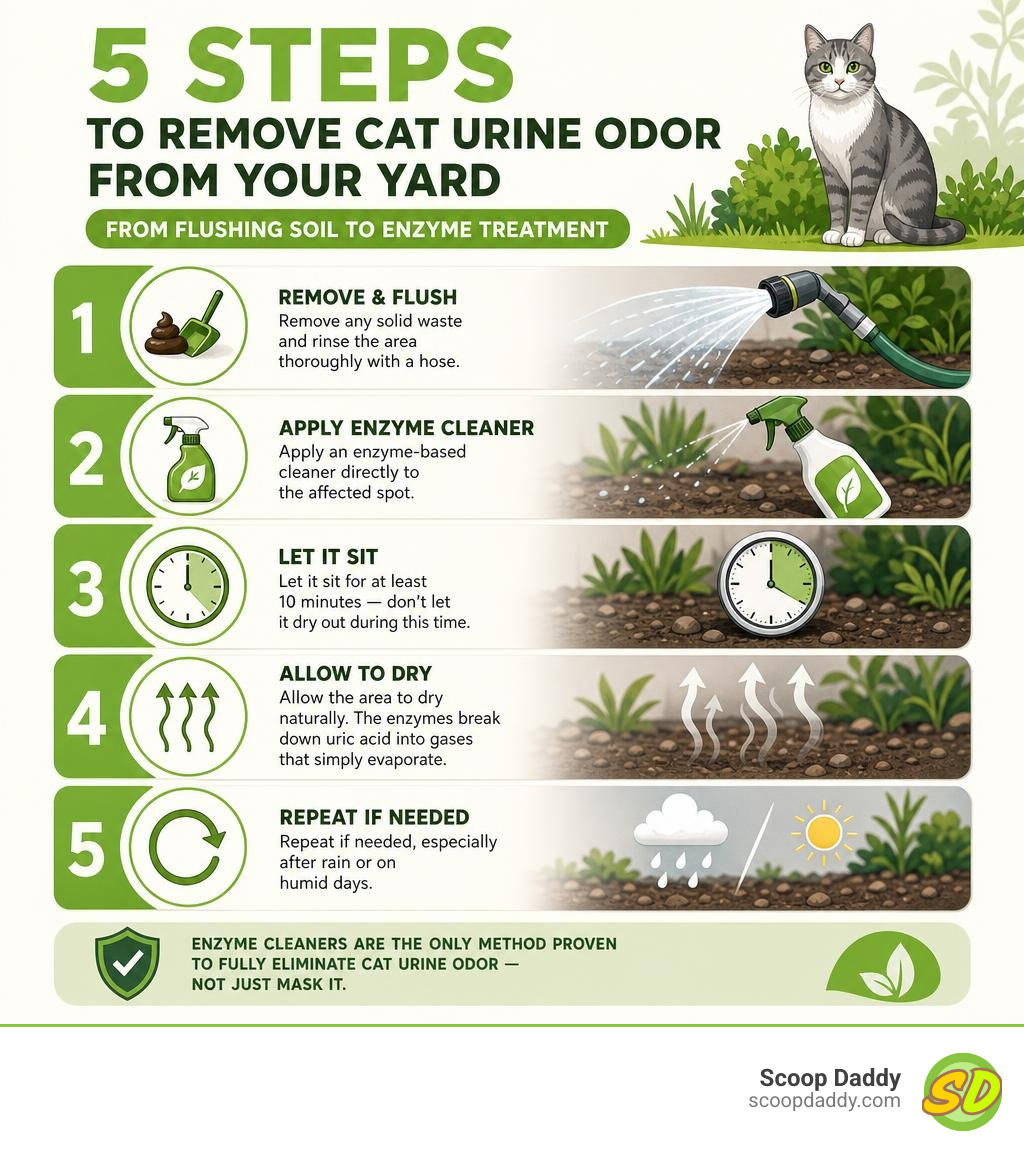
If you want to how to remove cat odor from your yard, here’s the short answer:
- Remove any solid waste and rinse the area thoroughly with a hose.
- Apply an enzyme-based cleaner directly to the affected spot.
- Let it sit for at least 10 minutes — don’t let it dry out during this time.
- Allow the area to dry naturally. The enzymes break down uric acid into gases that simply evaporate.
- Repeat if needed, especially after rain or on humid days.
Enzyme cleaners are the only method proven to fully eliminate cat urine odor — not just mask it.
One minute you’re enjoying your backyard, the next you’re hit with that sharp, unmistakable ammonia sting. If you have outdoor cats — or your Southwest Florida yard has become a neighborhood stray’s favorite bathroom — you already know the smell doesn’t just fade on its own.
Cat urine is stubbornly persistent. It soaks into soil, gravel, and concrete, and it can come back even stronger after a humid afternoon or a light rain. Standard household fixes like vinegar or baking soda offer temporary relief at best.
The good news? With the right approach, you can fully eliminate the odor — not just cover it up.
Why Outdoor Cat Urine Smell is So Powerful and Persistent
To win the battle against the stink, we first have to understand what we are actually fighting. Outdoor cat urine is not like normal dirt or organic garden waste. It is a biological packing house of highly concentrated proteins and acids designed by nature to leave a permanent territorial message.
When a cat sprays or urinates on your grass, flowerbeds, or patio, it is laying down a chemical calling card. In the wild, these scent markers need to withstand wind, sun, and rain so other felines get the message. Unfortunately for us, this means the odor is structurally engineered to cling to your property for months on end.
The primary culprit behind this staying power is uric acid. When cat urine dries, soil bacteria immediately go to work breaking down the urea component, which quickly releases a sharp ammonia smell. But as that ammonia dissipates, it leaves behind highly resilient uric acid crystals. These crystals do not dissolve in plain water and bond tightly to whatever porous surface they touch.
When you learn the science behind Neutralizing Cat Urine In Soil: Tips And Tricks | MedShun , you realize that standard rinsing only spreads the problem around rather than solving it. The trapped uric acid remains dormant in the dirt or concrete until moisture reactivates it, starting the smelly cycle all over again.
The Chemical Makeup of Feline Urine
To understand why this odor is so tough to kick, let’s look at the numbers. Cat urine is composed of approximately 95% water. The remaining 5% is a complex cocktail of:
- Urea (which decays into ammonia)
- Uric acid (the non-water-soluble compound that binds to surfaces)
- Proteins and pheromones (used for territorial marking)
- Sodium, electrolytes, and other minerals
- Thiols (the organic sulfur compounds that give the spray its signature skunky, pungent kick)
As urine sits in the environment, the urea breaks down first, releasing that initial wave of ammonia. Once the ammonia phase passes, the thiols and uric acid take over. Because feline kidneys are incredibly efficient at conserving water, their urine is far more concentrated than dog or human urine. This high concentration is why a single cat spraying a patio post can make your entire outdoor seating area smell like an uncleaned litter box.
When these chemical compounds seep into garden beds, they don’t just smell bad; they can actually damage your landscaping. Reading about How To Get Rid Of Cat Pee Smell In Garden | Safe Odor Fixes reveals that the high nitrogen and salt content in concentrated cat pee can chemically burn delicate plant roots and yellow your lawn edges.
Why DIY Methods Fail to Solve How to Remove Cat Odor Yard Issues
Most homeowners immediately reach for household staples when trying to figure out how to remove cat odor from their yard. It makes sense—vinegar, baking soda, and hydrogen peroxide are fantastic for general household cleaning. Unfortunately, when it comes to outdoor cat pee, these remedies usually fall flat.
White vinegar is highly acidic and can temporarily neutralize the alkaline ammonia, while baking soda is great at absorbing surface moisture. However, neither of these household items can break the chemical bonds of uric acid.
On a hot, humid afternoon in Naples or Fort Myers, the moisture in the air causes the dry uric acid crystals to recrystallize. This process releases the trapped thiols and ammonia back into the air. You might think you’ve solved the problem on a dry morning, only to find the stench returning with a vengeance after the afternoon humidity rolls in.
| Cleaning Method | How It Works | Why It Fails Outdoors |
|---|---|---|
| Water Flushing | Dilutes fresh urine | Simply spreads the uric acid deeper into the soil |
| White Vinegar | Neutralizes alkaline ammonia | Does not break down uric acid; can wash away quickly |
| Baking Soda | Absorbs surface moisture and odors | Only temporary; washes away with rain or irrigation |
| Hydrogen Peroxide | Oxidizes organic compounds | Evaporates too quickly in the sun; can damage plants |
| Enzyme Cleaners | Biodegrades uric acid and proteins | Succeeds by converting compounds into evaporative gases |
Step-by-Step: How to Remove Cat Odor Yard Clean Up Guide
If you are ready to reclaim your outdoor space, you need a systematic approach. Simply spraying some product around randomly won’t cut it. Follow our step-by-step guide to locate, neutralize, and eliminate the odor once and for all.
Step 1: Locate the Source
Before you start cleaning, you need to know exactly where the cats are going. Look for telltale signs like yellowed patches of grass, disturbed mulch, or soil that looks dug up. If you are cleaning hard surfaces like concrete or wooden decks, look for dark stains or use a hand-held UV blacklight at night to spot the glowing urine residues.
Step 2: Remove Solid Waste
Put on a pair of thick gloves and remove any cat feces from the area. Cats will repeatedly return to the same spot if they can smell their own solid waste. Bag the waste tightly and dispose of it in your outdoor trash bin.
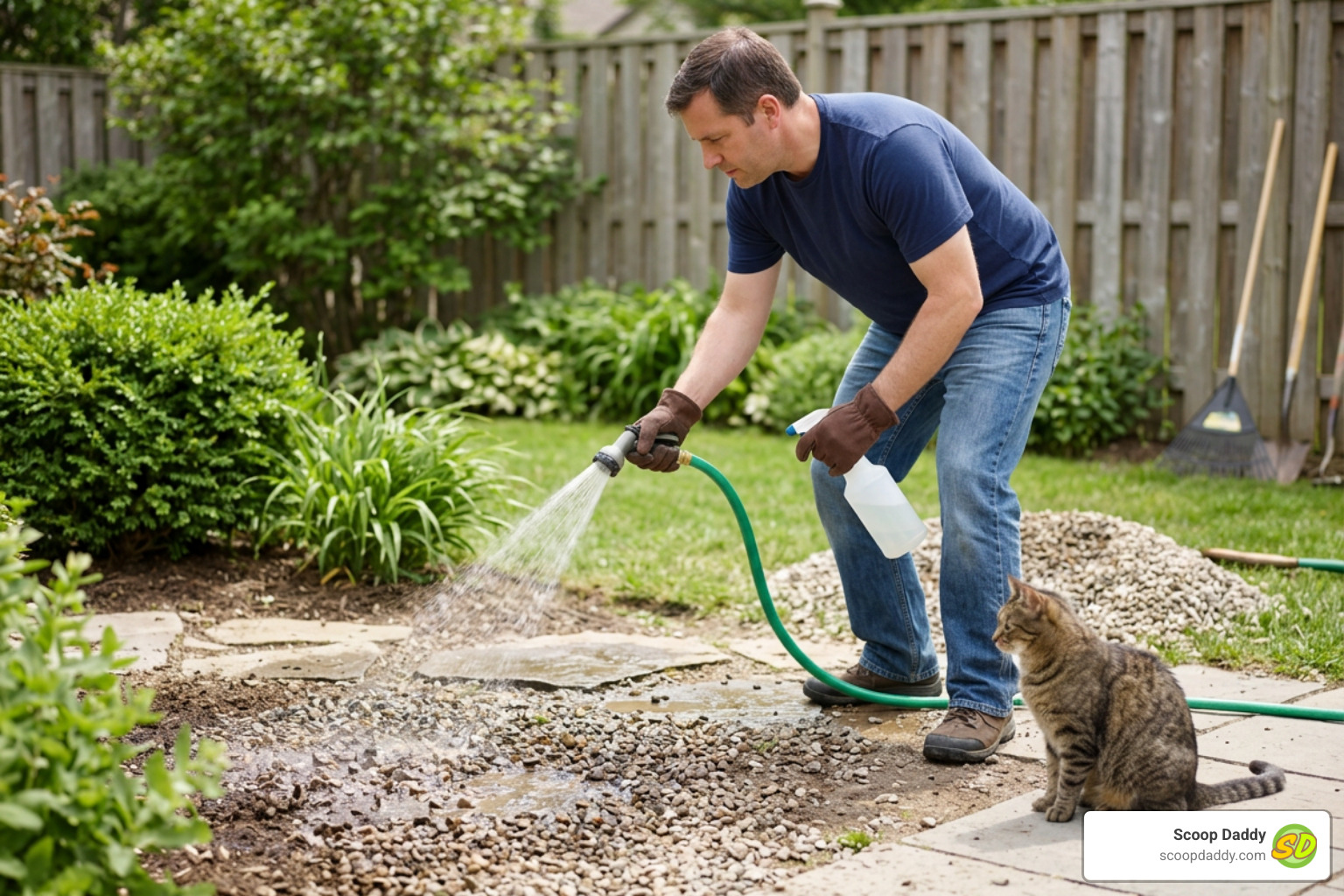
Step 3: Flush the Area (For Fresh Spots Only)
If you catch a cat in the act or find a fresh wet spot, act fast. Flush the area with a gentle stream of water from your garden hose for 5 to 10 minutes. This dilutes the urea before it has a chance to bond to the soil or seep deep into concrete pores. Note: Skip this step for old, dried stains, as excessive water will only reactivate the dormant uric acid without removing it.
Step 4: Apply Your Enzyme Cleaner
Saturate the dry, smelly area with a high-quality, outdoor-rated enzymatic cleaner. Make sure you apply enough product to penetrate as deep as the urine did—typically 1 to 2 inches into soil or mulch. For detailed application techniques, check out How to Get Rid of Cat Pee Outside: 7 Effective Methods | Hepper Pet Resources .
Step 5: Keep the Area Damp (The Dwell Time)
Enzymes need moisture to do their jobs. If the cleaner dries out too quickly in our warm Florida sun, the bacteria stop working. Apply the treatment during the cooler times of day—like dawn or dusk—and cover the treated spot with a tarp or a damp towel to keep it wet for at least 10 to 20 minutes.
Step 6: Let It Dry Naturally
Remove the cover and let the area dry naturally. As the enzyme cleaner evaporates, it carries the broken-down organic gases away with it, leaving your yard smelling fresh.
Using Enzyme Cleaners: How to Remove Cat Odor Yard Spots Permanently
So, how exactly do these magical enzyme cleaners work? Unlike masking agents that simply cover up bad smells with heavy artificial perfumes, true enzymatic formulas contain live, beneficial bacterial microbes.
When you spray these microbes onto cat urine, they produce specific enzymes that target and digest the proteins, urea, and uric acid. The bacteria literally eat the odor-causing compounds, breaking them down into natural, odorless elements like carbon dioxide and water.
According to the official application guides for US | Household | Pets | Cat Urine Outside – Simple Green , using a hose-end sprayer is the most efficient way to apply these treatments across large outdoor areas like lawns, gravel runs, and landscaping beds. This ensures even coverage and deep penetration into the soil where the uric acid crystals hide.
Surface-Specific Cleaning: Grass, Gravel, and Patios
Different surfaces in your yard require different cleaning tactics. What works beautifully on a concrete patio could easily ruin your backyard turf.
- Grass and Lawns: Your main goal is to protect the root systems while neutralizing the odor. Flush the grass thoroughly with water first to dilute the salts, then apply a lawn-safe enzyme cleaner. Avoid heavy chemical solutions that can yellow the grass.
- Gravel and Dirt: Urine can seep deep into loose ground. For heavy buildup, use a shovel to turn the top 2 to 3 inches of soil. This exposes the trapped pockets to fresh air and natural soil microbes. Once turned, saturate the area with an outdoor enzyme treatment.
- Patios and Concrete: Concrete is highly porous, acting like a giant sponge for liquids. To clean concrete, scrub the surface with a stiff brush and an enzyme cleaner, then cover the wet area with a plastic tarp for 24 hours. This prevents the cleaner from evaporating, forcing the enzymes deep into the concrete pores to dissolve the uric acid.
For more surface-specific tips, you can refer to How to Get Rid of Pet Urine Odor Outside: Tips & Tricks to ensure you don’t damage your outdoor finishes.
How to Prevent Cats from Returning to Your Garden
Once you have successfully removed the odor, your next step is ensuring the neighborhood felines don’t return to re-mark their territory. Cats are creatures of habit; if they smell even a faint trace of their old bathroom spot, they will use it again.
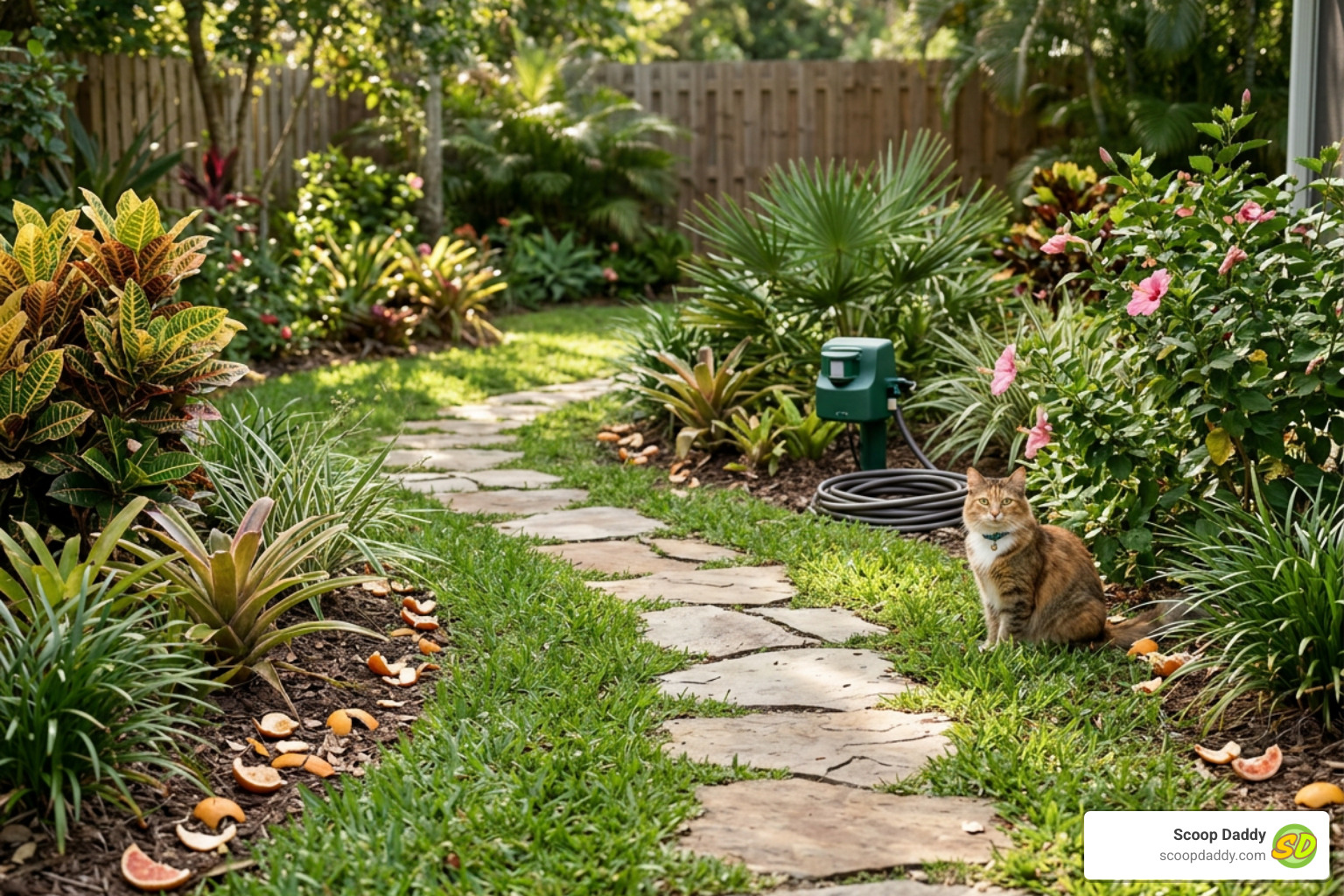
To keep your garden beds pristine, try these safe, humane deterrents:
- Incorporate Natural Scents: Cats have incredibly sensitive noses and absolutely detest the smell of citrus, lavender, rosemary, and mint. Burying fresh orange or lemon peels in your mulch is a fantastic, natural way to keep them away.
- Install Motion-Activated Sprinklers: These devices hook up to your garden hose and spray a harmless burst of water whenever they detect motion. It only takes one or two unexpected splashes to convince a stray cat to find a new bathroom.
- Create Physical Barriers: Lay flat chicken wire or plastic scat mats just beneath your mulch. Cats love loose, soft soil for digging; if they can’t easily dig, they will move on.
For a complete list of simple, pet-safe yard boundaries, check out How to Keep Cats From Pooping in Your Yard: 8 Simple Ways | The Vet Desk and read up on Banishing Feline Fragrances: How to Get Rid of Cat Poop Smell in Your Garden – GreatGardenPlans .
Keeping your yard clean of all pet waste is a vital step in maintaining a healthy outdoor space. If you also have dogs, keep in mind that Dog Poop Is Not Fertilizer: How to Keep Your Yard Safe and Clean—keeping all animal waste out of your garden beds is essential for your family’s safety.
Frequently Asked Questions About Outdoor Cat Odor
Does rain wash away cat urine odor outdoors?
No. In fact, rain often makes the smell much worse. While a heavy downpour might temporarily dilute fresh urea, the water reactivates the dried, dormant uric acid crystals trapped in your soil, gravel, or wood decking. Once the storm passes and the Florida humidity returns, the odor will rise again.
Can I use bleach to clean cat pee from my patio?
Absolutely not. You should never mix chlorine bleach with cat urine. Cat pee contains high levels of ammonia, and when mixed with bleach, it creates toxic chloramine gas. This gas is highly irritating to the eyes, nose, and lungs, and can be incredibly dangerous for both humans and pets.
Are enzyme cleaners safe for garden plants and lawns?
Yes, high-quality, outdoor-specific enzyme cleaners are biodegradable, non-toxic, and safe to use around grass, shrubs, and garden flowers. They work through natural bacterial processes rather than harsh chemical reactions.
Regularly treating and cleaning your yard is vital because the Why Even Pick Up Poop? The Dangers of Abandoned Pet Waste go far beyond just bad smells—unattended pet waste can introduce harmful parasites and bacteria into your home’s soil.
Conclusion
Reclaiming your yard from stubborn cat odors doesn’t have to be an endless battle. By understanding the science of uric acid, ditching the temporary DIY fixes for high-quality enzyme treatments, and setting up humane deterrents, you can enjoy a fresh, clean outdoor oasis once again.
If you live in Southwest Florida—including Fort Myers, Naples, Estero, and Bonita Springs—and want to keep your yard completely clean and odor-free without lifting a finger, we are here to help.
At Scoop Daddy, we provide professional pet waste removal and high-powered yard deodorizing services designed to keep your lawn fresh and safe. Discover the ease of A Clean Yard Without the Crap: Your Guide to Pooper Scooper Services and learn more about The Environmental Benefits of Proper Pet Waste Disposal.
Ready to enjoy a fresh, clean backyard? Schedule professional yard deodorizing services with Scoop Daddy today!
You May Like
A Practical Guide to Pet Waste Removal
Why a Pet Waste Service Is Worth Every Penny A pet waste service sends trained technicians to your yard on a regular schedule to remove dog poop, bag it, and haul it away — so you never have to touch it. Here's how it works in a nutshell: Sign up
Read More
How Pet Waste Removal Services Help Maintain Property Value and Curb Appeal
Doggy Landmines Don’t Impress the Neighbors Brown Spots & Burned Grass = Bye-Bye Curb Appeal Smell That? Neither Should You (or Your Guests) A Cleaner Yard Shows You Care Scoop Daddy = Property Value’s Secret Weapon Your dog is part of the family, but their waste? Not exactly boosting your
Read More
The Scoop on Poop: Is a Pooper Scooper Service Worth It?
Why a Pooper Scooper Service Is Worth Every Penny A pooper scooper service is a professional pet waste removal solution where trained technicians visit your yard on a set schedule, collect and bag all dog waste, and haul it away so you never have to touch it. Here's what a
Read More