
Commercial Pet Waste Removal: Is It a Goldmine or Just Gross?
Why Commercial Pet Waste Removal Is Crucial For Florida Communities
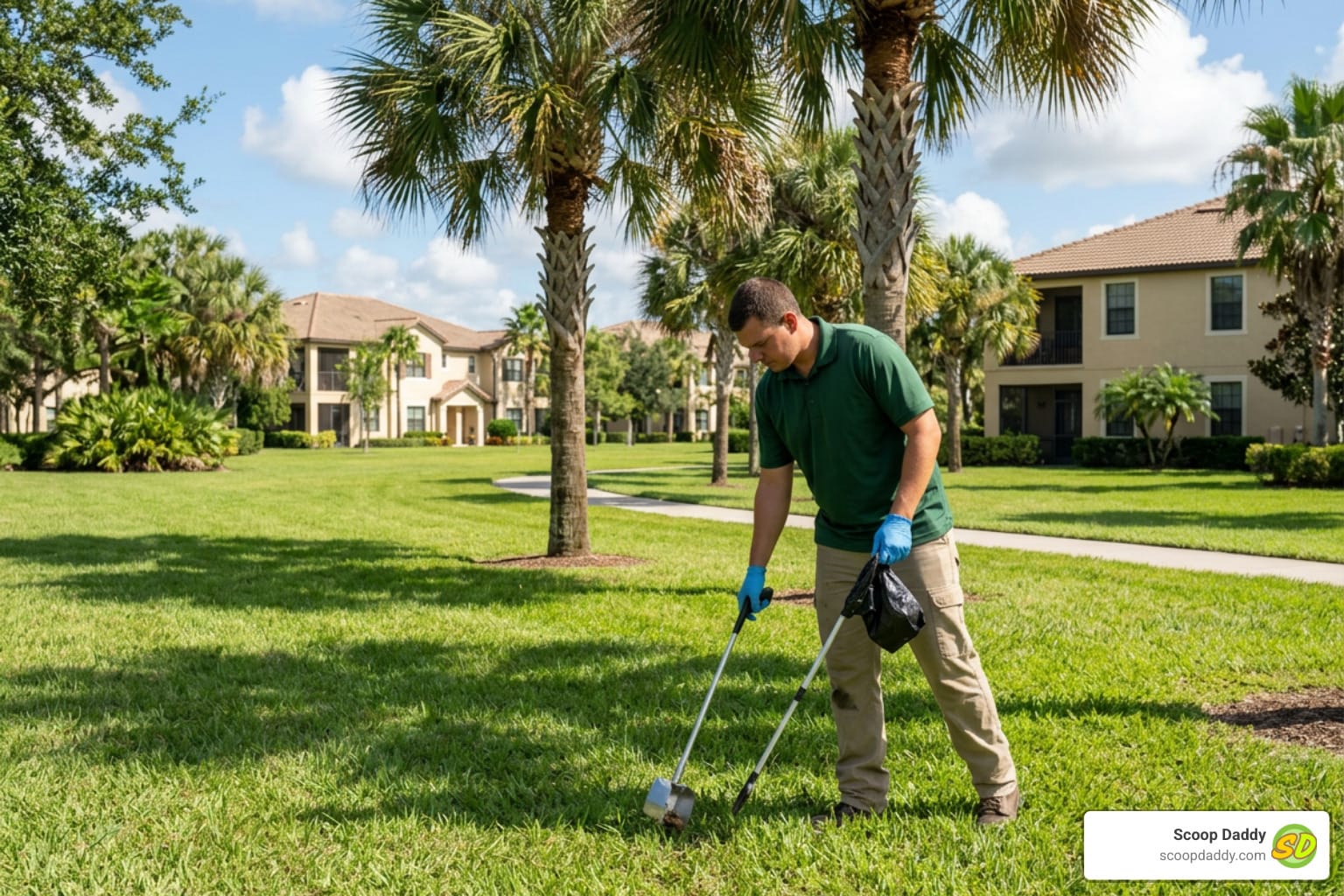
Managing a clean property in Southwest Florida is a major challenge, which is why commercial pet waste removal has become a vital service for local HOAs, apartment complexes, and businesses in 2026.
Here is a quick breakdown of how this service helps keep shared properties clean and easier to manage:
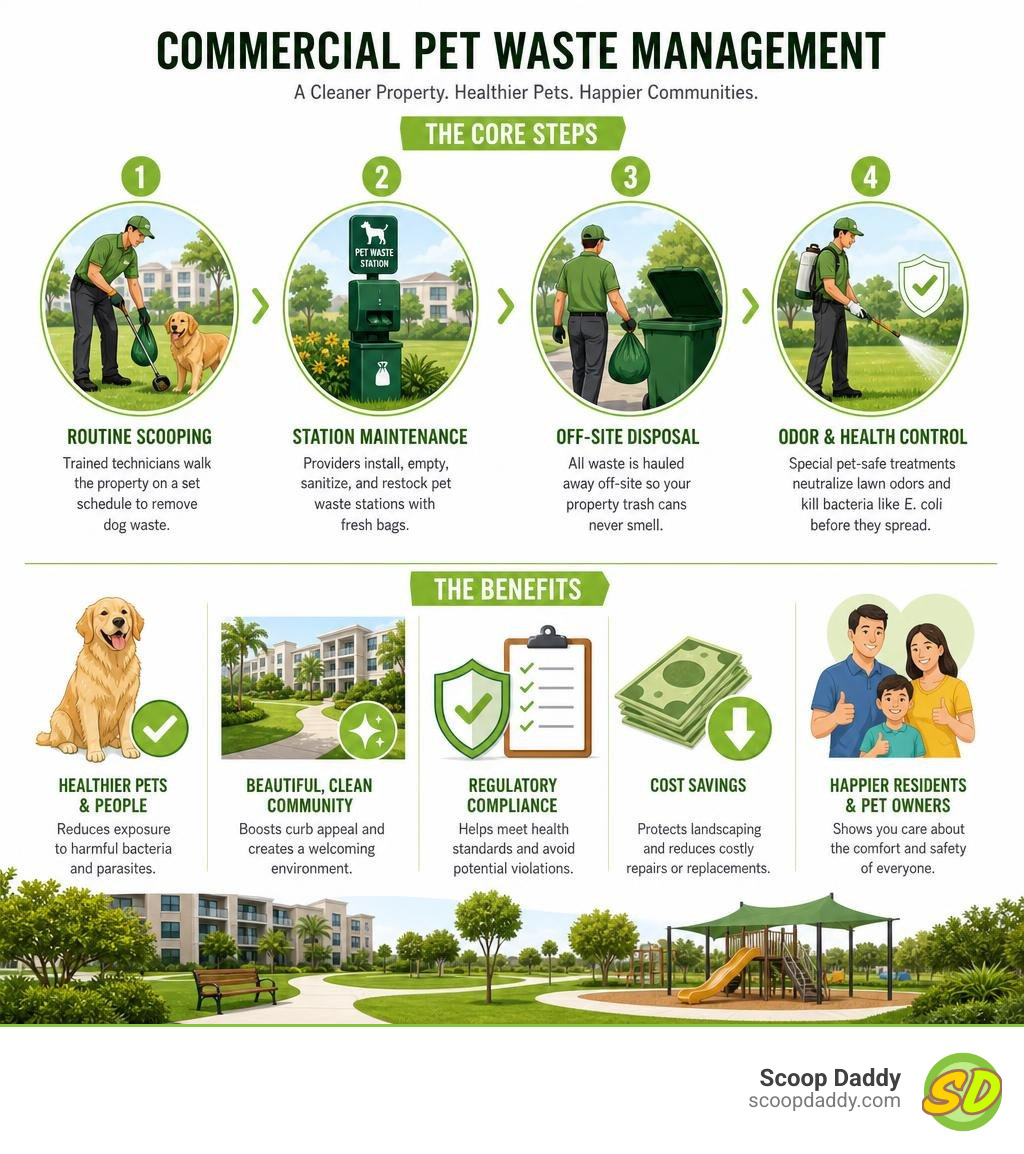
- Routine Scooping: Technicians walk the property on a set schedule to scoop and remove dog waste from common areas.
- Station Maintenance: Service may include emptying, sanitizing, and restocking pet waste stations with fresh bags.
- Proper Disposal: Waste is removed from common areas so pet zones stay cleaner and more pleasant.
- Odor And Health Control: Pet-safe treatment options may help reduce odors and bacteria in high-traffic areas.
Dog waste is a common headache. On a commercial scale—like in a busy Naples HOA or a Fort Myers apartment complex—it can quickly affect curb appeal, resident satisfaction, and the cleanliness of shared outdoor spaces.
In Southwest Florida, intense afternoon heat and heavy summer downpours make the problem worse. Unmanaged waste creates odors, damages lawns, and can wash pathogens into local storm drains and watersheds.
This guide explains how commercial poop scooping works, why outsourced pet waste management can support property operations, and how shared outdoor spaces can stay cleaner and safer for residents, guests, and pets.
First impressions are everything for commercial properties. When prospective residents tour an apartment complex in Estero or a condominium community in Bonita Springs, they look closely at the shared amenities. A beautifully manicured courtyard loses its charm instantly if visitors have to constantly look down to avoid stepping in dog waste.
Beyond aesthetics, unmanaged dog waste directly damages property infrastructure. Dog urine and feces are highly acidic, containing high concentrations of nitrogen and salts. This leads to unsightly brown patches on manicured turf, destroying expensive landscaping that costs thousands of dollars to install and maintain.
Investing in consistent waste management preserves these outdoor features. By establishing a clean, welcoming environment, property managers can significantly boost resident satisfaction and tenant retention. To learn more about how a clean environment protects your bottom line, explore How Pet Waste Removal Services Help Maintain Property Value and Curb Appeal.
The Environmental Impact Of Neglecting Commercial Pet Waste Removal
Many people mistakenly believe that dog poop acts as a natural fertilizer. In reality, dog waste is an environmental hazard. Unlike cow manure, dog waste is highly toxic and slow to decompose, especially when left on the sandy soils common to Southwest Florida.
When heavy summer downpours hit our coastal communities, rainwater washes uncollected pet waste directly into storm drains. These drains flow straight into local canals, rivers, and coastal waters, carrying harmful bacteria like E. coli and parasites like Giardia. This runoff contributes to nutrient pollution, which can fuel algae blooms in local waterways. According to the U.S. Environmental Protection Agency, nutrient pollution is one of the most widespread and costly environmental challenges facing the nation’s waterways.
Implementing a structured cleanup program is a practical step in helping protect local ecosystems and keeping shared property areas cleaner.
Health And Safety Risks In Shared Spaces
Unmanaged pet waste poses direct health risks to both humans and other pets. Feces harbor a variety of zoonotic pathogens—diseases that can be transmitted from animals to humans. Among the most common are roundworms, hookworms, Salmonella, and Giardia.
Children playing in common areas and residents walking through grassy courtyards are particularly vulnerable to these parasites, which can persist in the soil for weeks or even months after the physical waste has disappeared. For pet owners, walking their dogs through contaminated grass increases the risk of their pets contracting highly contagious viruses like Parvovirus.
As a property manager, ignoring these risks can lead to escalating resident complaints and potential liability issues. Recognizing the warning signs early is key to maintaining a safe community. If you notice waste accumulating in high-traffic zones, review the 5 Signs It’s Time to Hire a Professional Pet Waste Removal Service.
What Is Included In Commercial Pet Waste Management Plans
Every commercial property has unique layouts, pet populations, and traffic patterns. A professional commercial waste management plan should be designed around the specific needs of your community.
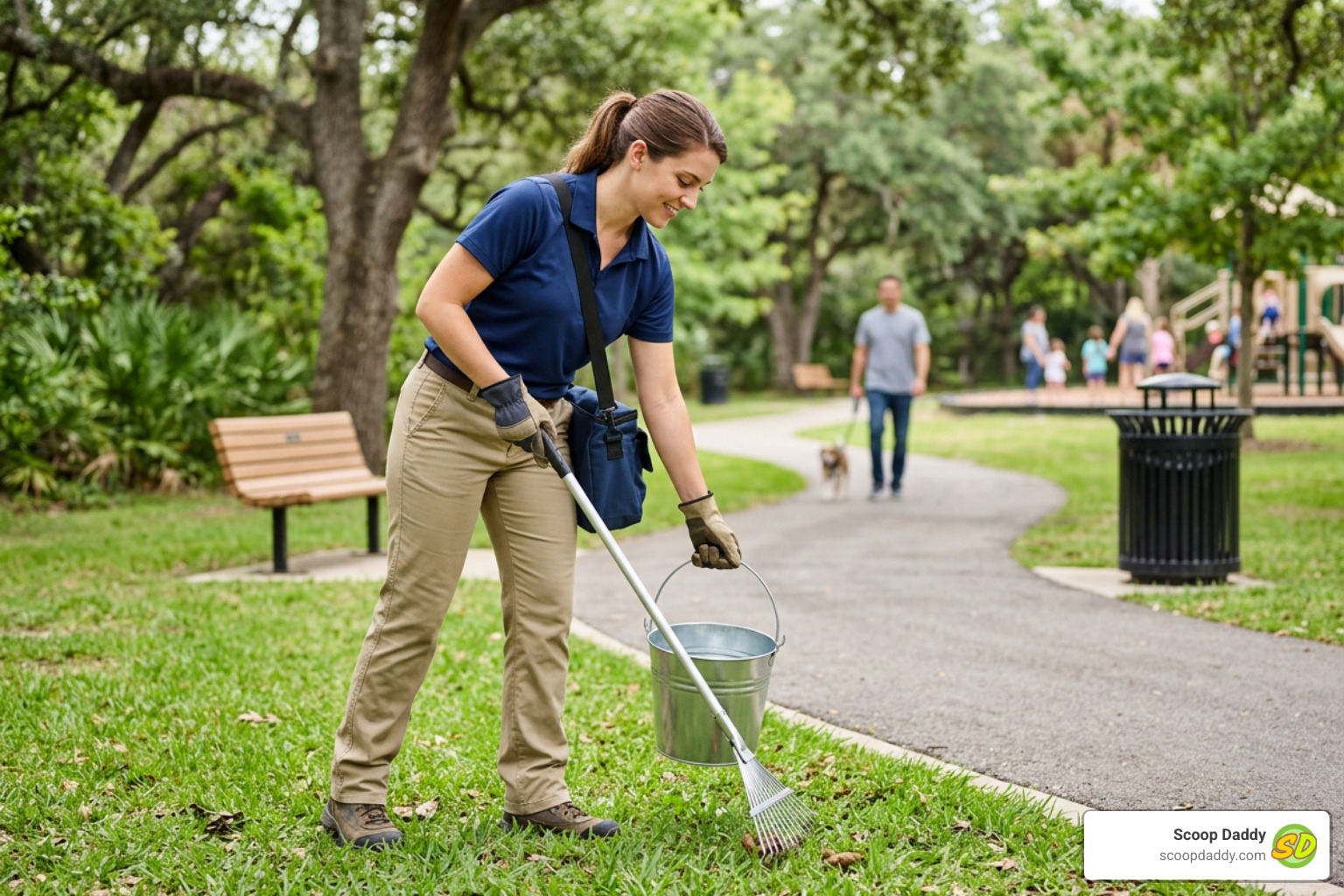
A commercial pet waste plan may include a mix of the following services:
- Common Area Scooping: Systematic sweeps of parks, walking paths, courtyards, and grassy perimeters to remove visible waste.
- Pet Waste Station Servicing: Emptying waste receptacles, replacing liners, and restocking bag dispensers.
- Grounds Sanitation: Applying pet-safe sanitizer or deodorizer options where appropriate.
- Litter And Light Trash Removal: Picking up loose trash around high-traffic pet zones to keep the area looking cleaner.
Pet Waste Station Installation And Maintenance
One of the most effective ways to encourage pet owners to clean up after their dogs is to make the process as convenient as possible. Installing dedicated pet waste stations in highly visible, accessible locations is the industry standard for encouraging compliance.
Professional station management can include far more than just emptying a trash bin. Depending on the property and service plan, station support may include:
- Placement Planning: Identifying visible, accessible station locations in high-traffic pet areas.
- Durable Hardware: Using outdoor receptacles and dispensers designed for commercial use in Southwest Florida conditions.
- Area Cleanup: Cleaning around each station to capture overflow, dropped waste, or loose litter.
- Bag Restocking: Keeping dispensers supplied so residents have fewer excuses for improper disposal.
By placing these stations strategically throughout your property, you make responsible cleanup easier for pet owners.
Specialized Add-On Services For Commercial Properties
Sometimes, basic scooping may not fully address odors or sanitation concerns in high-traffic outdoor spaces. Depending on the property’s needs, specialized add-on treatments may help improve cleanliness and appearance.
Common add-on options can include:
- Common Area Deodorizers: Pet-safe sprays designed to reduce lingering pet odors in shared spaces.
- Sanitizer Treatments: Disinfectant options intended for high-traffic pet areas.
- Brown Spot Support: Lawn appearance solutions that help address visible urine-related discoloration.
These treatments can provide an added layer of cleanliness for shared outdoor spaces.
How The Commercial Pet Waste Management Process Works
Outsourcing pet waste management should be straightforward for property managers, HOA boards, and commercial property owners. A clear plan helps keep service organized and reduces disruption to daily operations.
To help you evaluate your options, here is a comparison of how professional management stacks up against relying on in-house maintenance staff:
| Feature | In-House Maintenance Staff | Professional Waste Removal |
|---|---|---|
| Consistency | Can be delayed by urgent work orders | Scheduled service visits |
| Thoroughness | May be limited by time and staffing | Dedicated pet waste cleanup focus |
| Equipment | Standard maintenance tools | Tools designed for pet waste cleanup |
| Staff Morale | Unpleasant task for maintenance teams | Handled by a dedicated service provider |
| Accountability | Harder to track and verify | Service documentation may be available |
| Disposal | Often handled through on-site trash areas | Disposal method depends on the service plan |
Step-By-Step Operational Logistics
When a commercial property works with a professional service, the process typically follows a clear path.
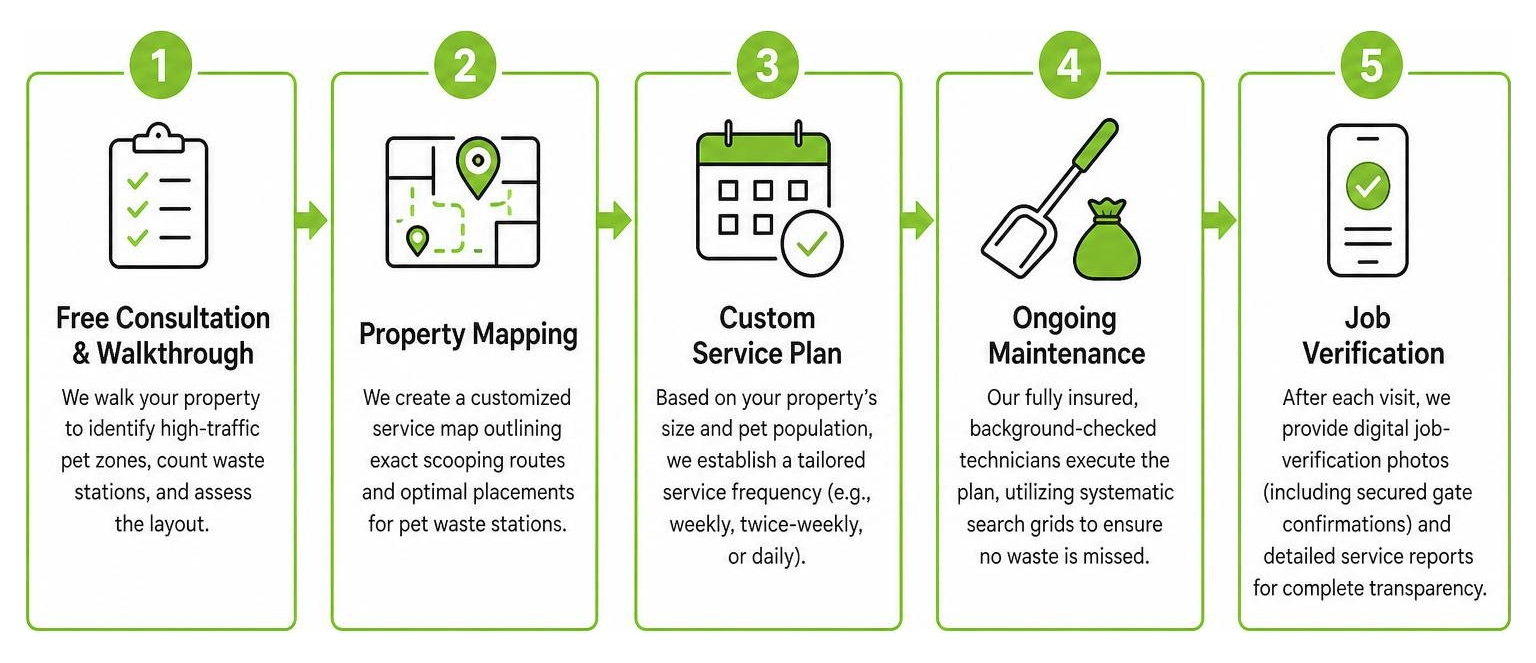
- Consultation And Walkthrough: The property is reviewed to identify common pet zones, waste station locations, and traffic patterns.
- Property Mapping: Service areas and priority zones are outlined for routine visits.
- Custom Service Plan: Service frequency is determined based on property size, usage, and pet activity.
- Ongoing Maintenance: Technicians follow the agreed service plan to remove visible pet waste from designated areas.
- Service Documentation: Depending on the provider and plan, documentation may be provided after visits.
This structured approach helps commercial properties maintain cleaner shared spaces over time. To understand how outsourcing this chore can save time for your business, read Why Professional Dog Poop Cleanup Is a Must-Have Time Saver.
The Financial Benefits Of Outsourcing Pet Waste Management
Many property managers hesitate to hire an outside service, assuming their internal maintenance team can handle the cleanup. However, tasking maintenance technicians with scooping poop can distract them from completing skilled work orders—like plumbing, electrical, and HVAC repairs—which may lead to longer tenant wait times and lower overall morale.
Furthermore, neglecting waste management can lead to hidden financial drains:
- Landscaping Replacement: Replacing sod ruined by pet waste and urine can be expensive.
- Resident Complaints: Odors and messy common areas can create ongoing management issues.
- Lower Occupancy Rates: A dirty property can struggle to attract and retain residents.
Outsourcing this task creates a more consistent approach to pet waste management while helping maintenance teams stay focused on skilled tasks.
Key Factors In Choosing A Commercial Pet Waste Removal Provider
When selecting a commercial pet waste partner, it is useful to look beyond basic service offerings. Because technicians may access private common areas, property managers and boards should confirm important details before service begins.
Information to review may include:
- Insurance Coverage: Confirm that the provider carries appropriate insurance for commercial work.
- Staff Standards: Ask how technicians are trained, identified, and managed while on property.
- Sanitation Protocols: Review how tools, boots, and buckets are cleaned between service areas.
- Service Expectations: Confirm the schedule, scope of work, communication process, and issue-resolution procedure in writing.
Clear expectations help keep commercial pet waste removal organized and easier to manage.
Frequently Asked Questions About Commercial Pet Waste Management
How Often Should Commercial Pet Waste Stations Be Serviced?
The ideal service frequency depends on the size of your community, the number of registered pets, and the amount of foot traffic. For some apartment complexes and HOAs, weekly service may be sufficient. High-density properties, popular dog parks, and retail centers may require more frequent visits to help prevent overflowing bins and unpleasant odors.
Do Commercial Pet Waste Removal Services Require Long-Term Contracts?
Service terms vary by provider and property needs. Commercial properties should review the service agreement carefully so schedules, expectations, station responsibilities, and cancellation terms are clear. For more details on general service questions, review the Frequently Asked Questions.
How Does Southwest Florida’s Climate Affect Pet Waste Decomposition?
Southwest Florida’s hot, humid climate and heavy seasonal rains do not help pet waste decompose cleanly. Instead, the intense heat can intensify unpleasant odors and attract pests like flies and rodents.
During the rainy season, frequent downpours can wash waste residue across lawns and into local storm drains, spreading bacteria through shared outdoor spaces. Because of these SWFL weather patterns, consistent, year-round waste removal is important for keeping properties sanitary and odor-free.
Conclusion
Managing pet waste is a demanding job, but it is essential for maintaining the health, beauty, and value of your Southwest Florida property. From Naples and Bonita Springs to Estero and Fort Myers, professional commercial pet waste removal helps keep shared outdoor spaces clean, safe, and welcoming for residents, guests, and pets.
A consistent pet waste management plan can support cleaner common areas, reduce resident complaints, and help protect landscaping throughout SWFL’s hot, rainy climate.
You May Like
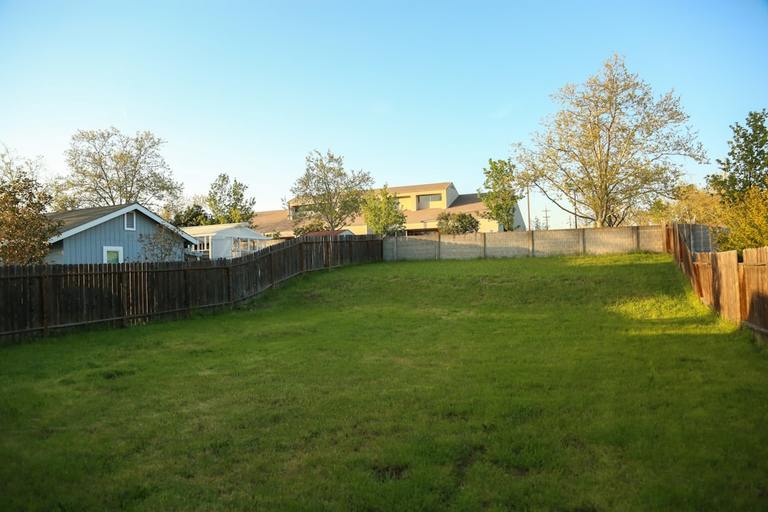
A Practical Guide to Pet Waste Removal
Why a Pet Waste Service Is Worth Every Penny A pet waste service sends trained technicians to your yard on a regular schedule to remove dog poop, bag it, and haul it away — so you never have to touch it. Here's how it works in a nutshell: Sign up
Read More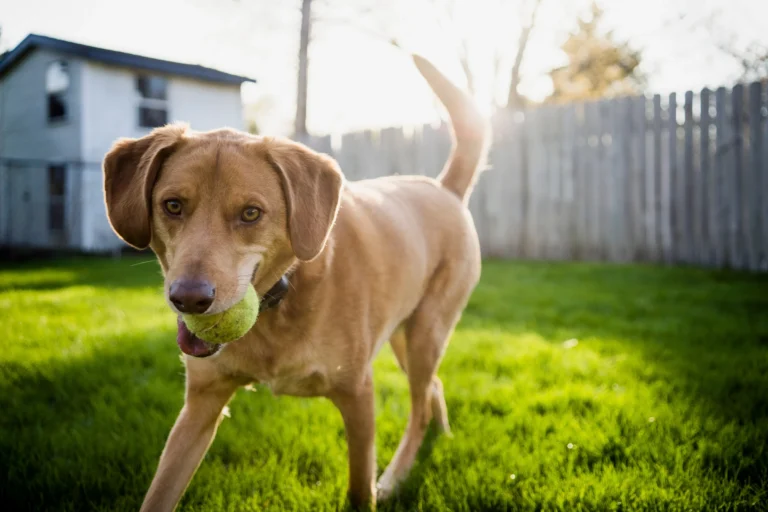
How Pet Waste Removal Services Help Maintain Property Value and Curb Appeal
Doggy Landmines Don’t Impress the Neighbors Brown Spots & Burned Grass = Bye-Bye Curb Appeal Smell That? Neither Should You (or Your Guests) A Cleaner Yard Shows You Care Scoop Daddy = Property Value’s Secret Weapon Your dog is part of the family, but their waste? Not exactly boosting your
Read More
How to Survive the Annual Post-Winter Backyard Poop Apocalypse
What Every Southwest Florida Dog Owner Needs to Know About Spring Poop Clean Up Spring poop clean up is the process of removing accumulated dog waste from your yard before Florida's rainy season arrives — and in Southwest Florida, it matters more than most people realize. Here's the quick version
Read More