
How to Survive the Annual Post-Winter Backyard Poop Apocalypse
What Every Southwest Florida Dog Owner Needs to Know About Spring Poop Clean Up
Spring poop clean up is the process of removing accumulated dog waste from your yard before Florida’s rainy season arrives — and in Southwest Florida, it matters more than most people realize.
Here’s the quick version of what you need to do:
- Walk your entire yard and identify high-traffic pet waste zones
- Clear away debris like fallen palm fronds and leaves that hide waste
- Scoop all waste systematically, working in a grid pattern
- Double-bag and dispose of waste in your regular trash
- Sanitize and deodorize the lawn with an enzyme-based treatment
- Schedule regular pickups to prevent buildup before the next rainy season
In Southwest Florida, year-round warmth and a distinct dry-to-wet seasonal shift create a unique challenge for pet owners.
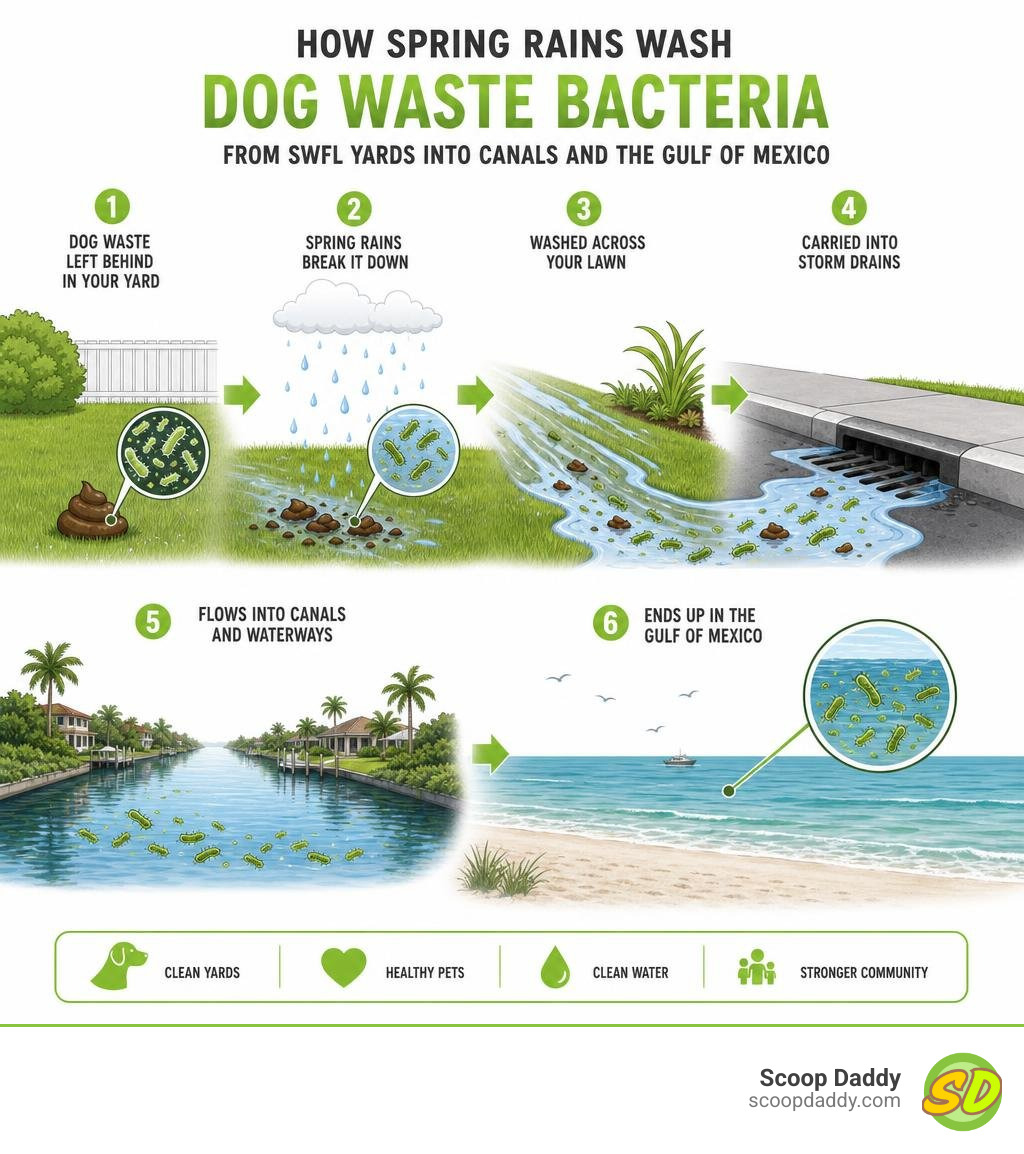
Dog waste piles up quietly during the drier winter months — often tucked under shrubs, along fence lines, or blended into landscaping debris. Then, when the heavy spring rains arrive, all of that bacteria-laden waste gets washed across your lawn, into storm drains, and eventually into local canals and waterways.
A single dog produces roughly 50 to 70 pounds of waste over a four-month period. If regular cleanup has been skipped, that’s potentially 300 to 400 individual piles waiting in your yard — a genuine backyard poop apocalypse.
The good news? It’s completely fixable. This guide walks you through exactly how.
Simple guide to spring poop clean up:
The Hidden Dangers of Neglecting Your Spring Poop Clean Up
When left ignored, dog waste does not simply “melt” into the ground or act as a helpful fertilizer. In our unique Southwest Florida climate, leaving pet waste to sit in the yard creates significant health and environmental hazards.
First, let’s talk about the microscopic guests living in that waste. Dog poop is a primary breeding ground for harmful bacteria and parasites, including E. coli, Salmonella, roundworms, hookworms, and Giardia. In Southwest Florida, our warm weather acts as a year-round incubator. The heat accelerates bacterial growth, allowing these microscopic threats to multiply rapidly.
Our sandy Florida soil offers very little filtration. When dog waste decomposes, these pathogens sink directly into the soil where your pets play and where you walk barefoot. Hookworm larvae, for example, can penetrate human skin on contact, leading to uncomfortable infections. Children playing in the yard are particularly at risk of contracting zoonotic diseases from touching contaminated soil and accidentally transferring it to their mouths.
Beyond your property line, there is a massive environmental cost. Southwest Florida is famous for its intricate system of drainage canals, lakes, and close proximity to the Gulf of Mexico. When heavy afternoon spring rains hit Fort Myers, Naples, Estero, or Bonita Springs, the stormwater washes over yards, carrying dissolved and decaying pet waste directly into local storm drains.
This runoff flows straight into our local waterways untreated. The excess nitrogen and phosphorus from dog waste fuel toxic algae blooms, deplete oxygen levels in the water, and threaten local marine life. Understanding the environmental benefits of proper pet waste disposal is key to keeping our local SWFL ecosystems clean, beautiful, and safe for everyone to enjoy.
Preparing Your Southwest Florida Yard for a Fresh Start
Before you grab a shovel and start scooping, a little preparation goes a long way. Trying to find and remove waste in an untamed Florida yard is a recipe for missed spots and messy shoes.
Start by clearing away tropical debris. In Southwest Florida, our yards are constantly collecting fallen palm fronds, large sea grape leaves, oak leaves, and loose mulch. This debris creates a “roof” over pet waste, hiding hundreds of piles from plain sight. Rake up these large leaves and pile up the palm fronds first. Be sure to use a rake to gently move aside loose mulch in landscaping beds where dogs love to hide their business.
Next, ensure clear access to all areas of your yard. Unlock your side gates, check the latches, and move any patio furniture, garden hoses, or kids’ toys out of the way. If you are hiring professionals to tackle the job, having clear pathways ensures they can clean every square inch of your turf safely and efficiently.
When it comes to lawn care, timing is everything. Never mow your lawn before completing a thorough spring poop clean up. Running a lawnmower over dog waste does not make it disappear; instead, the spinning blades chop the waste into tiny particles, flinging bacteria across your entire yard, your landscaping, and your home’s exterior. It also coats the underside of your mower deck and blades in fecal matter, creating a terrible smell every time you cut the grass.
For a complete breakdown of safe waste management practices, check out our practical guide to pet waste removal to set your yard up for success.
Step-by-Step DIY Spring Poop Clean Up Methods
If you decide to tackle this massive chore yourself, you need a systematic plan. Wandering around the yard aimlessly will leave you exhausted and guaranteed to step in a missed pile. Follow this systematic process to reclaim your lawn:
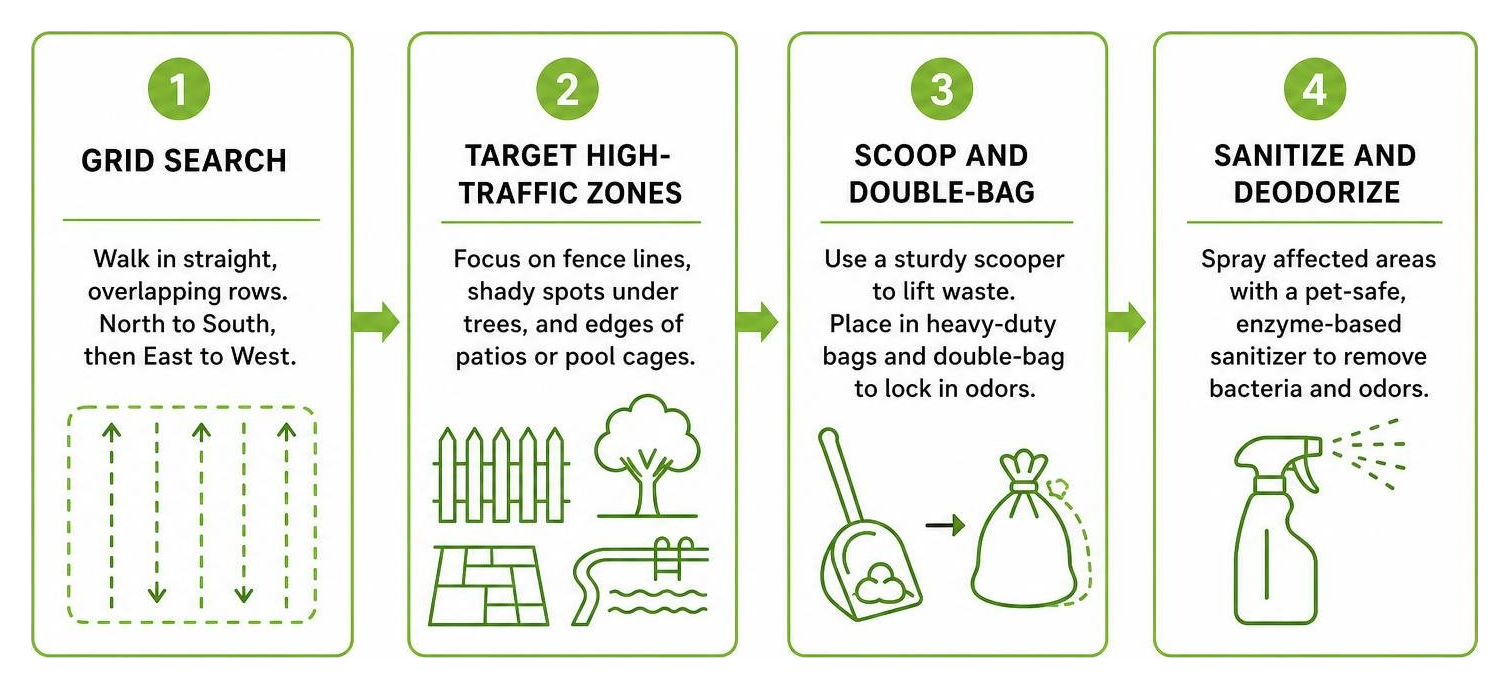
- Step 1: Divide and Conquer with a Grid Search. Do not just look around randomly. Walk your yard in straight, overlapping rows—just like mowing a lawn. Walk North to South, then repeat the process walking East to West. This grid pattern ensures you cover every square foot.
- Step 2: Target the High-Traffic Pet Zones. Focus heavily on your dog’s favorite spots. This includes the physical boundaries of your yard (fence lines), shady spots under trees where they lounge, and the edges of paved patios or pool cages.
- Step 3: Scoop and Double-Bag. Use a sturdy scooper to lift the waste cleanly from the grass. Deposit the waste into heavy-duty, leakproof trash bags. Double-bagging is essential in the Florida heat to prevent tears and contain intense odors in your outdoor trash bin.
- Step 4: Sanitize and Deodorize. Once the physical waste is gone, the bacteria remain. Spray the affected areas of your lawn with a pet-safe, enzyme-based outdoor sanitizer. These enzymes actively eat the organic matter and bacteria, neutralizing odors at the molecular level rather than just masking them.
Essential Tools for an Efficient Spring Poop Clean Up
Having the right equipment makes a dirty job much more tolerable. If you are going the DIY route, leave the flimsy plastic grocery bags behind and arm yourself with heavy-duty tools.

- Long-Handled Pooper Scoopers: Save your back. A scooper with an adjustable handle (ideally between 32 and 40 inches) allows you to clean the yard while standing completely upright.
- Metal Rake and Tray Sets: For Florida’s thick St. Augustine or Zoysia grass, a metal wire rake is far superior to a plastic spade. The tines of the rake slide between the grass blades to lift soggy or dried waste cleanly without tearing up your lawn.
- Heavy-Duty Waste Bags: Look for thick, puncture-resistant bags. Scented options (like lavender) can help mask odors while you work.
- Enzyme-Based Yard Deodorizing Sprays: These attach directly to your garden hose, making it easy to spray down grass, patios, and fence lines to destroy lingering odors and bacteria.
Professional Removal vs. DIY: What Is Best for Your Lawn?
Tackling a multi-month accumulation of dog waste is no small feat. It requires hours of physical labor in the humid Florida sun, a strong stomach, and the right tools. Many homeowners find that their weekends are better spent enjoying the beach or golfing rather than dodging landmines in the backyard.
To help you decide which route is best for your home, here is a direct comparison of DIY cleanup versus hiring a professional service:
| Feature | DIY Spring Cleanup | Professional Service (Scoop Daddy) |
|---|---|---|
| Time Investment | 4 to 6 hours of hot, exhausting weekend work | Zero time spent; your weekend is completely yours |
| Physical Labor | High; bending, walking, lifting heavy bags in the heat | None; professional technicians handle all the work |
| Thoroughness | Moderate; easy to miss piles hidden in thick grass | High; trained technicians use systematic search patterns |
| Sanitization | Often skipped or limited to basic hose spraying | Thorough application of professional-grade sanitizers |
| Waste Disposal | Smelly bags sit in your personal trash can | Double-bagged and placed neatly in your designated bin |
| Equipment Costs | Upfront costs for scoopers, rakes, bags, and sprays | Included in the service; all tools are sanitized between yards |
Outsourcing this chore is one of the easiest ways to reclaim your free time. If you want to understand why so many pet owners in Fort Myers, Naples, and Estero are making the switch, read more on why professional dog poop cleanup is a must-have time saver.
Frequently Asked Questions About Spring Yard Sanitation
To help you keep your family, pets, and lawn safe, we have answered some of the most common questions about yard sanitation in Southwest Florida. For more helpful answers, visit our complete page of frequently asked questions.
How Long Do Dog Poop Bacteria and Parasites Survive in Florida Soil?
In our warm, humid sandy soil, pathogens can survive for months—and in some cases, years. The consistent warmth of Southwest Florida allows bacteria and parasites to remain active year-round.
Roundworm eggs are incredibly resilient and can remain viable in the soil for years, posing a long-term risk to pets and children. Hookworm larvae thrive in warm, moist sandy soil and can survive for several weeks waiting for a host. Regular cleanup is the only way to break the cycle of reinfection.
Does Heavy Spring Rain Wash Away Dog Waste Safely?
No. Heavy rain does not wash dog waste away safely; it simply liquifies it and spreads the contamination across a larger area.
The runoff carries the microscopic bacteria and parasite larvae into your landscaping, onto your walkways, and directly into the stormwater system. This water eventually empties into our beautiful local canals, rivers, and bays, contributing to water pollution and health hazards for local swimmers and wildlife.
Can Dog Waste Be Used as a Natural Fertilizer for Lawns?
This is a common myth, but dog waste is actually toxic to your grass. Unlike cows, which eat grass, dogs are carnivores. Their protein-rich diet results in waste that is highly acidic and exceptionally high in nitrogen.
When left on your lawn, dog poop will burn and kill the grass underneath, leaving unsightly yellow or brown dead spots. Additionally, the parasites and bacteria present in dog waste make it unsafe to use anywhere near edible gardens or areas where families gather.
Conclusion
Surviving the annual backyard poop apocalypse is all about taking action before the heavy spring rains arrive. By clearing away tropical debris, utilizing a systematic grid search, and properly sanitizing your lawn, you can protect your family’s health and play an active role in keeping Southwest Florida’s beautiful waterways clean.
Once you have achieved a clean slate, consistency is key. You can prevent future buildup by establishing a designated potty zone for your dog, maintaining a regular scooping schedule, and exploring professional maintenance options. Discover more tips on how to get a clean yard and keep it that way to enjoy a spotless lawn year-round.
If you would rather skip the dirty work entirely, let us handle it. At Scoop Daddy, we provide reliable, tech-driven pet waste removal services for busy homeowners and commercial properties across Southwest Florida, including Fort Myers, Naples, Estero, and Bonita Springs. Contact us today to schedule your yard cleanup and get back to enjoying your fresh, clean backyard!
You May Like
How to Get a Clean Yard and Keep It That Way
A Clean Yard Starts With the Right Plan Clean yard landscaping is about more than just mowing the grass. It's the combination of smart design, regular maintenance, and the right cleanup habits that keep your outdoor space looking sharp — and feeling safe for your family and pets. Quick answer:
Read More
Why Even Pick Up Poop? The Dangers of Abandoned Pet Waste
Is Dog Waste Considered Pollution? In Short, Yes! The Health Hazards of Dog Poop for Kids and Pets How Dog Poop Affects the Home: Smells, Bugs, and More The Financial Impact of Dog Poop on Lawn Maintenance Let the Professionals at Scoop Daddy Handle Your Dog Poop Woes Frequently Asked
Read More
Dog Waste Station Amazon Guide: Commercial and Backyard Receptacles
The Best Dog Waste Stations on Amazon for Backyards and Commercial Properties If you're shopping for a dog waste station on Amazon, here are the top options to know about right now (June 2026): Pick Best For Key Feature Zero Waste USA (Green or Black) Commercial & residential Rustproof aluminum,
Read More