
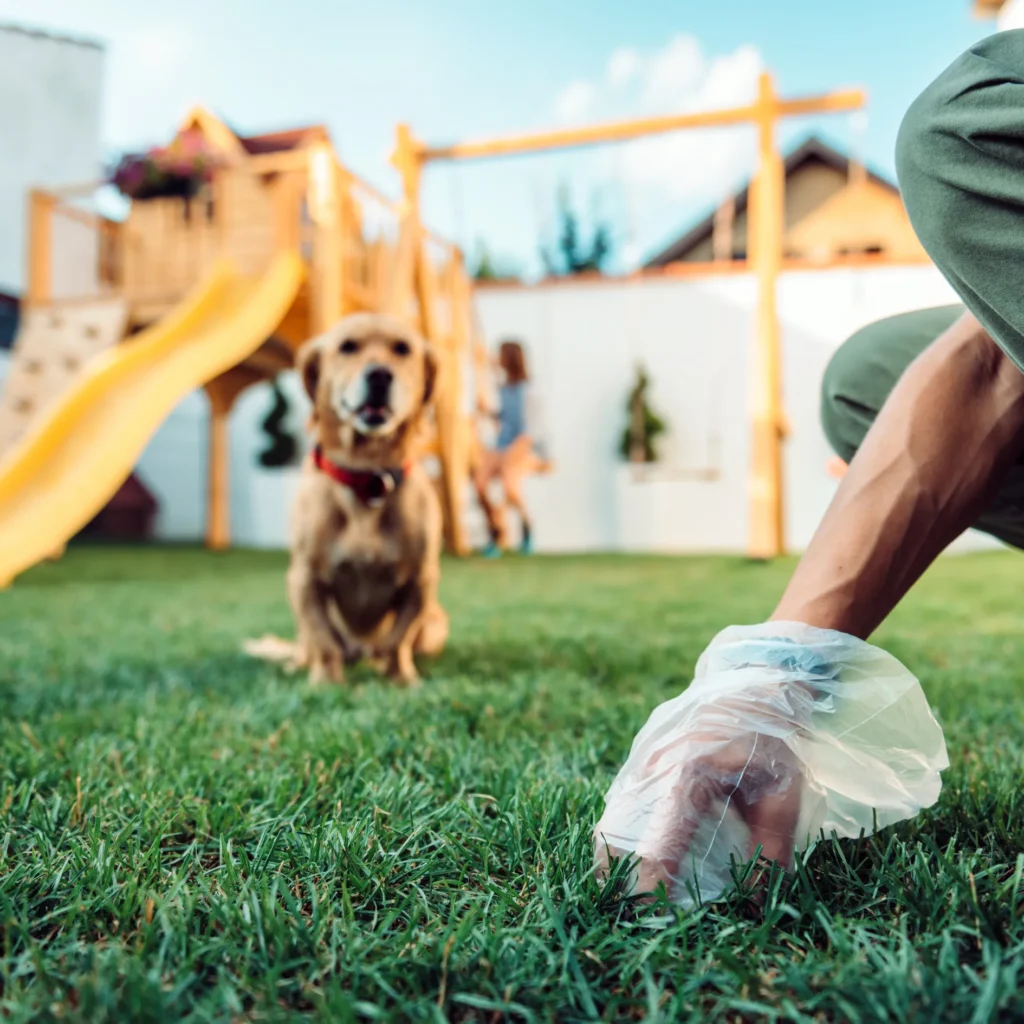
Doggie Doo Clean Up 101: Simple Steps for a Spotless Home
Why Every Pet Owner Needs to Clean Up After Pets
Knowing how to clean up after pets quickly and correctly can protect your family, your lawn, and even your neighborhood’s water supply.
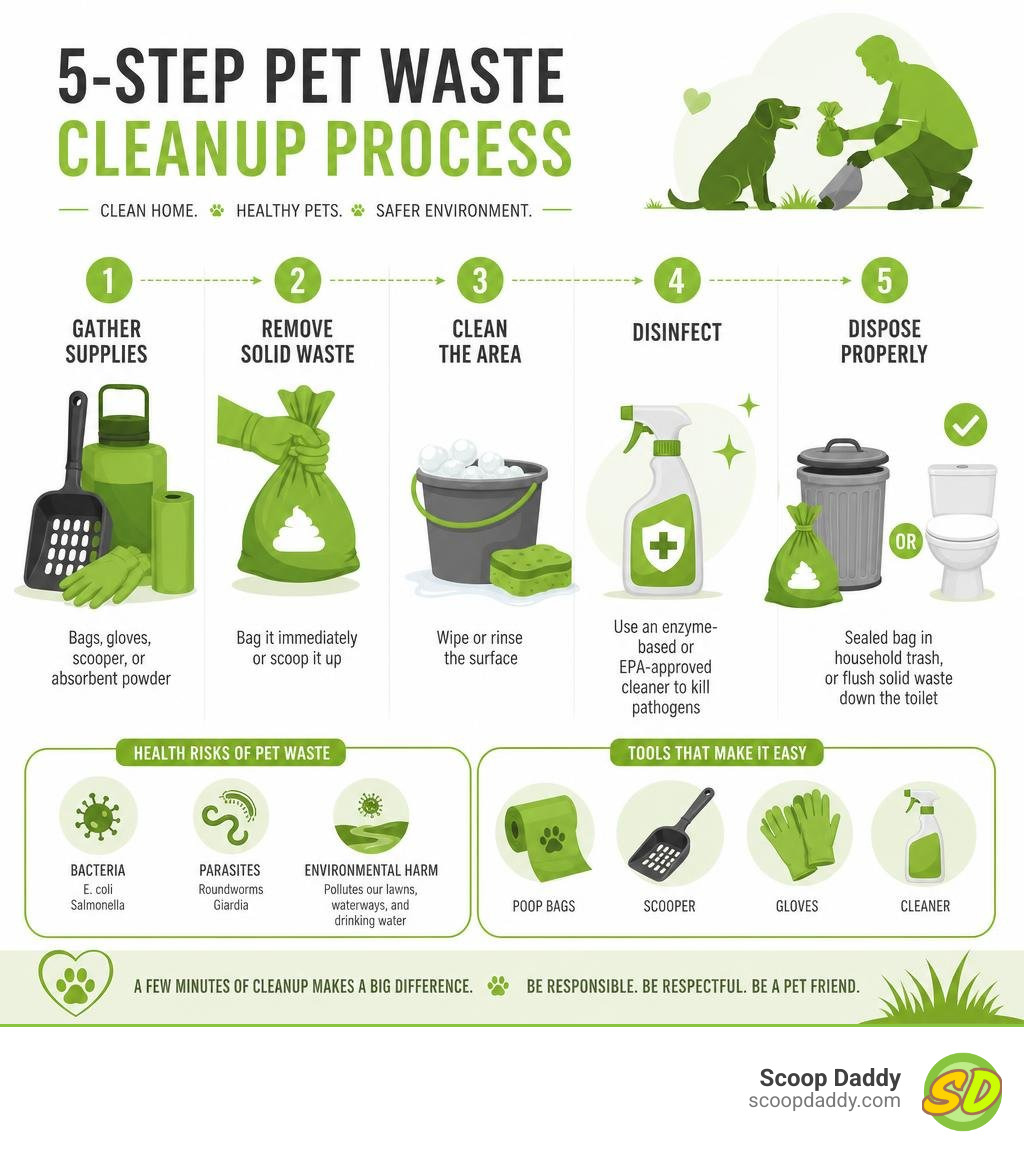
Quick answer — 5 steps to clean up after pets:
- Gather supplies — bags, gloves, scooper, or absorbent powder
- Remove solid waste — bag it immediately or scoop it up
- Clean the area — wipe or rinse the surface
- Disinfect — use an enzyme-based or EPA-approved cleaner to kill pathogens
- Dispose properly — sealed bag in household trash, or flush solid waste down the toilet
Dog waste is a bigger problem than most people realize. Americans produce roughly 10 million tons of dog waste every year — enough to fill the Empire State Building 21 times. Left on the ground, that waste doesn’t just smell bad. It spreads bacteria like E. coli and Salmonella, parasites like roundworms and Giardia, and washes into local waterways through storm drains.
For busy homeowners in Southwest Florida, the warm climate makes things worse. Heat and humidity speed up the spread of pathogens and attract flies within minutes of waste being left outside.
The good news? Cleaning up is straightforward when you have the right tools and habits.
Why You Must Clean Up After Pets Immediately
When your dog or cat does their business, the clock starts ticking. Leaving waste in the yard or on your indoor floors is a recipe for health and hygiene issues.
Pathogen Prevention and Fly Strike
Leaving pet feces outdoors attracts flies almost instantly. Within minutes, flies will lay eggs on the waste, which can quickly lead to maggots. If your pet spends time outdoors, they can suffer from “fly strike,” a painful condition where flies bite their ears or skin, or worse, cause maggot infections in open wounds or soiled fur.
Furthermore, even healthy-looking pets can carry invisible pathogens. Diseases can spread to both humans and other animals through feces. According to the CDC guidelines on pathogen safety, proper sanitation and disinfection are critical to stopping the spread of zoonotic diseases (illnesses that jump from animals to humans).
Monitoring Pet Health Through Feces
Routine cleanup isn’t just a chore; it is an invaluable diagnostic tool. By picking up waste immediately, we can monitor our pets’ internal health.
- Normal Pet Feces: Firm but not rock-hard, tubular in shape, consistent brown color, and in long segments.
- Abnormal Pet Feces: Loose, watery, containing mucus, or showing unusual colors (red, black, yellow).
Regularly checking their stool during cleanup allows us to spot early signs of intestinal parasites. Common parasites that infect pets through contaminated feces include:
- Roundworms: Extremely resilient eggs that can survive in the soil for years.
- Hookworms: Parasites that hook onto the intestinal lining and feed on blood.
- Whipworms: Resilient parasites that cause severe digestive distress.
- Coccidia and Giardia: Microscopic protozoa that thrive in moist environments, puddles, and damp grass, spreading rapidly after rainfall.
If you ignore the yard, you risk your dog stepping in old waste and re-infecting themselves. To dive deeper into these hidden hazards, check out our guide on Why Even Pick Up Poop? The Dangers of Abandoned Pet Waste.
The Environmental and Neighborhood Impact of Leftover Waste
Many people assume that because wild animals poop outside, pet waste is harmless to the environment. This is a dangerous misconception.

Storm Drains and Waterway Contamination
Unlike wildlife, which is spread out naturally, domestic pets live in high concentrations in residential areas. When it rains in Southwest Florida, stormwater washes uncollected dog waste directly into storm drains. These drains do not lead to water treatment plants; they empty directly into our local canals, rivers, and coastal waters.
Dog waste is incredibly high in nitrogen and phosphorus. When these nutrients enter the water, they trigger rapid, harmful algal blooms. These blooms block sunlight, deplete oxygen levels in the water, and release toxins that kill fish and other marine life.
Lawn Damage and Soil Contamination
Dog feces are highly acidic due to their high-protein diets. Leaving waste on your lawn doesn’t fertilize it; it actually burns the grass, leaving ugly brown patches and dead spots that can take months to recover.
Additionally, uncollected waste damages neighbor relations and lowers property values. No one wants to live next to a yard that smells of rotting waste and is swarming with flies. To learn more about how proper disposal keeps our local ecosystem safe, read about The Environmental Benefits of Proper Pet Waste Disposal.
How to Clean Up After Pets Indoors and Outdoors
To maintain a clean, hygienic home, we must use different strategies for indoor accidents and outdoor yard maintenance.
To keep your lawn green and safe for your family, it helps to understand why pet waste should never be treated like a natural lawn booster. Dog poop can burn grass, spread parasites, and wash into storm drains during Southwest Florida rainstorms. For a deeper look at the lawn and health risks, read our guide to why dog poop is not fertilizer and how to keep your yard safe and clean.
Essential Tools to Clean Up After Pets Indoors
Indoor accidents require rapid absorption and deep sanitization to prevent lingering odors and repeat marking.
- UV Stain Detection: Older, dried urine stains can be invisible to the naked eye but still emit odors that draw your pet back to the same spot. A UV blacklight makes these hidden spots glow so you know exactly where to clean.
- Absorbent Powders: For liquid messes like urine, vomit, or diarrhea on hard floors, traditional mopping can spread the mess around. Products like Sprinkle & Sweep Pet Mess and Odour Clean Up (also available as Sprinkle and Sweep Pet Accident Cleanup Deodorizer) use plant-based dry absorbents and coconut-activated carbon to solidify liquid messes on contact, allowing you to sweep them up without scrubbing.
- Foaming Enzyme Cleaners: For carpets and rugs, a professional-grade Pet Cleanup Kit containing foaming enzyme solutions is essential. Enzymes break down the organic proteins in urine and feces, permanently destroying the scent molecules so your pet won’t re-mark the area.
Best Practices to Clean Up After Pets Outdoors
Cleaning the yard requires durable tools and consistent routines to manage accumulation.
- Use the Right Tools: A heavy-duty, long-handled pooper scooper and a yard rake make cleanup much easier on your back.
- Bag and Seal: Always place waste in durable, tightly sealed bags before throwing it in your outdoor trash bin to prevent flies and odor buildup.
- Yard Deodorizers: Spraying your lawn with non-toxic, pet-safe enzyme sprays can help neutralize lingering odors, especially during the hot summer months.
| Disposal Method | Best For | Pros | Cons |
|---|---|---|---|
| Double-Bagged Trash | Daily outdoor cleanup | Convenient, widely accepted | Adds plastic waste to landfills |
| Flushing | Indoor accidents | Environmentally friendly | Cannot flush heavy clay litter or bags |
| Burying | Rural properties | Returns nutrients to deep soil | Must be 200ft from water, 6-8 inches deep |
| Professional Service | Busy households, multi-pet | Saves time, highly thorough | Recurring subscription cost |
Frequently Asked Questions About Pet Waste
Is dog poop a good fertilizer for lawns?
No. Unlike cow or horse manure, which comes from grass-eating animals, dogs eat meat. This makes their waste highly acidic and packed with nitrogen. Instead of helping your grass grow, dog poop will burn and discolor it, leaving dead patches. It also contains harmful pathogens that can linger in your soil for years, making it unsafe to use anywhere near edible gardens.
What are the legal fines for not picking up pet waste?
Many cities have strict “Pooper Scooper Laws” to protect public health. Fines for failing to clean up after your pet in public spaces can range from $50 to $250 or more depending on municipal codes. For residents in Southwest Florida, staying compliant with local ordinances is essential to keep our communities clean and avoid costly penalties.
How often should I clean my yard of pet waste?
For a single dog, you should scoop your yard at least once a week. If you have multiple dogs, you should clean the yard every two to three days to prevent parasite buildup and heavy odors. If you find yourself falling behind, it might be time to check out the 5 Signs It’s Time to Hire a Professional Pet Waste Removal Service.
Conclusion
Maintaining a clean yard and home doesn’t have to be a constant struggle. By understanding the health risks of uncollected waste and establishing a simple cleanup routine, you can keep your family safe, your lawn green, and your neighbors happy.
But let’s be honest — scooping poop is rarely anyone’s favorite chore. If you are short on time or simply want to hand off the dirty work, we are here to help.
At Scoop Daddy, we provide professional, reliable pet waste removal services for residential and commercial properties throughout Southwest Florida, including Fort Myers, Naples, Estero, and Bonita Springs. Our tech-driven scheduling makes keeping your yard spotless entirely hands-free. Sign up for our professional pet waste removal services today!
You May Like
How to Find a Dog Feces Removal Service Fast by Using Local Search
Find Dog Feces Removal Help Fast in Southwest Florida Dog feces removal is easiest to arrange when you search locally, check who serves your SWFL neighborhood, and compare recent reviews and service details before you book. For busy dog owners, a local provider can help keep the yard cleaner, reduce
Read More
Dog Poop Container Outdoor Guide: Trash Cans That Actually Block Odors
The Best Outdoor Dog Poop Containers at a Glance Choosing the right dog poop container outdoor setup makes a real difference in keeping your yard clean, odor-free, and safe for your family and pets. Here are the top options to consider: Container Type Best For Capacity Odor Control Compact pail
Read More
The Environmental Benefits of Proper Pet Waste Disposal
Wait…Dog Poop Is Bad for the Planet? Rain + Poop = Polluted Waterways It’s Not Fertilizer. It’s a Health Hazard. The Ripple Effect: How Responsible Dog Parents Make a Difference Scoop Daddy’s Role in a Cleaner, Greener Neighborhood Wait…Dog Poop Is Bad for the Planet? As loving dog parents, it’s
Read More