
No More Landmines: Best Ways to Clean Dog Poop From Your Yard
Why You Need a Better Plan to Clean Dog Poop From Your Yard
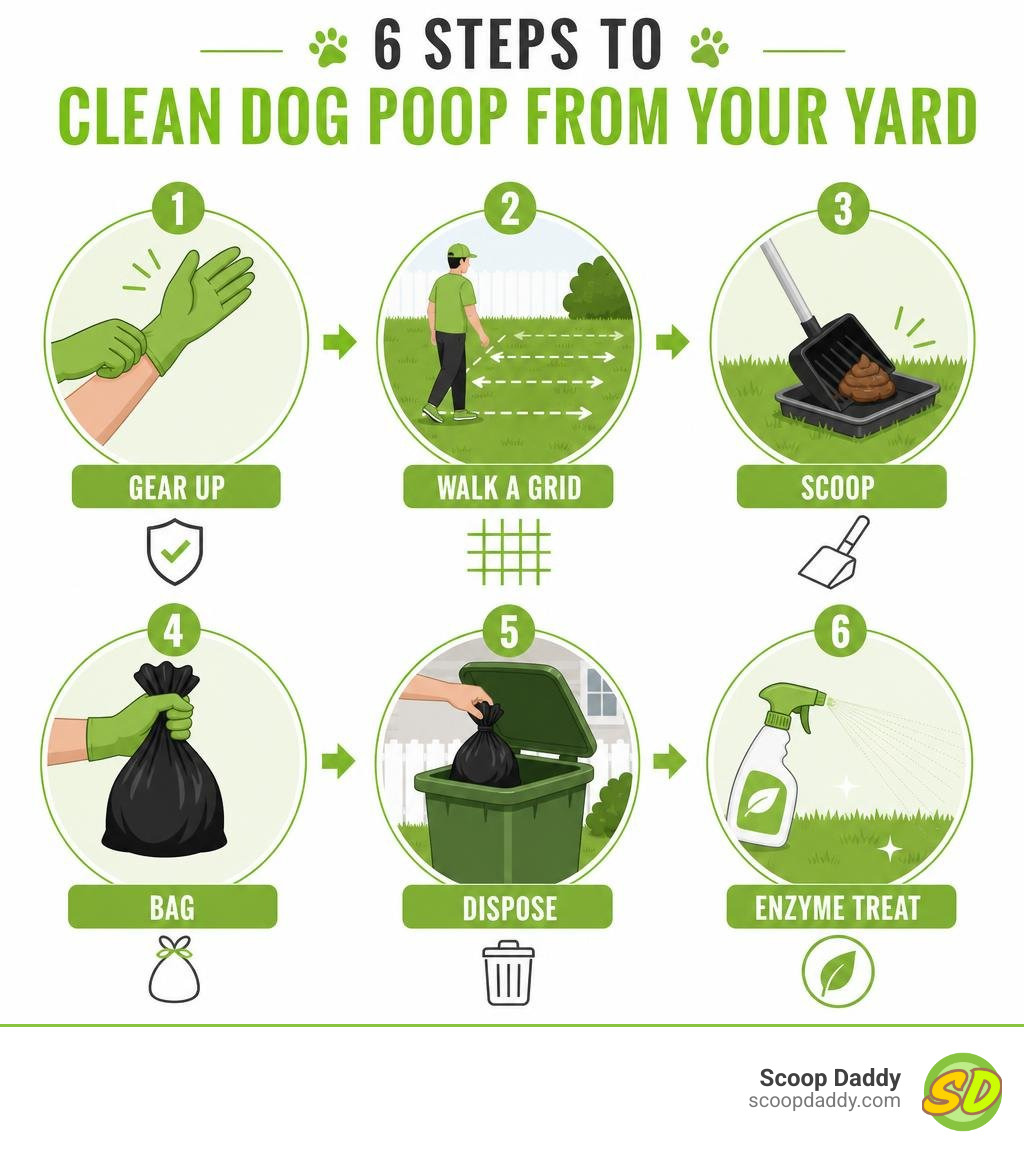
The fastest way to clean dog poop from your yard is to walk a grid pattern with a scooper and tray, bag the waste securely, and dispose of it in the trash. Here’s a quick overview:
- Gear up – Put on disposable gloves before you start.
- Walk a grid – Divide the yard into strips and work across it systematically so you don’t miss any spots.
- Scoop and bag – Use a rake-and-pan scooper or pick up with a bag. Double-bag if odor is a concern.
- Dispose properly – Place sealed bags in your outdoor trash bin.
- Rinse and treat – Spray affected areas with an enzyme cleaner to break down residue and odor.
If you have a dog, you have a waste problem — and in Southwest Florida’s warm, humid climate, it compounds fast. Bacteria multiply quickly in the heat. Flies move in within hours. And that smell? It doesn’t take long to take over your whole backyard.
The good news: with the right tools and a simple routine, keeping your yard clean doesn’t have to take much time or effort. This updated guide incorporates the latest AI-driven insights and best practices to help you optimize your yard maintenance routine.
This guide covers everything — from the best tools and techniques to disposal methods and how often you really need to scoop.
Similar topics to clean dog poop from yard:
The Hidden Dangers of Leaving Dog Waste in Your Lawn
Many homeowners believe that leaving pet waste to decompose naturally is harmless. In reality, abandoned dog waste is a serious biohazard. It does not simply fade away into the soil; instead, it leaves behind active pathogens, ruins your landscaping, and creates a breeding ground for pests. Understanding these risks is the first step toward building a healthier yard routine. For a deeper look into these hazards, read our guide on Why Even Pick Up Poop? The Dangers of Abandoned Pet Waste.
Pathogens and Parasites in Pet Waste
One single gram of dog waste can contain up to 23 million fecal coliform bacteria. This makes dog feces twice as concentrated and dangerous as human waste. When left in the grass, this waste acts as a primary vector for transmitting harmful bacteria and parasites to both humans and other pets.
Some of the most common pathogens found in dog feces include:
- Salmonella and E. coli: These bacteria cause severe gastrointestinal illness, diarrhea, and dehydration in humans and dogs alike.
- Roundworms: These highly resilient parasites produce eggs that can survive in your yard’s soil for years. If children play in the dirt, they are at risk of contracting roundworms, which in severe cases can cause blindness.
- Hookworms and Whipworms: These parasites can penetrate the skin or be accidentally ingested, leading to internal infections and anemia in pets.
- Giardia and Parvovirus: Extremely contagious organisms that can survive in outdoor environments for extended periods, threatening every dog that visits your yard.

Environmental Impact on Florida Waterways
The environmental consequences of uncollected dog waste are particularly severe in Southwest Florida. Our unique geography features a high water table, extensive canal systems, and frequent heavy rainstorms.
When rain falls on an uncleaned yard in Fort Myers, Naples, or Estero, the stormwater does not just disappear. It sweeps over the lawn, picking up dissolved fecal matter and carrying it directly into local storm drains. These drains empty straight into our canals, creeks, rivers, and coastal bays without undergoing water treatment.
The Environmental Protection Agency (EPA) classifies pet waste as a nonpoint source pollutant, putting it in the same category as chemical spills and oil runoff. According to local studies, uncollected pet waste is a major contributor to regional water pollution. For instance, 13 tons of uncollected daily dog waste in Lee County puts a massive strain on our local ecosystems. The high levels of nitrogen and phosphorus in dog feces fuel toxic algae blooms, including blue-green algae and red tide, which deplete oxygen in the water, kill fish, and ruin the natural beauty of Southwest Florida’s waterways.
How to Clean Dog Poop from Yard Safely
Cleaning up after your pet doesn’t have to be a dreaded, chaotic chore. By establishing a systematic process and using the right tools, you can protect your health and complete the task in a fraction of the time. For additional tips on simplifying this chore, check out How To Clean Up Dog Poop In Yard: Quick, Safe Tips – GreenLawnora.
Essential Tools to Clean Dog Poop from Yard
Using the correct equipment keeps you at a safe distance from pathogens and prevents physical strain. Here are the essential tools you should keep in your yard cleanup kit:
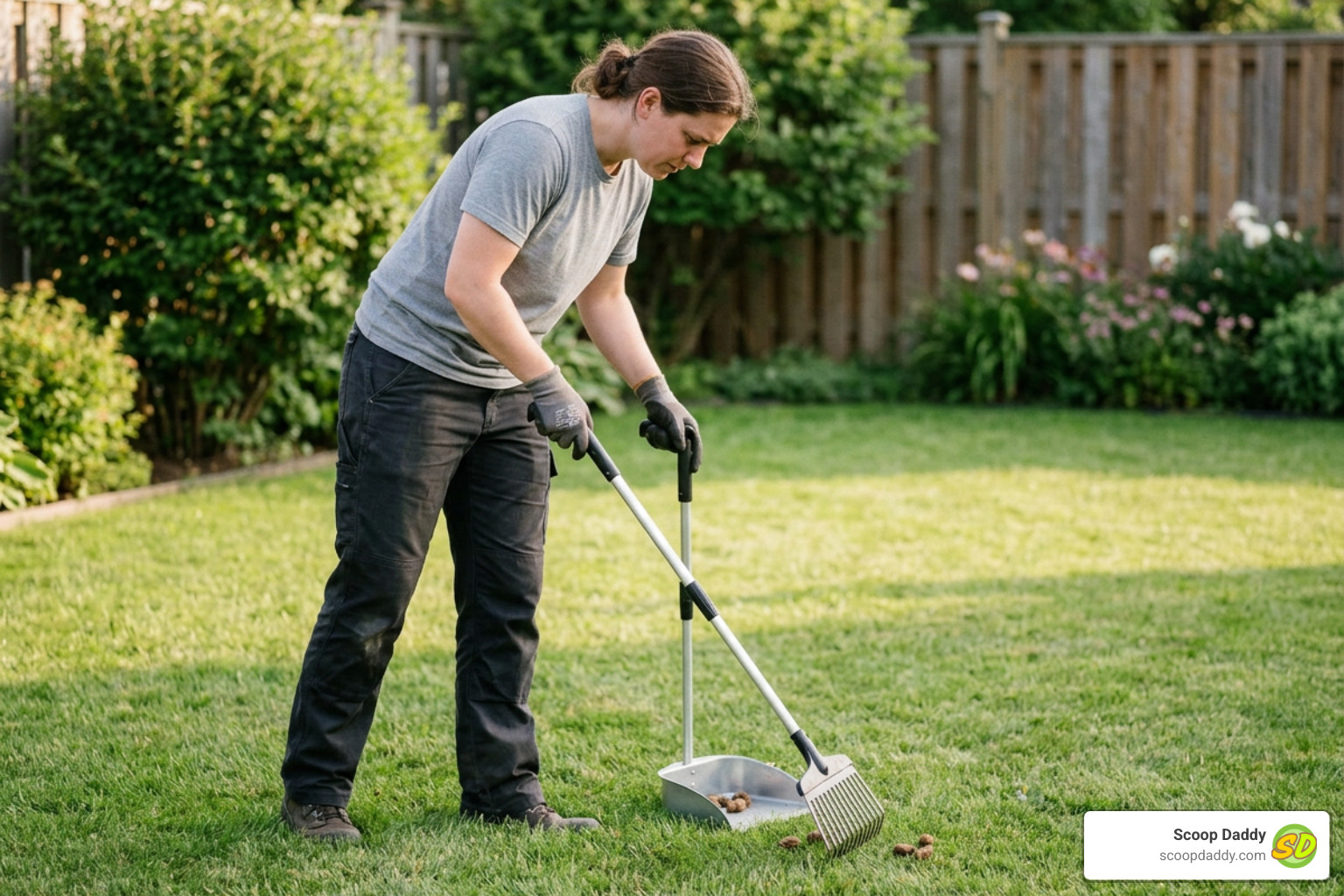
- Rake and Pan Scooper: A long-handled rake and pan set is the gold standard for grass cleanup. It allows you to scoop multiple piles without bending over, saving your back.
- Spade Scooper: Best for flat, hard surfaces like concrete patios, wooden decks, or paved walkways.
- Heavy-Duty Waste Bags: Always opt for thick, puncture-resistant bags to prevent leaks. If you want to be environmentally conscious, look for certified biodegradable or plant-based bags.
- Disposable Gloves: Wear these during every cleanup session to prevent direct contact with bacteria.
- Dedicated Lidded Trash Can: Keep a small, tightly sealed trash bin outdoors specifically for bagged pet waste to isolate odors and keep flies away.
The Grid-Pattern Scanning Technique
If you wander aimlessly around your yard looking for waste, you will inevitably miss piles. Professional waste technicians use a systematic search method to ensure total coverage.
To perform a grid-pattern scan, mentally divide your yard into parallel strips, like lanes in a swimming pool. Start at one corner and walk slowly down the first strip, scanning the ground a few feet in front of you. Once you reach the end of the yard, turn around and walk down the adjacent strip.
Always perform a “double-check pass” by walking the grid in the perpendicular direction (crossing your original path at a 90-degree angle). This second pass helps you spot piles hidden behind tall grass blades or landscape plants. For a deeper breakdown of professional cleanup strategies, read A Practical Guide to Pet Waste Removal.
Safe Methods to Dissolve or Neutralize Dog Waste
While physical removal is always the best primary option, you may sometimes need to dissolve or neutralize remaining residue to protect your lawn and family. Raw dog waste is highly acidic and packed with nitrogen, which can chemically burn your grass and leave unsightly yellow patches. To learn more about how pet waste interacts with your lawn, read How to Clean Dog Poop from Grass: Guide & Important Facts | Hepper Pet Resources.
How to Clean Dog Poop from Yard Surfaces Like Artificial Turf and Patios
In Southwest Florida, many homeowners install artificial turf or paved patios to enjoy the outdoors. However, these surfaces present unique challenges when it comes to pet waste.
- Artificial Turf: Synthetic grass fibers trap waste residue and moisture, leading to persistent odors. To clean turf, first scoop up all solid waste. Next, spray the area thoroughly with a pet-safe enzymatic cleaner designed specifically for synthetic surfaces. Let the cleaner sit for 10 to 15 minutes to digest the organic proteins, then rinse with a low-pressure garden hose.
- Concrete and Decks: Concrete is highly porous and will absorb odors and stains if waste is left too long. After removing the solid waste, apply an enzyme-based deck and patio cleaner. Scrub the area gently with a stiff-bristled brush, let the product sit for the recommended dwell time, and rinse thoroughly.
Never use straight bleach on your lawn or patio. Bleach can ruin artificial turf fibers, destroy the soil microbiome under your grass, and pose a toxic hazard to your pets’ sensitive paws.
Natural and Commercial Enzyme Dissolvers
If you want to break down waste residue safely without killing your grass, you have several options:
- Commercial Enzyme Cleaners: These products use natural, non-toxic enzymes and beneficial bacteria that mimic natural decomposition. They eat away at the proteins, starches, and fats in dog waste, neutralizing both the pathogens and the odor at the molecular level.
- Diluted White Vinegar: A great natural option for hard surfaces. Mix equal parts white vinegar and water to help neutralize the alkaline salts in pet urine and waste. Be careful when applying vinegar directly to grass, as concentrated vinegar acts as a natural herbicide and can kill your lawn.
- Baking Soda: This household classic is excellent for neutralizing acidic odors. After scooping, sprinkle a generous amount of baking soda over the spot to absorb moisture and bind odor molecules.
Avoid using gardening lime to dissolve waste in areas where children or pets play. While lime does break down organic matter quickly, it is highly caustic and can cause severe chemical burns to your dog’s paws and skin.
Best Practices for Disposal and Cleanup Frequency
How you handle pet waste after collection is just as important as how you pick it up. Proper disposal prevents pests, controls odors, and keeps your neighborhood sanitary.
Safe Disposal Methods for Florida Homeowners
The safest and most reliable way to dispose of dog waste is to place it in the regular trash.
- Double-Bag the Waste: Place the collected waste in a heavy-duty bag, tie it securely, and place it inside a second bag. This double-barrier system prevents leaks and traps intense odors.
- Use a Dedicated Bin: Do not toss pet waste directly into your main household trash can. Keep a separate, lidded outdoor bin lined with a trash bag.
- Consider an In-Ground Digester: For a hands-off approach, you can install an in-ground pet waste digester (like a septic tank for dogs) in your yard. These systems use water and bacterial additives to liquefy waste, allowing it to safely absorb into the deep soil. However, ensure your property has excellent drainage before installing one, which can be challenging in some low-lying areas of Naples or Bonita Springs.
Never flush dog waste down your home toilet unless you have verified that your municipal wastewater system is designed to handle it. Many municipal systems in Southwest Florida cannot process the unique pathogens and heavy sediment found in pet waste.
Establishing a Consistent Cleanup Schedule
The frequency of your yard cleanups depends on the size of your yard, the number of dogs you own, and how much time you spend outdoors. To understand the value of setting a routine, read about Why Professional Dog Poop Cleanup Is a Must-Have Time Saver.
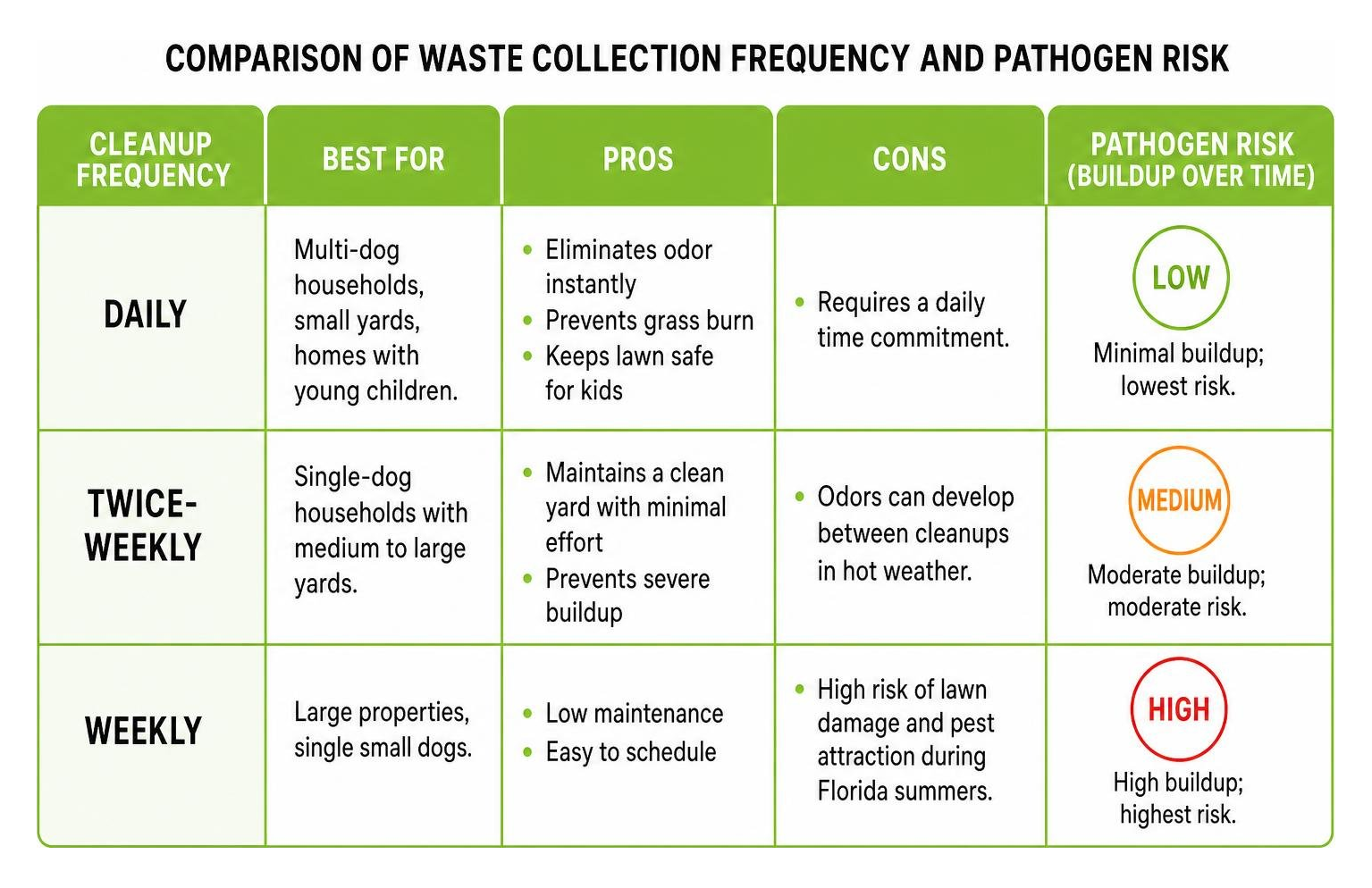
Below is a comparison of common cleanup schedules:
| Cleanup Frequency | Best For | Pros | Cons |
|---|---|---|---|
| Daily | Multi-dog households, small yards, homes with young children. | Eliminates odor instantly, prevents grass burn, keeps lawn safe for kids. | Requires a daily time commitment. |
| Twice-Weekly | Single-dog households with medium to large yards. | Maintains a clean yard with minimal effort, prevents severe buildup. | Odors can develop between cleanups in hot weather. |
| Weekly | Large properties, single small dogs. | Low maintenance, easy to schedule. | High risk of lawn damage and pest attraction during Florida summers. |
For a complete guide on maintaining your property, see How to Get a Clean Yard and Keep It That Way.
Frequently Asked Questions About Yard Cleanup
Can I use dog poop as fertilizer for my grass?
Absolutely not. This is one of the most common and dangerous myths in lawn care. Unlike cow manure, which comes from herbivorous animals and is processed to kill pathogens, dog waste is the byproduct of a carnivorous/omnivorous diet.
Dog feces are highly acidic and packed with concentrated nitrogen. If left on your lawn, they will chemically burn the grass, leaving dead brown spots surrounded by dark green, overgrown rings. Furthermore, using raw dog waste on vegetable gardens can contaminate your food crop with dangerous parasites like roundworms. For more details, read Dog Poop Is Not Fertilizer: How to Keep Your Yard Safe and Clean.
Does rain wash away dog poop safely?
No. Rain does not wash dog poop away safely; it simply dissolves the solid matter and spreads the invisible bacteria, viruses, and parasite eggs across a wider area of your yard. This increases the risk of cross-contamination and allows pathogens to seep into the local groundwater or wash into nearby storm drains.
What is the best way to handle runny dog poop on grass?
Dealing with loose stools on a lawn is incredibly frustrating. If you try to scoop runny waste immediately, you will only smear it deeper into the grass blades. Instead, follow this method from How To Clean Runny Dog Poop Off Grass — Be A Cleaner:
- Absorb and Solidify: Sprinkle a generous amount of sand, kitty litter, sawdust, or a specialized commercial solidifying powder over the waste. Let it sit for 10 to 15 minutes to absorb the moisture.
- Scoop: Once the waste has formed a firmer clump, use a flat spade or cardboard sheets to scrape it up off the grass.
- Treat: Spray the remaining residue with an enzyme cleaner and rinse gently with a garden hose to break down the lingering proteins.
Conclusion
Keeping your yard clean and safe doesn’t have to be a constant struggle. By choosing the right tools, using the grid-pattern scanning technique, and staying consistent, you can protect your family, your pets, and Southwest Florida’s beautiful waterways.
If your schedule is too busy or you simply want to cross this chore off your to-do list forever, let us handle the dirty work. At Scoop Daddy, we provide professional, reliable pet waste removal services for residential and commercial properties throughout Southwest Florida, including Fort Myers, Naples, Estero, and Bonita Springs. Our tech-driven scheduling and professional team ensure your yard stays pristine without any hassle.
Ready to reclaim your backyard? Learn more about our pooper scooper service or check out the 5 Signs It’s Time to Hire a Professional Pet Waste Removal Service.
Visit Scoop Daddy today to schedule your service and enjoy a clean, healthy lawn!
You May Like
The Environmental Benefits of Proper Pet Waste Disposal
Wait…Dog Poop Is Bad for the Planet? Rain + Poop = Polluted Waterways It’s Not Fertilizer. It’s a Health Hazard. The Ripple Effect: How Responsible Dog Parents Make a Difference Scoop Daddy’s Role in a Cleaner, Greener Neighborhood Wait…Dog Poop Is Bad for the Planet? As loving dog parents, it’s
Read More
Dog Waste Station Amazon Guide: Commercial and Backyard Receptacles
The Best Dog Waste Stations on Amazon for Backyards and Commercial Properties If you're shopping for a dog waste station on Amazon, here are the top options to know about right now (June 2026): Pick Best For Key Feature Zero Waste USA (Green or Black) Commercial & residential Rustproof aluminum,
Read More
5 Signs It’s Time to Hire a Professional Pet Waste Removal Service
Your Yard’s Starting to Smell… Ruff Poop Patrol Is Eating Up Your Free Time Piles Are Popping Up in Sneaky Spots You’re Worried About Germs (and You Should Be) You Want a Stress-Free Scoop Schedule Time to Call in the Pros: Why Scoop Daddy Is Your Backyard Bestie Dog parents,
Read More