
The Ultimate Guide to Removing Dog Urine Odor from Your Yard
Why Your Yard Smells Like Dog Urine (And How to Fix It Fast)
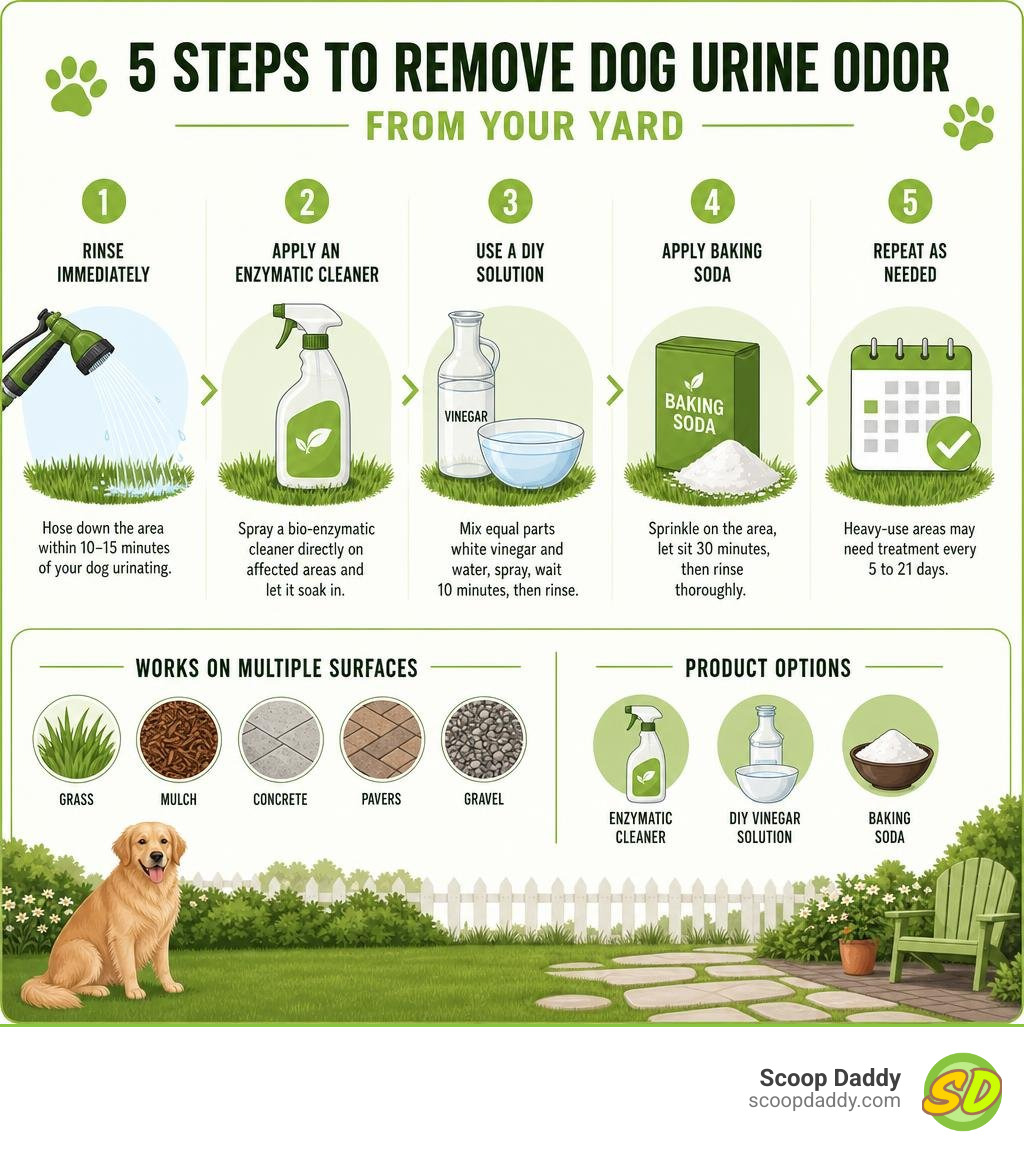
If you want to remove dog urine odor from your yard, here are the most effective methods:
- Rinse immediately – Hose down the area within 10-15 minutes of your dog urinating
- Apply an enzymatic cleaner – Spray a bio-enzymatic product directly on affected areas and let it soak in
- Use a DIY solution – Mix equal parts white vinegar and water, spray, wait 10 minutes, then rinse
- Apply baking soda – Sprinkle on the area, let sit 30 minutes, then rinse thoroughly
- Repeat as needed – Heavy-use areas may need treatment every 5 to 21 days
You let your dog out. You enjoy your morning coffee. Then the smell hits you.
If you have a dog and a yard in Southwest Florida, you know exactly what that smell is. Over 66 million U.S. households own at least one dog — and every single one of those dogs is leaving urine in the yard on a daily basis.
The problem isn’t just unpleasant. That persistent ammonia-like odor can make your outdoor space unusable for your family and guests. And in Florida’s heat and humidity, it gets worse fast.
The good news? You don’t have to live with it. Whether you’re dealing with dead grass patches, a smelly patio, or a dog run that clears the yard, there are proven methods that actually eliminate the odor — not just cover it up.
Why Dog Urine Odor Persists in Your Yard
To effectively remove dog urine odor from your yard, we first have to understand what we are fighting. The culprit isn’t just “pee”—it’s a complex chemical cocktail.
Dog urine is rich in nitrogen, salts, and urea. When urea exits your dog’s body, it begins a chemical breakdown process. Soil microbes convert urea into ammonia, which is the source of that sharp, pungent, eye-watering odor that clings to your lawn.
In addition to the smell, this chemical makeup is incredibly harsh on your plants. Many pet owners believe that dog spots are caused by acidic urine, but scientific research shows that the primary damage comes from highly concentrated nitrogen and salts. In fact, dog urine can be up to 10 times more concentrated than synthetic fertilizers. When your dog urinates in the same spot repeatedly, it creates a “fertilizer burn” that kills the grass crown, leaving a dead brown center surrounded by a dark green ring of over-fertilized grass.
For a deeper dive into the science of how this chemical reaction destroys turfgrass, check out the Dog Urine Damage on Lawns: Causes, Cures, and Prevention | CSU Extension .
In Southwest Florida, our climate acts as an accelerator. The intense heat and high humidity of Fort Myers, Naples, and Bonita Springs speed up the breakdown of urea into ammonia. When the sun bakes your yard, it draws the moisture out of the soil, leaving behind concentrated uric acid crystals that lock into porous dirt, sand, and stone. Every time we get a typical afternoon thunderstorm, those crystals are reactivated, releasing a fresh wave of odor.
How to Remove Dog Urine Odor from Yard Surfaces
Different surfaces in your yard require completely different cleaning strategies. What works beautifully on a concrete patio will destroy your St. Augustine grass, and what works on turf might wash right through loose gravel.
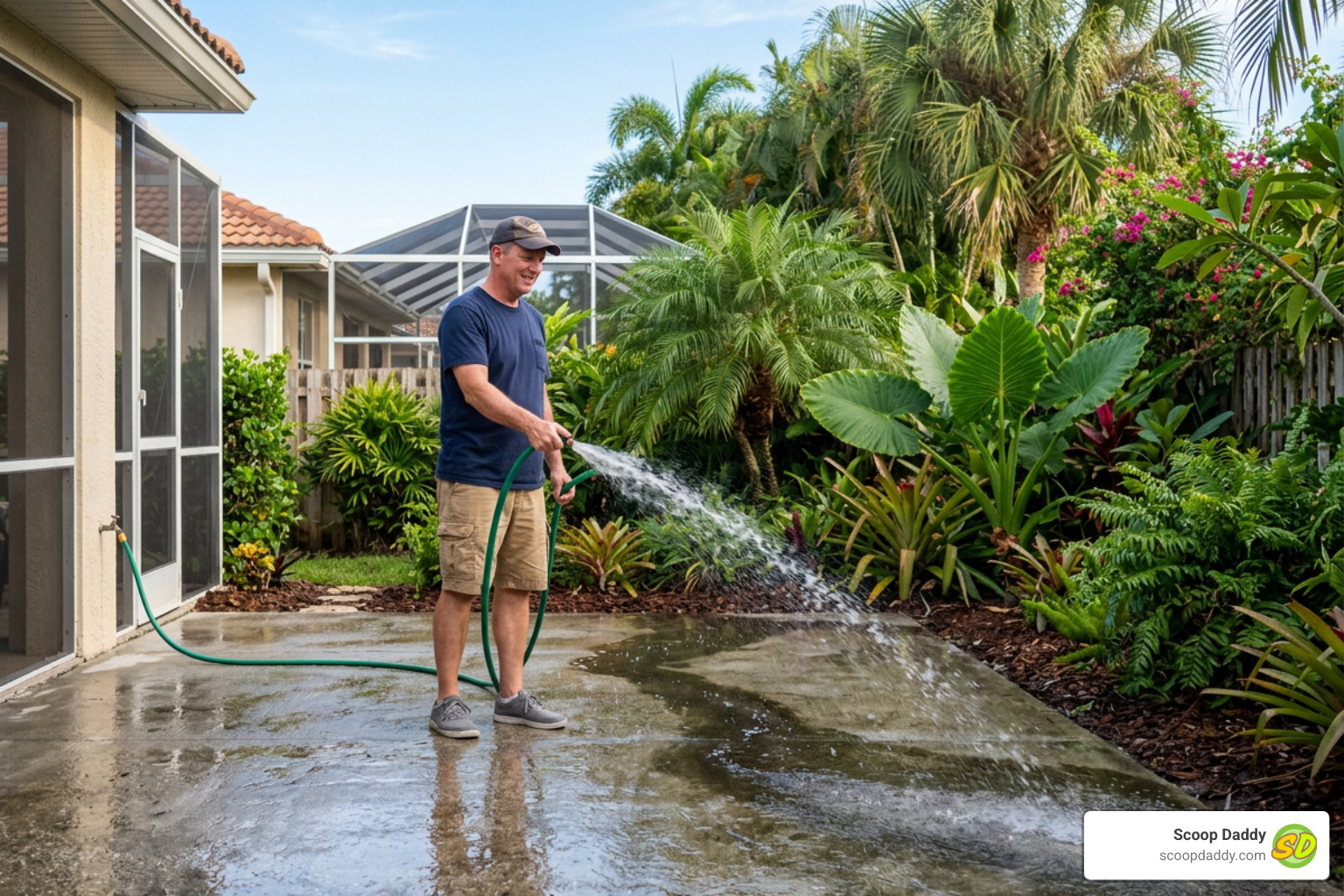
Before you begin any treatment, your first step should always be to clean up solid waste. Leaving dog poop in the yard only adds to the odor load and introduces harmful bacteria into the soil. Once the yard is clear, you can address surface-specific odors. For a comprehensive look at how different surfaces react to pet waste, refer to this Guide to eliminating outdoor pet odors.
Here is how to tackle the main surfaces in your yard:
- Concrete and Pavers: Concrete is highly porous. It acts like a giant sponge, absorbing urine deep below the surface. When untreated, uric acid crystals remain trapped inside the concrete pores for years. You must use a treatment that penetrates as deeply as the urine did.
- Gravel and Dirt: Because gravel has high drainage, urine quickly flows past the surface rocks and settles into the dirt or weed barrier beneath. To treat gravel, you cannot simply spray the surface; you must thoroughly saturate the area so the cleaning agent reaches the subsoil.
- Artificial Turf: Synthetic turf is notorious for holding onto pet odors. While the plastic blades don’t absorb liquid, the backing of the turf and the infill sand underneath certainly do. Treating turf requires regular flushing and specialized products that can break down organic matter trapped in the drainage layer.
Using Enzymatic Sprays to Remove Dog Urine Odor from Yard Grass
When it comes to living grass, chemical masking agents or harsh household disinfectants are out of the question—they will simply kill whatever grass your dog hasn’t already burned. This is where bio-enzymatic sprays shine.
Unlike chemical sprays that merely cover up smells with artificial perfumes, bio-enzymatic cleaners contain live, beneficial bacteria and natural enzymes. When sprayed onto your lawn, these microbes go to work physically consuming the organic compounds in dog urine, including the urea and proteins. They literally eat the odor-causing compounds until they are entirely gone, leaving behind only carbon dioxide and water.
Products like the Outdoor Pet Odor Eliminator & Remover | Eco Strong – EcoStrong are specifically formulated to be completely safe for grass, ornamental plants, and shrubs. They are non-toxic, biodegradable, and safe for your pets and children to walk on barefoot once the area has dried.
For the best results on grass, apply enzymatic sprays during the cooler parts of the day, such as dawn or dusk. Direct Florida sunlight and high heat can dry out the product too quickly, killing the beneficial bacteria before they have a chance to digest the uric acid. Keeping the lawn lightly damp during application allows the microbes to stay active longer and do their job effectively.
Natural DIY Remedies to Remove Dog Urine Odor from Yard Patios
If you prefer to use items already in your pantry, you can create highly effective, natural DIY remedies to treat hard surfaces like concrete, brick, and wood decks.
- The Vinegar Flush: White vinegar is a natural deodorizer. Its acetic acid helps neutralize the alkaline components of dog urine. For concrete patios, mix equal parts white vinegar and water. For wood decks, use a milder ratio of one part vinegar to two parts water to protect the wood’s finish. Spray the mixture generously over the patio, let it sit for 10 minutes to break down the salts, and then rinse it thoroughly with clean water.
- The Baking Soda Paste: For stubborn, concentrated spots on concrete or stone, baking soda works wonders to absorb deep-set odors. Sprinkle baking soda generously over the damp spot, or mix it with a little water to form a thick paste. Scrub the paste into the pores of the concrete with a stiff-bristle brush, let it dry for 30 minutes, and then rinse it away.
A word of warning for lawn lovers: While these kitchen remedies are great for hardscapes, be very careful when using them near your grass. Baking soda is a sodium salt; if it washes into your lawn, it can build up in the soil, alter the pH, and prevent your grass from absorbing vital nutrients. To learn how to safely manage and repair lawn damage without ruining your soil chemistry, consult this guide on How to repair lawn damage.
Commercial vs. DIY Methods for Yard Odor Control
Deciding whether to go with a commercial enzymatic spray or a DIY vinegar-and-baking-soda routine depends on your budget, the size of your yard, and how much time you want to spend on maintenance.
Both approaches have their place, but they perform very differently in the long run.
| Feature | Commercial Enzymatic Sprays | DIY Vinegar & Baking Soda |
|---|---|---|
| Primary Mechanism | Live bacteria physically consume uric acid | Acid-base neutralization and absorption |
| Best Used On | Grass, artificial turf, gravel, large areas | Spot-treating concrete patios, wood decks |
| Application Time | 5–10 minutes (using a hose-end attachment) | 20–30 minutes (mixing, scrubbing, rinsing) |
| Longevity | 5 to 21 days (microbes continue working) | Temporary (needs reapplication after rain) |
| Lawn Safety | 100% safe for grass and soil health | Can damage grass and alter soil pH if not rinsed |
| Average Cost | Moderate ($15 – $40 per bottle) | Very Low (pantry staples) |
While DIY methods are fantastic for quick spot-cleaning on a small patio, they struggle to keep up with large lawns or heavy-use pet runs. Furthermore, keeping your yard clean isn’t just about smell—it’s also about environmental health.
When dog urine and solid waste build up, rain washes those concentrated nutrients and bacteria into our local Southwest Florida storm drains, eventually affecting our local waterways. Practicing proper yard sanitation protects both your home and our local ecosystems. To understand why this matters, read about The Environmental Benefits of Proper Pet Waste Disposal.
Hose-End Sprayers vs. Concentrated Formulas
If you choose the commercial route, you will generally find products in two formats: ready-to-use hose-end sprayers or concentrated liquid formulas.
- Hose-End Sprayers: These bottles come with a built-in nozzle that attaches directly to your garden hose. As water flows through, it automatically dilutes the product at a pre-set ratio (usually around 1:15). This format is incredibly convenient for covering large grassy areas or long fence lines in just a few minutes.
- Concentrated Formulas: Concentrates, such as Pee Hero 1-Gallon Concentrate , require you to mix the product with water inside a separate pump sprayer. While this requires a bit more setup, it is highly recommended by professionals for treating porous hardscapes. A pump sprayer allows you to precisely control the dilution ratio and apply a heavy, concentrated mist directly to stubborn spots on concrete, gravel, or artificial turf. For the best results with concentrates, lightly pre-mist the dry ground with water first; this creates moisture pathways that help the active microbes penetrate deeper into the soil or concrete pores.
How to Prevent Recurring Urine Odors in Your Yard
Eliminating the existing smell is a great victory, but the real goal is keeping the odor from coming back. Dogs are creatures of habit; they tend to return to the exact same spots to do their business because of the lingering scent markers.
By implementing a few simple prevention strategies, you can break this cycle and keep your yard smelling fresh year-round:
- Establish a Designated Potty Zone: You don’t have to surrender your entire lawn to your dog. You can train your dog to use a specific, designated area of the yard. Fill this zone with pet-safe wood mulch or pea gravel. These materials drain exceptionally well, are incredibly easy to rinse down, and won’t die or turn yellow like grass.
- Dilute Immediately: Keep a garden hose handy. If you can rinse down your dog’s favorite spot within 10 to 15 minutes of them urinating, you will dilute the nitrogen and salts before they can concentrate in the root zone and burn the grass.
- Encourage Hydration: The more water your dog drinks, the more diluted their urine will naturally be. Keep fresh, cool water available outside at all times. A well-hydrated dog produces urine with a much lower nitrogen concentration, reducing both lawn burn and odor.
- Repair Damaged Spots Properly: If you already have dead patches, you must clear out the dead material and neutralize the soil before replanting. For step-by-step instructions on restoring these areas, check out this guide on How To Grow Grass In Dog Urine Spots .
- Maintain Regular Yard Sanitation: Odor control is a continuous process. Regular waste removal is essential to prevent bacteria buildup and maintain a healthy outdoor environment. Dog waste is not a natural fertilizer—in fact, leaving it on the ground does far more harm than good. To learn more about keeping your lawn safe, read why Dog Poop is Not Fertilizer: How to Keep Your Yard Safe and Clean.
Frequently Asked Questions About Yard Odor
Conclusion
Keeping your yard fresh and odor-free doesn’t have to be a full-time job. By understanding the chemistry behind dog urine, choosing the right enzymatic or natural cleaning methods for your yard’s surfaces, and practicing simple prevention habits, you can reclaim your outdoor space.
But let’s be honest—between work, family, and spending quality time with your pup, finding the time to constantly hose down the lawn, scoop waste, and spray deodorizers can be a challenge.
That is where we come in. At Scoop Daddy, we provide professional, tech-driven pet waste removal and yard deodorizing services throughout Southwest Florida, including Fort Myers, Naples, Estero, and Bonita Springs. We take the dirty work off your hands so you can simply step outside and enjoy a clean, fresh-smelling yard with your family.
Ready to say goodbye to yard odors for good? Schedule professional yard deodorizing services with Scoop Daddy today!
⚠️ Custom BlogPosting Schema Below – Do Not Delete
You May Like
The Environmental Benefits of Proper Pet Waste Disposal
Wait…Dog Poop Is Bad for the Planet? Rain + Poop = Polluted Waterways It’s Not Fertilizer. It’s a Health Hazard. The Ripple Effect: How Responsible Dog Parents Make a Difference Scoop Daddy’s Role in a Cleaner, Greener Neighborhood Wait…Dog Poop Is Bad for the Planet? As loving dog parents, it’s
Read More
Dog Poop Container Outdoor Guide: Trash Cans That Actually Block Odors
The Best Outdoor Dog Poop Containers at a Glance Choosing the right dog poop container outdoor setup makes a real difference in keeping your yard clean, odor-free, and safe for your family and pets. Here are the top options to consider: Container Type Best For Capacity Odor Control Compact pail
Read More
Dog Waste Station Amazon Guide: Commercial and Backyard Receptacles
The Best Dog Waste Stations on Amazon for Backyards and Commercial Properties If you're shopping for a dog waste station on Amazon, here are the top options to know about right now (June 2026): Pick Best For Key Feature Zero Waste USA (Green or Black) Commercial & residential Rustproof aluminum,
Read More