
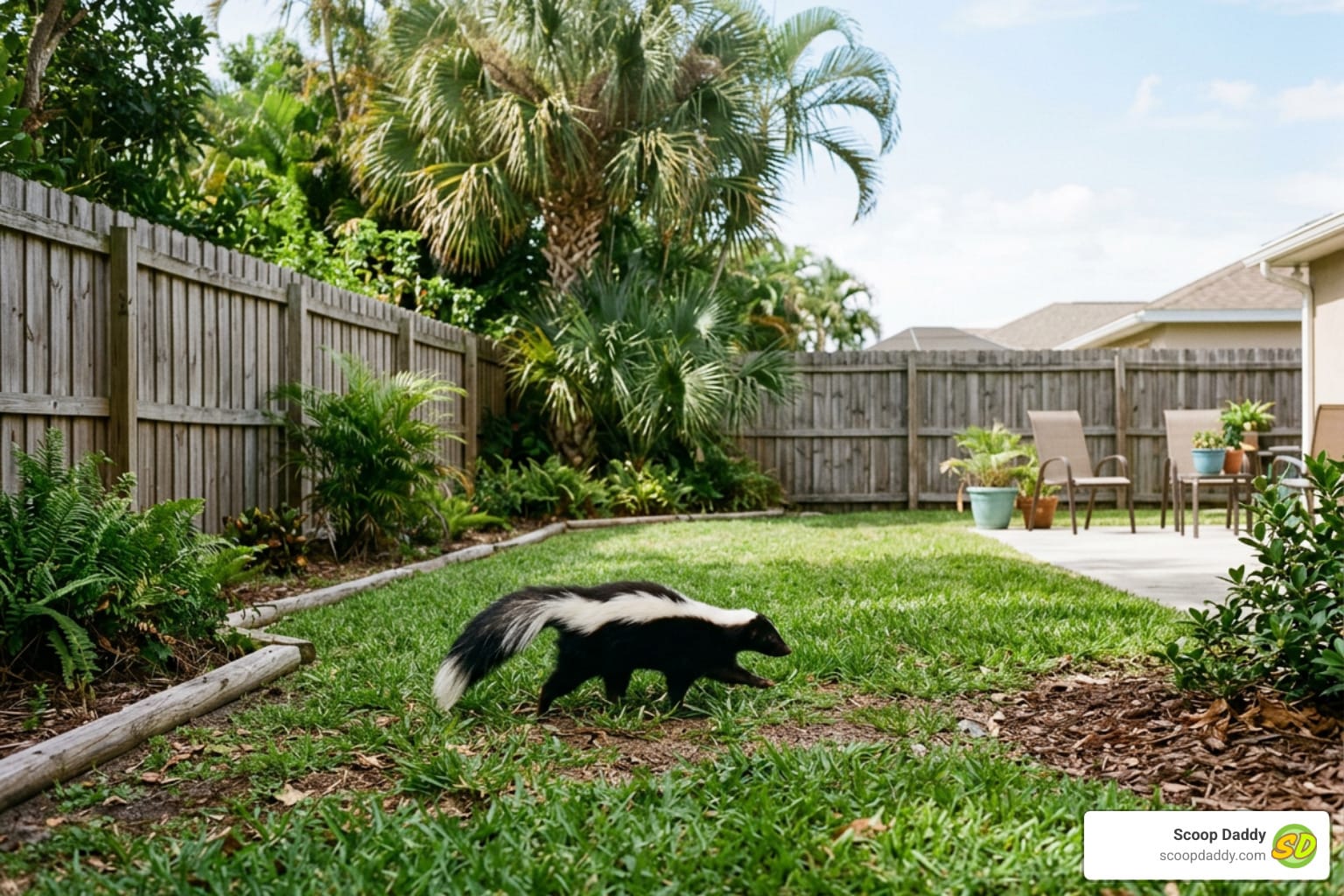
Smells Like Teen Spirit? How to Remove Skunk Odor from Your Yard
What Every Southwest Florida Homeowner Needs to Know About Skunk Odor in Their Yard
Knowing how to remove skunk odor from your yard can save you days — or even weeks — of dealing with one of the most persistent smells in nature. Here’s a quick-reference guide to get you started:
How to Remove Skunk Odor from Your Yard (Quick Answer):
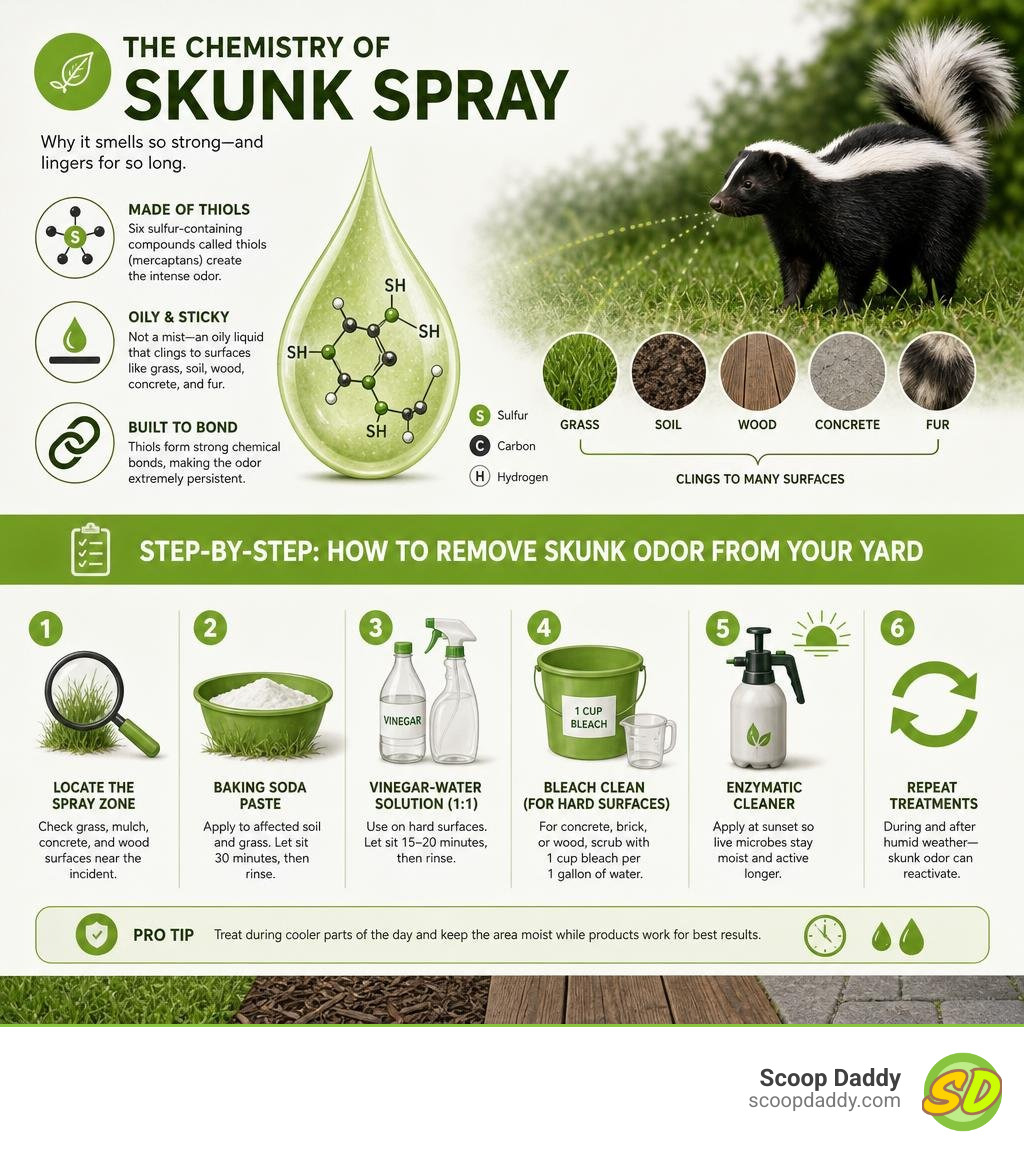
- Locate the spray zone — Check grass, mulch, concrete, and wood surfaces near the incident.
- Apply a baking soda paste to affected soil and grass. Let sit 30 minutes, then rinse.
- Use a vinegar-water solution (1:1) on hard surfaces. Let sit 15–20 minutes, then rinse.
- For concrete, brick, or wood, scrub with 1 cup bleach per 1 gallon of water.
- Apply an enzymatic cleaner at sunset so live microbes stay moist and active longer.
- Repeat treatments during and after humid weather — skunk odor can reactivate when moisture levels rise.
It happens fast. Your dog bolts to the back corner of the yard, there’s a rustle in the bushes, and then — that smell. Within seconds, your entire outdoor space transforms into something unbearable.
Skunk spray is no ordinary odor. Humans can detect it in concentrations as low as 10 parts per billion. A skunk can fire its musk up to 15 feet with surprising accuracy, and the smell can drift more than a mile away. Left untreated, it can linger for weeks or even months — and in humid Southwest Florida conditions, it can come roaring back even after you think it’s gone.
The good news? With the right approach, you can fully neutralize it — not just cover it up.
This guide walks you through everything: the science behind why skunk spray is so stubborn, surface-by-surface removal methods, how to de-skunk your dog before they bring it inside, and how to keep skunks from coming back to your yard in the first place.
The Science of Skunk Spray and Why It Lingers
To understand how to get rid of this olfactory nightmare, we have to look at the chemistry of what is actually happening. Skunk spray is a yellow-tinted, highly oily liquid produced in the animal’s anal glands. It is not a fine mist that easily dissipates; it is a sticky, stubborn oil designed to cling to physical surfaces.
Chemically, the musk is composed of seven distinct ingredients. Six of these are sulfur-containing chemical compounds called thiols (specifically, mercaptans). Sulfur is the same element that makes rotten eggs smell so repulsive. These thiols are incredibly stable and form incredibly strong chemical bonds with whatever surface they touch, whether that is your lawn, your wooden deck, your concrete patio, or your dog’s fur.
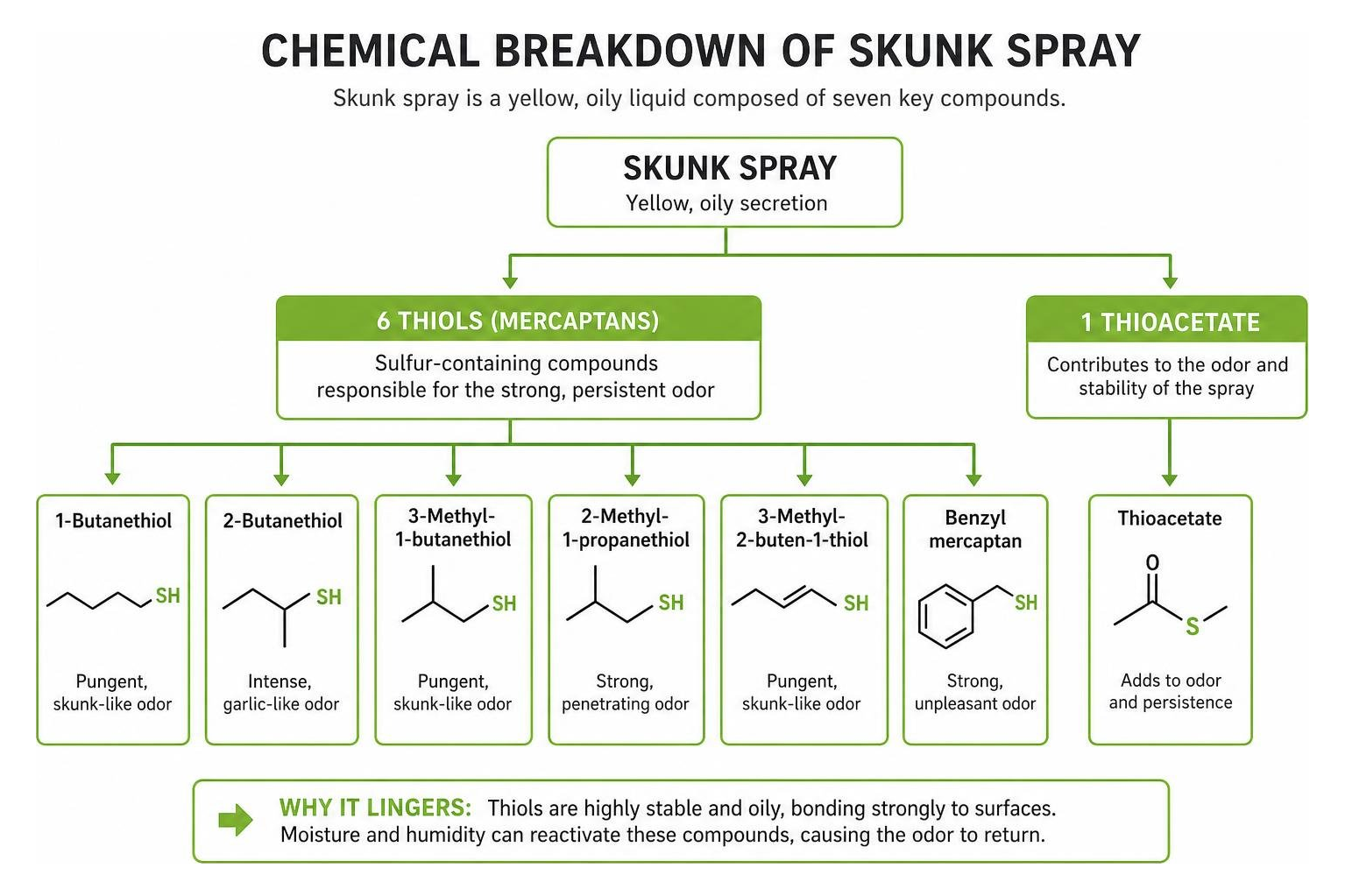
There are two major reasons why skunk odor is notoriously difficult to eliminate:
- Humidity Reactivation: Have you ever noticed that a faint skunk smell suddenly gets incredibly strong after a heavy afternoon rainstorm? This is a common issue here in Southwest Florida cities like Fort Myers and Naples. High humidity and moisture physically reactivate the dormant thiols bound to your yard’s soil and surfaces, releasing a fresh wave of odor.
- Olfactory Fatigue: This is the scientific term for your nose “giving up.” When you are exposed to a massive concentration of a strong smell, your sensory receptors shut down to protect your nervous system. This is why people mistakenly believe home remedies like tomato juice work — their noses have simply stopped registering the skunk musk, allowing them to only smell the newly introduced tomato scent.
To truly eliminate the odor, you must use chemical oxygenation or enzymatic digestion to break those sulfur bonds and convert the thiols into odorless acids. For more details on the biology of skunk musk, you can read the scientific breakdown in this guide on Removing Skunk Odor.
Step-by-Step: How to Remove Skunk Odor from Yard Surfaces
When a skunk sprays in your yard, it doesn’t just hit one spot. The oily residue can coat your grass, soak into your mulch, splash onto your concrete patio, and stick to your wooden fences. Because different surfaces react differently to cleaning agents, you need a targeted strategy.

Here is a quick comparison of the most common yard treatments:
| Surface Type | Best Treatment | Pros | Cons |
|---|---|---|---|
| Grass & Soil | Baking Soda Paste / Mild Enzymatic Spray | Safe for plants; inexpensive | Requires physical rinsing |
| Artificial Turf & Gravel | Commercial Enzymatic Cleaner | Deeply digests oils; highly effective | Must be applied at sunset to stay moist |
| Concrete & Brick | Bleach-Water Solution (1:10) | Strong disinfectant; neutralizes quickly | Can discolor decorative finishes |
| Wooden Decks & Fences | Bleach-Water or Commercial Wood Wash | Penetrates porous wood fibers | Can strip paint or wood stains |
If the skunk’s defensive spray has physically damaged your turf, or if the skunk has torn up sections of your grass while digging, you will want to follow up with specific lawn restoration techniques. You can learn more about restoring your grass in this guide on How to Repair Lawn After Skunk Damage? Minimize Long-Term Damage – LawnGardenPro.
Natural Remedies for How to Remove Skunk Odor from Yard Soil and Grass
If a skunk sprayed directly onto your grass, flowerbeds, or garden soil, you must be careful not to kill your vegetation. Harsh chemical cleaners like bleach will destroy your lawn, leaving unsightly brown patches.
Instead, use these natural, plant-safe remedies:
- The Baking Soda Paste: Baking soda is an excellent natural deodorizer. Mix a generous amount of baking soda with water to create a thick paste. Apply this paste directly to the affected soil and grass. Let it sit for at least 30 minutes to absorb the surface oils, then rinse the area thoroughly with a garden hose.
- The Vinegar Flush: White vinegar contains acetic acid, which naturally interacts with and breaks down sulfur compounds. Mix equal parts white vinegar and water in a garden sprayer. Lightly mist the affected grass and soil. Let it sit for 15 to 20 minutes before washing it down with water. Note: Use vinegar sparingly on delicate plants, as highly concentrated vinegar can act as a natural weed killer.
- Soil Aeration: If the spray has penetrated deep into the dirt, the lack of oxygen will keep the thiols active. Gently aerating the soil with a garden fork or lawn aerator introduces oxygen, which helps oxidize the sulfur compounds naturally.
Maintaining a clean, well-drained yard is the first step to keeping your outdoor space fresh. For more tips on managing a clean yard, check out our guide on The Ultimate Guide to a Pet-Friendly Backyard in Florida.
Commercial Solutions for How to Remove Skunk Odor from Yard Turf and Gravel
For porous, non-living surfaces like artificial turf, gravel dog runs, or decorative stone paths, natural remedies might not fully penetrate the cracks and fibers. This is where commercial enzymatic cleaners shine.
Enzymatic outdoor odor eliminators use surfactants to break up the oily skunk residue, combined with live, beneficial microbes that physically digest the organic sulfur compounds.
To get the most out of these commercial products, follow these best practices:
- Pick up Pet Waste First: Before applying any deodorizer, ensure the yard is clear of other organic odor sources.
- Apply at Sunset: This is the golden rule of enzymatic cleaning. Live microbes require moisture to remain active and work their magic. If you apply the product during the hot midday sun in Bonita Springs or Estero, it will dry out instantly, killing the microbes before they can digest the skunk oils. Applying the product in the evening allows it to stay damp and active overnight.
- Keep it Moist: Lightly mist the treated gravel or artificial turf with a garden hose after applying the enzyme spray to keep the microorganisms active.
For more details on commercial solutions and keeping your property smelling fresh, you can read about outdoor deodorizing in this article on How to Remove Skunk Smell and Keep Skunks Away From Your Home for Good.
Treating Hard Surfaces: Concrete, Brick, Stone, and Wood
Hard surfaces like concrete patios, brick walkways, and wooden decks are highly porous. They act like giant sponges, sucking in the oily skunk spray deep into their fibers. If a skunk sprays near your house, these surfaces will hold the scent for a very long time unless chemically neutralized.
To clean hard, non-living surfaces:
- Mix the Solution: Create a mixture of 1 cup of household liquid bleach to 1 gallon of water.
- Test First: Bleach can discolor painted wood, dark stains, or decorative concrete. Always perform a patch test on an inconspicuous area first.
- Scrub Thoroughly: Apply the bleach solution to the concrete, brick, or wood using a stiff-bristled deck brush. Scrub vigorously to force the solution deep into the pores of the material.
- Rinse and Reapply: Rinse the area thoroughly with clean water. For stubborn, deep-set odors on wood, you can apply a second, lighter misting of the solution and let it air dry.
If you are dealing with other stubborn outdoor pet odors, such as concentrated dog urine on your patio or fence, you can find specialized tips in The Ultimate Guide to Removing Dog Urine Odor From Your Yard.
De-Skunking Pets and Preventing Indoor Odor Spread
If your dog was the unfortunate target of the skunk’s wrath, your immediate priority is keeping them outside until they are fully de-skunked. Letting a skunked dog run into your home will transfer the oily residue to your carpets, sofas, and bedding, creating an indoor disaster.

Before you begin bathing your pet, check their eyes. Skunk spray can cause temporary blindness and severe, painful irritation. If their eyes are red or watering, flush them gently with cool, clean water or a pet-safe saline solution.
To keep your entire yard safe, clean, and healthy for your furry family members, check out our comprehensive guide on How to Get a Clean Yard and Keep It That Way.
The Ultimate DIY Pet De-Skunking Recipe
Do not reach for the tomato juice! Instead, use the famous Krebaum Formula. Chemically formulated by chemist Paul Krebaum, this open-container mixture is highly effective at converting smelly thiols into completely odorless acids.
The Recipe:
- 1 quart of 3% hydrogen peroxide (do not use anything stronger than 3%, as it can cause skin irritation)
- 1/4 cup of baking soda
- 1 to 2 teaspoons of liquid dishwashing soap (such as Dawn, which is excellent for breaking down oils)
How to Use It:
- Mix in an Open Container: Mix the ingredients in an open bucket or bowl. Never mix or store this solution in a closed bottle or container. The chemical reaction releases rapid oxygen gas, which will build up pressure and cause a sealed container to violently explode.
- Apply to Dry Fur: Wear rubber gloves and massage the mixture thoroughly into your dog’s dry coat. Avoid their eyes, mouth, and inner ears (you can put cotton balls in their ears to keep the liquid out).
- Let it Sit: Allow the mixture to sit on their coat for 5 to 10 minutes. This gives the oxygenation process time to break the sulfur bonds.
- Rinse and Repeat: Rinse your dog thoroughly with warm water. Follow up with a bath using their regular dog shampoo to leave them smelling clean and fresh.
Removing Skunk Smell from Indoor Furniture and Bedding
If the smell has managed to sneak its way into your home’s fabrics, you have to act quickly before the oils fully set.
- Washable Fabrics: Wash machine-washable bedding, clothes, and slipcovers using your standard laundry detergent mixed with a half-cup of baking soda. Add a cup of white vinegar to the rinse cycle. Do not put these items in the clothes dryer until the smell is completely gone, as the high heat will permanently bake the oils into the fabric fibers. Hang them outside to dry.
- Upholstery and Mattresses: Mist affected sofas, rugs, or mattresses with a 1:1 mixture of white vinegar and water. Let it dry completely. Once dry, follow up with an enzyme-based fabric cleaner.
- The Power of Sunlight: Sunlight is a natural deodorizer. The sun’s UV rays help oxidize the remaining skunk odor. If possible, place removable cushions, rugs, and fabrics outside in the direct Southwest Florida sunlight for several hours.
Safe Dead Skunk Removal and Yard Disinfection
Finding a dead skunk on your property is a double-whammy of unpleasantness: you have to deal with the intense, concentrated smell of a decomposing animal, and you must manage the serious health risks involved.
While the rabies virus is not transmitted through a skunk’s defensive spray, the live rabies virus can remain infectious in a dead skunk’s carcass until the animal is completely decomposed. This makes strict personal protective equipment (PPE) mandatory.
How to Safely Remove a Dead Skunk:
- Gear Up: Wear heavy-duty, puncture-resistant work gloves (such as leather gloves over disposable latex/vinyl gloves), long sleeves, long pants, eye protection, and a dust mask.
- Scoop and Bag: Use a flat shovel to scoop up the carcass. Because the oils and fluids will have soaked into the immediate ground, scoop up the top 2 to 3 inches of contaminated soil and grass directly underneath the animal as well. Double-bag the carcass and soil in heavy-duty trash bags, seal them tightly, and dispose of them according to your local waste management regulations.
- Disinfect the Ground: To kill the rabies virus and neutralize the lingering odor, spray the ground where the skunk was found with a solution of 10% bleach and 90% water.
For more detailed safety guidelines on managing wildlife remnants on your property, refer to this professional reference on Removing Skunk Odor.
Long-Term Skunk Prevention for Southwest Florida Homeowners
The best way to deal with skunk odor is to ensure skunks never feel welcome in your yard. Skunks are nocturnal, opportunistic omnivores. They are constantly searching for easy meals and cozy places to build dens. By making your yard less appealing, you can prevent future encounters.
To learn more about keeping your yard secure and pest-free, explore our step-by-step guide on 9 Best Steps How to Stop Skunks From Digging Up Lawn.
Eliminating Food Sources and Grubs
Skunks love to forage for insects, worms, and grubs. If you notice small, cone-shaped holes (typically 2 to 6 inches deep and 4 to 12 inches wide) scattered across your lawn, you likely have a grub infestation that is drawing skunks to your yard.
- Apply Grub Control: Treat your lawn with beneficial nematodes or milky spores in the late summer or early fall. These natural organisms destroy the subterranean grub populations, removing the skunks’ primary food source.
- Clean Up Fallen Fruit: Southwest Florida yards are often filled with citrus trees, mangoes, and avocados. Clean up fallen fruit daily, as these sweet treats are a major attractant for skunks and rodents alike.
- Secure Trash and Pet Food: Never leave pet food bowls outside overnight, and secure all outdoor garbage cans with tight-fitting, lockable lids.
- Pick Up Pet Waste: Dog waste can attract flies, pests, and scavengers to your yard. Keeping your lawn clear of waste is essential for a clean, odor-free backyard. Learn more about proper yard hygiene in our guide on Dog Poop Is Not Fertilizer: How to Keep Your Yard Safe and Clean.
Installing Physical Barriers and Deterrents
If skunks are trying to set up camp under your home, deck, or shed, you need to block their access permanently.
- The L-Shaped Footer: Skunks are excellent diggers. To prevent them from burrowing under your porch or wooden deck, install a barrier of welded wire mesh. Dig a trench 12 inches deep around the perimeter, place the wire in an “L” shape facing outward, and bury it. This stops animals from digging underneath the edge.
- Motion-Activated Deterrents: Install motion-activated sprinklers or flashing lights near your garden beds or fence lines. The sudden burst of water or light will startle nocturnal pests and send them scurrying away.
- Natural Repellents: Scatter natural deterrents around your yard perimeter. Skunks have incredibly sensitive noses and dislike strong, spicy scents. You can sprinkle cayenne pepper, paprika, or spray a mixture of citrus essential oils and water around your garden beds.
Frequently Asked Questions About Yard Odor Removal
Does Tomato Juice Actually Neutralize Skunk Spray?
No. Tomato juice neutralizing skunk spray is a complete myth. While it may temporarily mask the smell, it does not chemically alter or neutralize the sulfur-containing thiols. The belief that it works is simply a result of olfactory fatigue, where your nose becomes overwhelmed by the skunk odor and temporarily shuts down, allowing you to only smell the newly introduced tomato scent.
How Far Can a Skunk Spray and How Long Does the Smell Last?
A skunk can direct and shoot its spray up to 15 feet (and sometimes up to 20 feet) from its anal glands. The smell itself can be detected by humans up to 1.5 miles away. Left untreated, skunk odor can linger for several weeks, and sometimes for months. Because the sulfur compounds bind so tightly to surfaces, the smell can reactivate during periods of high humidity.
Can I Use Ammonia to Clean Skunk Odor?
No. You should absolutely avoid using ammonia-based cleaning products to clean skunk spray. Ammonia can chemically react with the compounds in skunk musk to worsen the odor. Furthermore, because ammonia smells like the urine of rival predators, it can actually attract other wild animals to your yard or cause domestic pets to mark their territory in the same spot.
Conclusion
Dealing with a skunk encounter in your yard is a stressful, smelly experience, but it doesn’t have to ruin your outdoor space for weeks on end. By understanding the chemistry of skunk spray and using targeted, surface-safe treatments like the Krebaum formula, enzymatic cleaners, and proper yard sanitation, you can fully neutralize the odor and reclaim your backyard.
At Scoop Daddy, we know that a clean, safe, and fresh-smelling yard is essential for Southwest Florida pet owners. While you tackle the skunk odor, let us handle the daily dirty work. We provide professional, tech-driven pet waste removal services across Fort Myers, Naples, Estero, and Bonita Springs to keep your lawn pristine and healthy.
Ready to take your yard back? Schedule professional pet waste removal with Scoop Daddy today!
You May Like
Dog Poop Container Outdoor Guide: Trash Cans That Actually Block Odors
The Best Outdoor Dog Poop Containers at a Glance Choosing the right dog poop container outdoor setup makes a real difference in keeping your yard clean, odor-free, and safe for your family and pets. Here are the top options to consider: Container Type Best For Capacity Odor Control Compact pail
Read More
How Pet Waste Removal Services Help Maintain Property Value and Curb Appeal
Doggy Landmines Don’t Impress the Neighbors Brown Spots & Burned Grass = Bye-Bye Curb Appeal Smell That? Neither Should You (or Your Guests) A Cleaner Yard Shows You Care Scoop Daddy = Property Value’s Secret Weapon Your dog is part of the family, but their waste? Not exactly boosting your
Read More
The Ultimate Guide to a Pet-Friendly Backyard in Florida
Florida-Friendly Landscaping for Pet Owners The Scoop on Odor Control Dealing with Florida Critters and Pests Setting Up a Potty Zone Routine Yard Maintenance Tips Scoop Daddy Makes It Simple Frequently Asked Questions Florida-Friendly Landscaping for Pet Owners Creating a pet-friendly yard in Florida starts with choosing the right plants
Read More