
The Complete Guide to Efficient Backyard Cleaning Methods
Why Efficient Backyard Cleaning Matters for Southwest Florida Homeowners
Backyard cleaning in Southwest Florida comes with a unique set of challenges — fast-growing weeds, tropical humidity, storm debris, and the added layer of managing pet waste in the heat.
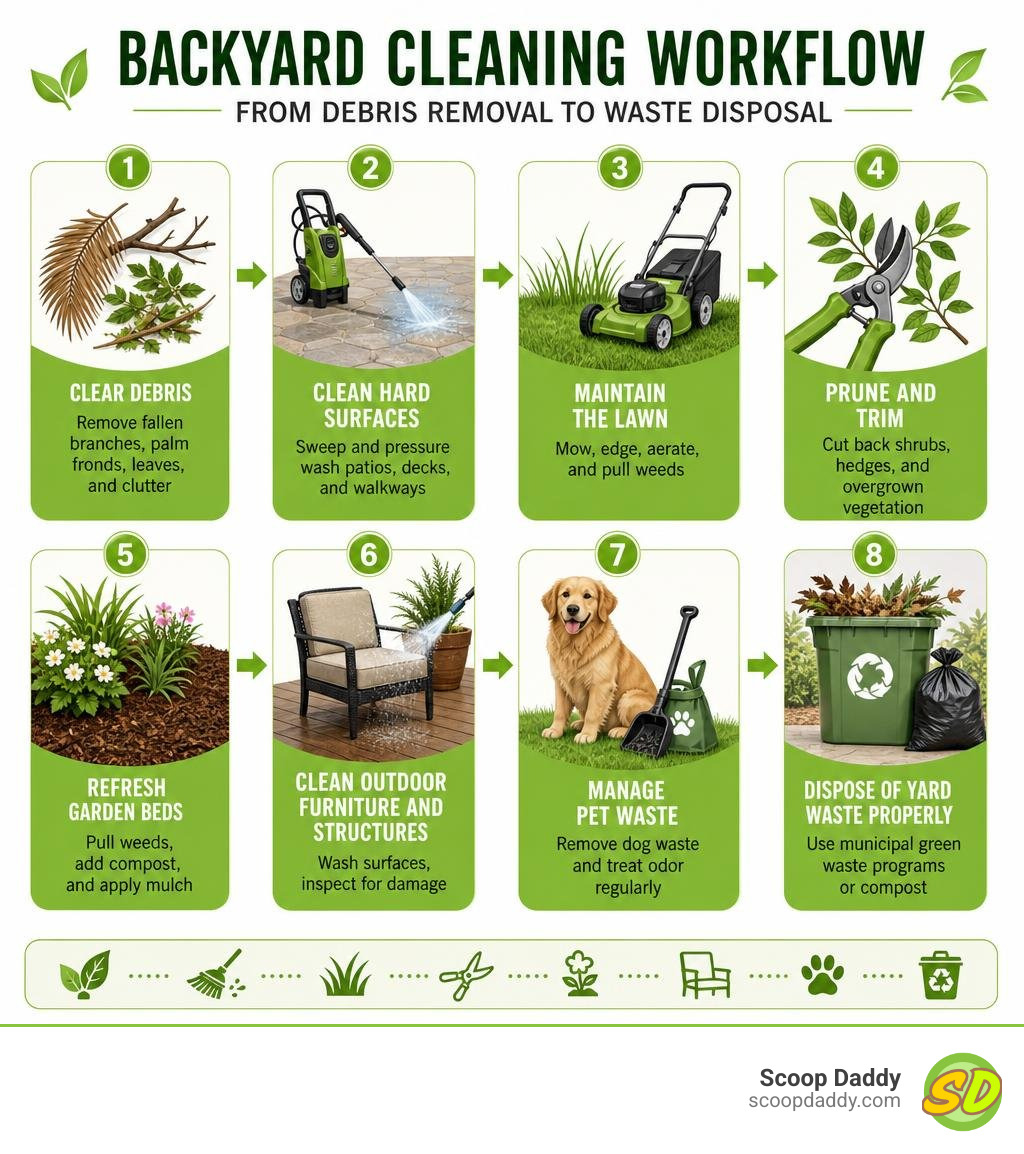
Here’s a quick overview of what an efficient backyard cleaning routine covers:
- Clear debris — Remove fallen branches, palm fronds, leaves, and clutter
- Clean hard surfaces — Sweep and pressure wash patios, decks, and walkways
- Maintain the lawn — Mow, edge, aerate, and pull weeds
- Prune and trim — Cut back shrubs, hedges, and overgrown vegetation
- Refresh garden beds — Pull weeds, add compost, and apply mulch
- Clean outdoor furniture and structures — Wash surfaces, inspect for damage
- Manage pet waste — Remove dog waste and treat odor regularly
- Dispose of yard waste properly — Use municipal green waste programs or compost
A messy backyard can feel more overwhelming than it actually is. You step outside, spot palm fronds scattered across the lawn, weeds creeping into the beds, and a patio covered in mildew — and suddenly the whole job feels like a weekend project. It doesn’t have to be.
With the right sequence and tools, most homeowners can bring order back to their yard without burning an entire day. The key is working smart, not just hard.
This guide walks you through every step — from clearing debris to tackling pet waste — so your outdoor space stays clean, safe, and ready to enjoy.
Essential Tools and Supplies for Backyard Cleaning
Before we roll up our sleeves and head out into the Florida heat, we need to make sure we have the right gear. Trying to tackle a deep backyard cleaning with dull tools or a weak garden hose will only drag out the chore and leave us exhausted.
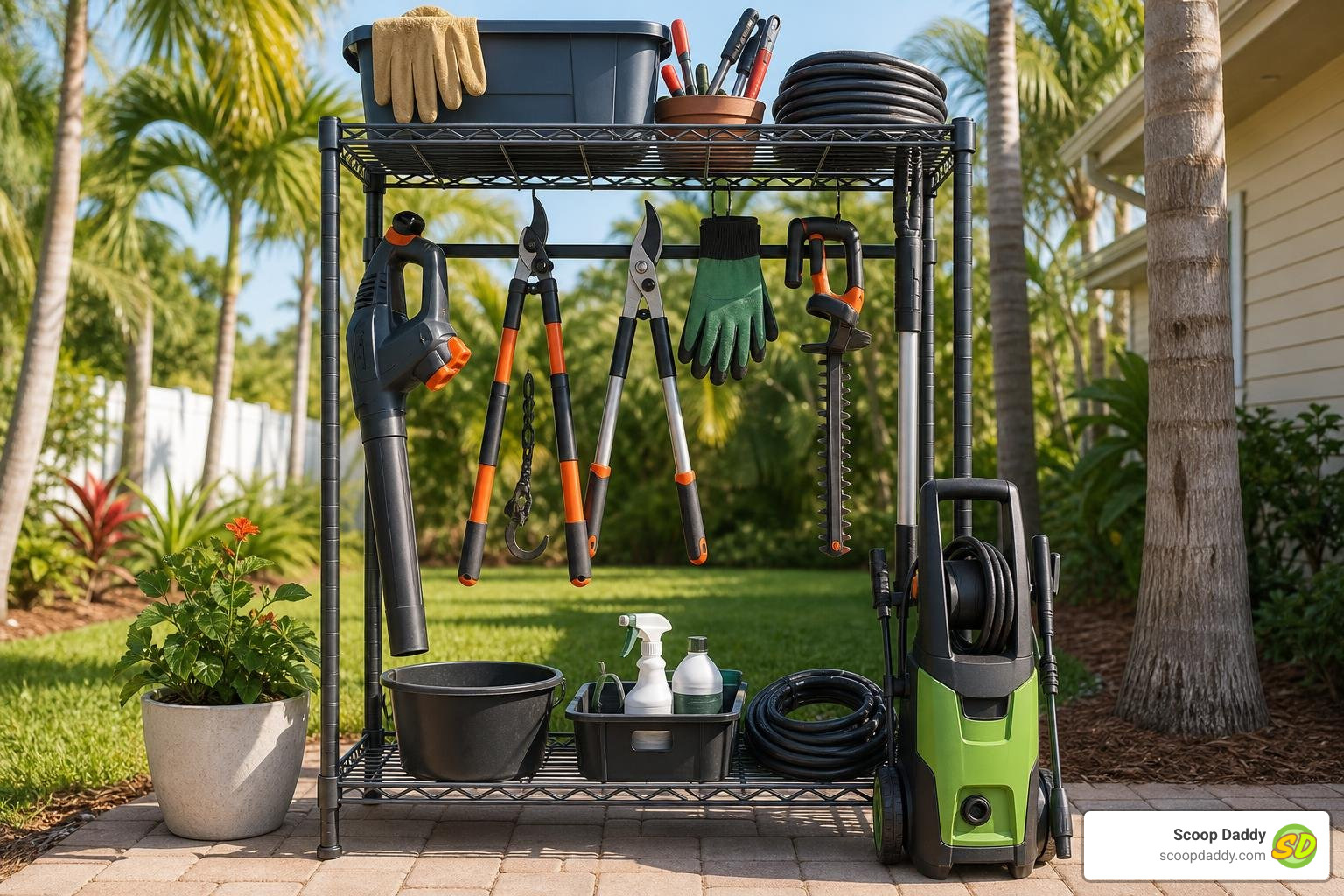
To work efficiently, we recommend gathering these essential tools and supplies before starting:
- Leaf Blower: A high-powered leaf blower is our best friend in Southwest Florida. It saves hours of manual raking when clearing oak leaves, pine needles, and small debris from lawns and hardscapes.
- Pruning Shears and Loppers: Essential for keeping fast-growing tropical plants in check. Make sure the blades are sharp to ensure clean cuts.
- Pressure Washer: A standard residential pressure washer is invaluable for blasting away the green mold and black mildew that quickly covers our patios, pool decks, and walkways.
- Safety Gear: Never skip safety. We always wear heavy-duty leather gloves to protect our hands from sharp palm thorns and splinters, safety glasses to block flying debris, and sturdy footwear to guard against fire ants and uneven ground.
- Eco-Friendly Cleaners: When washing outdoor furniture or patios, we opt for organic, non-toxic, and biodegradable cleaning solutions. This keeps our local soil, native lizards, and family pets safe from harsh chemical runoff.
- Yard Waste Bags or a Wheelbarrow: Heavy-duty, biodegradable paper yard bags or a sturdy wheelbarrow make transporting heavy organic debris infinitely easier.
By keeping our tools clean, dry, and organized on a wall rack or in a shed, we prevent rust and extend their lifespan. A dull tool requires twice the physical effort and can damage your plants, so take a few minutes to inspect your gear before you begin.
A Step-by-Step Guide to Transforming Your Outdoor Space
The secret to a stress-free backyard cleaning is the sequence of tasks. If you wash your patio before trimming your hedges, you will end up with a patio covered in leaf clippings, forcing you to clean the same area twice.
To prevent this frustration, we follow a logical, top-down, outside-in workflow:
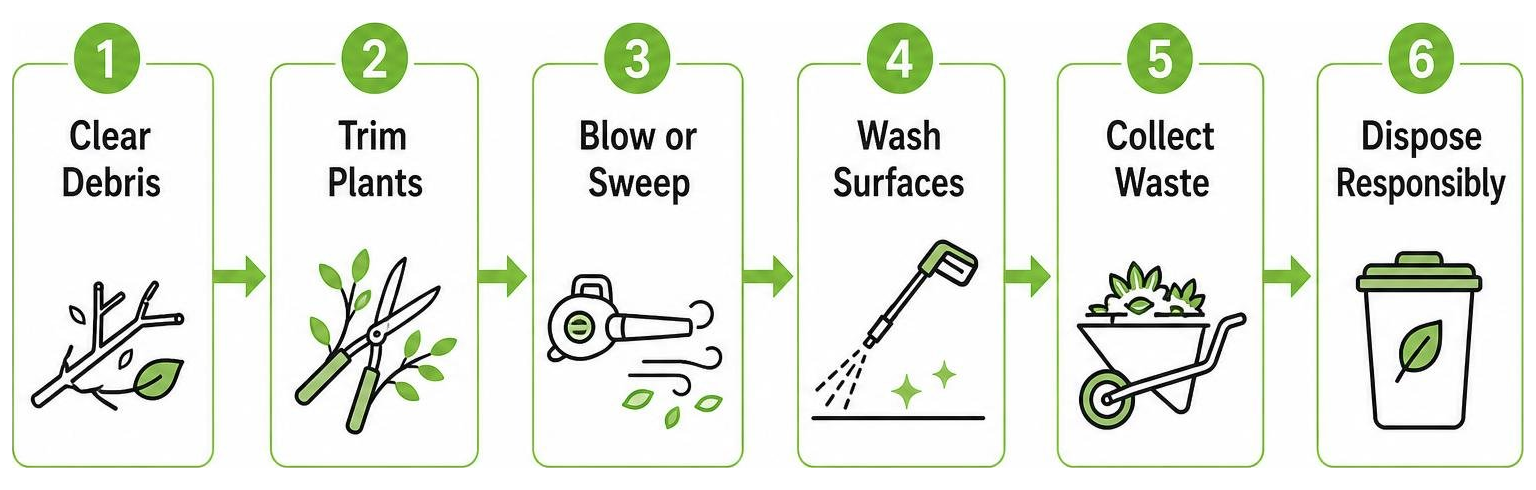
By following this systematic sequence, every task prepares the ground for the next, ensuring we never waste time re-cleaning areas we have already completed.
Clearing Debris Before Backyard Cleaning
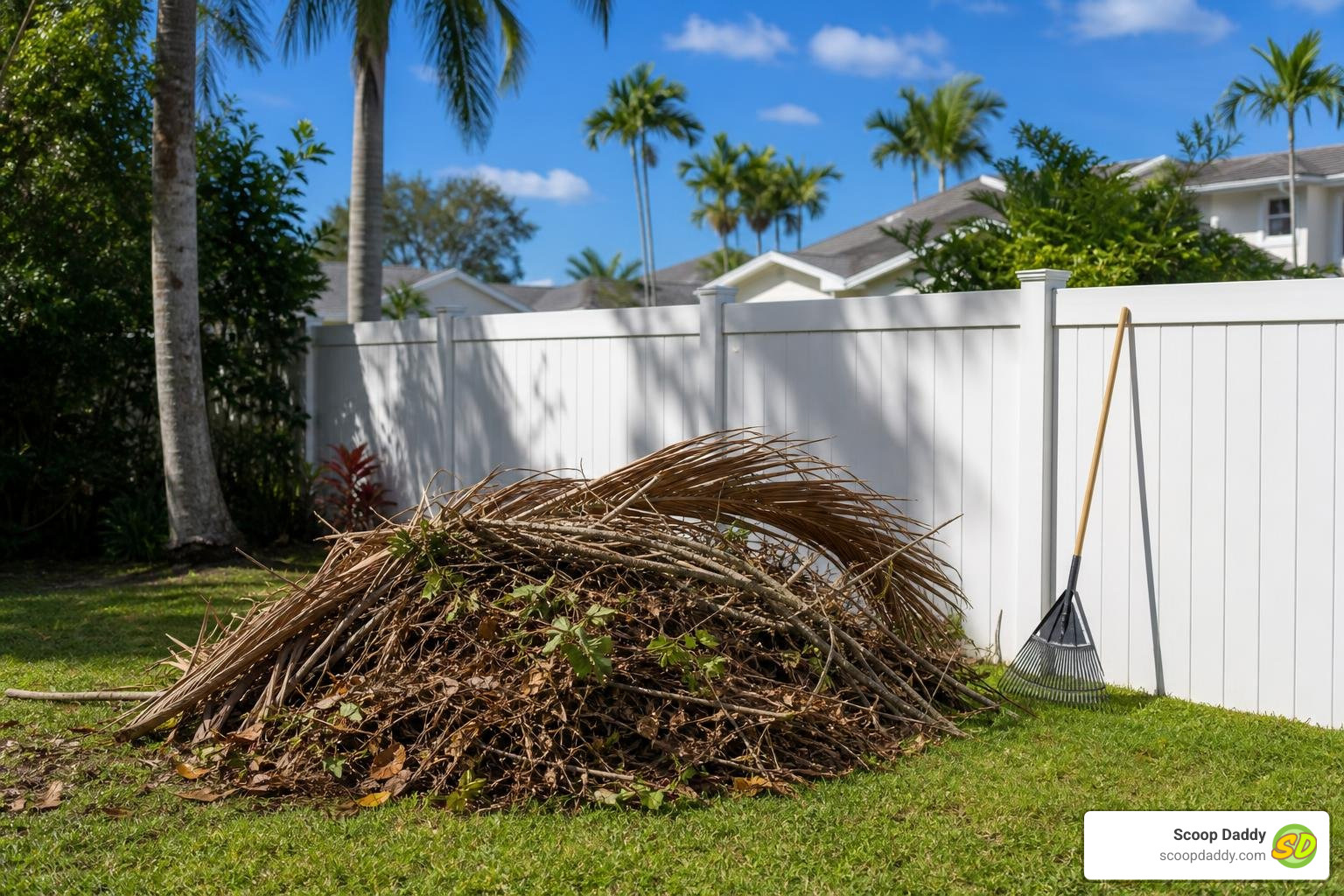
The very first physical step is clearing the heavy clutter. In Southwest Florida, this usually means dealing with a steady carpet of fallen branches, heavy pinecones, and large palm fronds. These items are notorious “mower killers” that can easily bend blades or damage the undercarriage of your equipment.
As we walk the property to collect these larger items, we also look out for toys, broken pots, and windblown trash. Clearing this surface clutter represents the fastest visual win of the entire project, instantly making the yard look more spacious and organized.
Removing these piles quickly is also a matter of safety. Leaving brush and leaf piles sitting in the corners of your yard acts as an open invitation for rodents, snakes, and biting insects to set up camp. If you have let your yard get a bit out of hand, check out our guide on Taming the Jungle: Your Complete Guide to Yard Waste Removal to learn how to safely reclaim your space without inviting unwanted pests.
Restoring Patios, Decks, and Hard Surfaces
Once the lawn is clear of major debris, we turn our attention to our hardscapes. Our patios, pool decks, and walkways are the primary transition zones between our indoor and outdoor living spaces, and they bear the brunt of our humid climate.
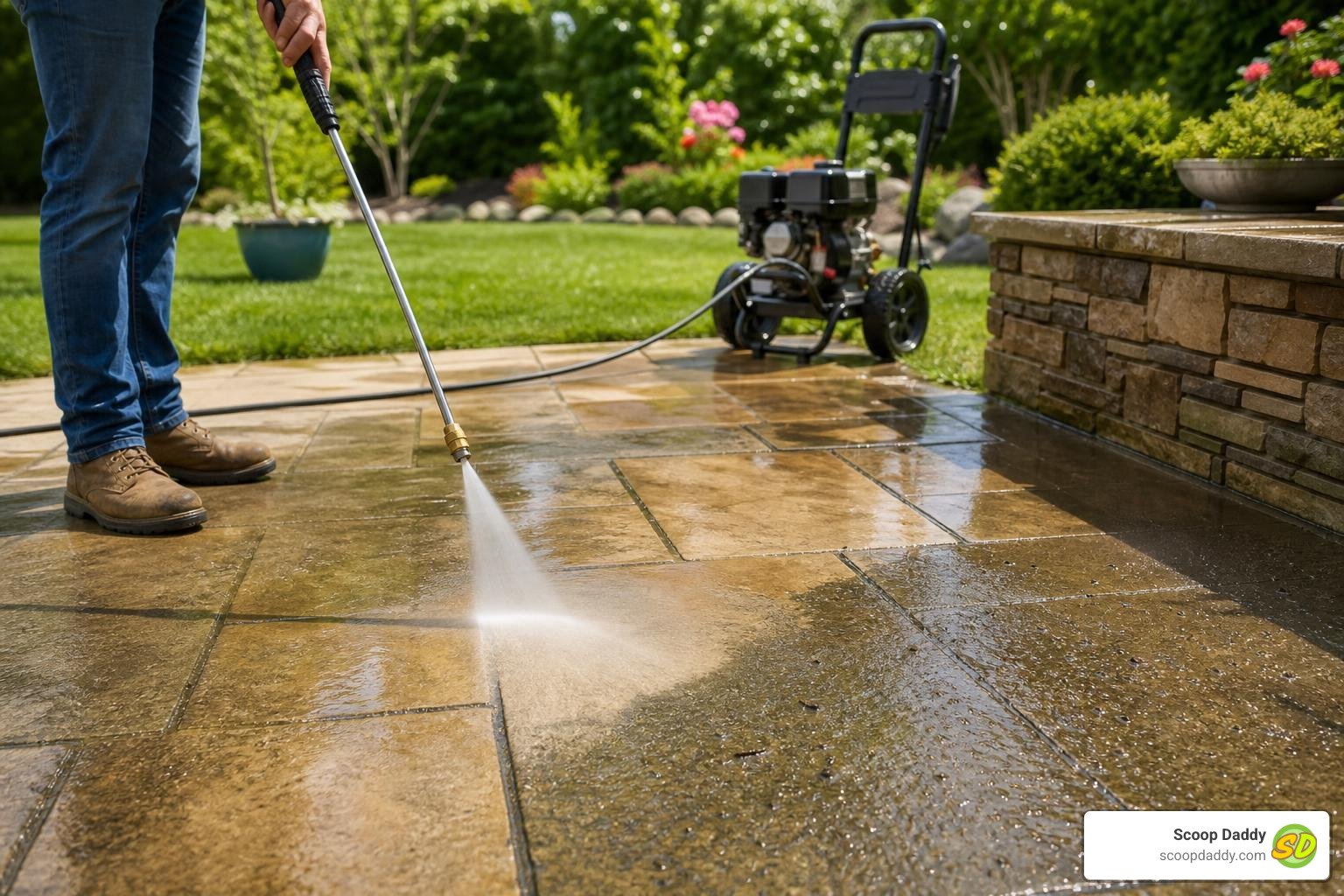
To restore these surfaces to their original beauty, we follow a simple three-step process:
- Sweep: Use a heavy-duty push broom to remove loose dirt, sand, and dried leaves.
- Pre-treat: Apply an eco-friendly outdoor cleaner or a mild dish soap and water mixture to break down stubborn grime, bird droppings, and algae.
- Pressure Wash: Use a pressure washer to deep clean porous stone, concrete, or pavers.
A quick word of warning for wood decks: If you are pressure washing a wooden deck, keep the nozzle moving constantly and use a wider, lower-pressure spray pattern. Concentrated pressure on a single spot can easily gouge, splinter, or permanently ruin soft wood surfaces. Once clean and completely dry, applying a fresh coat of sealer or stain is the best way to prevent rot and preserve the wood against the intense Florida sun.
Pruning Tropical Greenery and Refreshing Garden Beds
With the hardscapes sparkling, we can move on to our plants and garden beds. Southwest Florida’s warm climate means our shrubs, hibiscus, and vines grow incredibly fast, requiring regular shaping to maintain a neat appearance.
When pruning trees and shrubs, we always cut branches at a 45-degree angle. This angled cut prevents water from pooling on the raw wood, promoting rapid, healthy healing and preventing fungal infections. It is also important to research your specific plants; for example, pruning spring-blooming shrubs too early in the season can accidentally strip away the wood holding the upcoming season’s flowers.
Next, we tackle the garden beds. Weeding can be slow, tedious work, but pulling weeds completely from the roots is the only way to prevent them from bouncing right back. Once the beds are clear of weeds and dead annuals, we loosen the topsoil and spread a consistent layer of 2 to 3 inches of organic mulch. This mulch does more than just look beautiful; it acts as a protective blanket that retains vital soil moisture and blocks sunlight to suppress future weed seeds from germinating.
Seasonal Maintenance Strategies for Southwest Florida
Unlike northern states that experience distinct winter freezes, our seasonal shifts in Southwest Florida are defined by water. We transition between a hot, rain-heavy wet season and a warmer, sun-drenched dry season. Understanding these shifts is crucial for maintaining a resilient, healthy landscape year-round.
Wet Season Preparation and Storm Cleanup
From June through November, our yards face near-daily afternoon downpours, high humidity, and the constant threat of tropical storms. Backyard cleaning during this time of year is heavily focused on water management and safety.
First and foremost, we must keep our drainage pathways completely clear. This means regularly clearing leaves, grass clippings, and twigs away from lawn drains, swales, and gutters. Standing water from blocked drainage is a prime breeding ground for mosquitoes and can lead to costly foundation damage.
The combination of heavy rain and intense heat also triggers explosive plant and weed growth. We must stay on top of regular trimming to keep branches away from our rooflines, reducing wind hazards during storms. Additionally, wet leaves left sitting on our lawns for long periods will quickly suffocate the grass, trapping moisture and actively promoting mold growth and turf diseases.
Dry Season Upkeep and Irrigation Checks
When the rains subside in the late fall and winter, our focus shifts to water conservation and preservation. During the dry season, our lawns need, on average, about an inch of water a week to maintain their lush, green look.
Because we cannot rely on daily rain clouds, we must regularly inspect and test our irrigation systems. We turn on our sprinkler zones manually to check for:
- Clogged or broken sprinkler heads.
- Sprinklers pointing at our walls or fences rather than the lawn.
- Leaking valves that waste water and create soggy, diseased patches of grass.
To prevent bare patches and help our grass survive the dry months, we avoid scalping the lawn. We set our mower carriage to keep the grass height around 3 to 3.5 inches. Keeping the grass slightly taller encourages deeper root growth, shades the soil to retain moisture, and makes the lawn significantly more resilient against the baking sun.
Managing Pet Waste and Odor in Warm Climates
If you share your home with four-legged family members, managing pet waste is a critical part of your backyard cleaning routine. In our warm, humid climate, leaving dog poop on the lawn is more than just an unsightly nuisance — it is a genuine health and environmental hazard.
Dog waste is not fertilizer. It is highly acidic and packed with harmful bacteria, roundworms, hookworms, and viruses like parvovirus. When left on the grass, it washes into our local waterways and contaminates our unique, shallow water table.
Furthermore, the intense Florida heat acts as an accelerator, breaking down waste quickly while intensifying foul odors. Regular pet waste removal is essential to keep your lawn healthy, prevent the spread of parasites, and ensure your backyard remains a safe, odor-free sanctuary for your family.
Integrating Pet Waste Removal Into Your Backyard Cleaning Routine
To keep your yard in pristine condition, we recommend establishing a strict waste-clearing routine. If you want to dive deeper into the best techniques, check out our guide on No More Landmines: Best Ways to Clean Dog Poop From Your Yard.
One of our absolute golden rules of yard maintenance is to never mow over dog poop. Running a lawnmower over pet waste does not make it disappear; instead, it flings the waste across your grass, coats your mower blades, and aerosolizes bacteria and odors into the air you breathe. Always perform a thorough sweep of the yard to scoop and bag all waste before starting up the mower.
For persistent urine and waste smells on your grass, artificial turf, or patio stone, skipping the chemical cover-ups is key. Instead, use natural, enzyme-based deodorizing treatments. These specialized enzymes actively target and break down the ammonia and proteins in pet waste, neutralizing the odor at its source rather than just masking it with artificial perfumes. For more tips on keeping your air fresh, read our article on The Ultimate Guide to Removing Dog Urine Odor From Your Yard.
Deciding Between DIY and Professional Services
Keeping a backyard clean is rewarding, but it is also a massive investment of time and physical energy. Many homeowners find themselves asking whether they should spend their precious weekends tackling the yard themselves or bring in professional help.
To help you decide, we have broken down the key differences between the DIY route and professional services:
| Factor | DIY Backyard Cleaning | Professional Yard Services |
|---|---|---|
| Time Commitment | Heavy (can take an entire weekend or multiple evenings) | Zero (work is done while you relax or work) |
| Physical Labor | Very High (heavy lifting, bending, working in extreme heat) | None |
| Equipment Needed | Must purchase, maintain, and store your own tools | Professionals bring commercial-grade equipment |
| Specialized Skills | Learning curve for proper pruning, pressure washing, and safety | Experienced crews who understand plant health and safety |
| Safety Risks | Risk of heat exhaustion, tool accidents, and pest bites | Fully insured professionals assume all operational risks |
| Waste Disposal | You must bag, haul, and dispose of the debris yourself | Debris hauling and proper disposal are typically included |
For many busy families in Fort Myers, Naples, Estero, and Bonita Springs, outsourcing the heavy lifting is a simple way to reclaim their weekends. It allows them to enjoy a resort-style backyard without the physical strain of maintaining it.
Frequently Asked Questions About Backyard Cleaning
How Often Should a Backyard Be Cleaned in Florida?
Because of our year-round warm weather, we recommend performing a deep backyard cleaning at least twice a year — once in the spring to prepare for the wet summer months, and once in the late fall to clean up storm debris and prep for the dry season. Between these deep cleans, a light weekly routine of mowing, quick weeding, and scooping pet waste is usually enough to prevent the yard from spiraling into chaos.
What Is the Best Way to Prevent Weeds From Returning?
The most effective weed prevention method is a multi-layered approach. First, you must pull existing weeds out by their full root systems. Next, apply a pre-emergent herbicide to block new seeds from taking root. Finally, spread a consistent 2-to-3-inch layer of organic mulch over your garden beds. This physical barrier blocks the sunlight that weed seeds need to germinate, keeping your soil healthy and your beds clean.
Can Yard Waste Be Mixed With Regular Household Trash?
No, municipal waste systems in Southwest Florida strictly prohibit mixing organic yard waste with regular household garbage. Grass clippings, leaves, palm fronds, and branches must be placed in designated green waste bins, bundled according to local guidelines, or packed into biodegradable paper yard bags for curbside collection. This organic material is recycled by our municipalities to create compost and mulch.
Conclusion
A clean, well-maintained backyard is more than just a visual asset; it is a direct extension of our indoor living spaces. By keeping our lawns mowed, our hardscapes pressure washed, and our tropical plants neatly pruned, we create a beautiful, insect-free sanctuary where our families can truly relax and play.
Of course, maintaining that pristine look takes regular effort. If you love the idea of a beautiful, safe yard but dread the thought of spending your weekends scooping pet waste in the Florida heat, we are here to help. At Scoop Daddy, we provide reliable, professional pet waste removal services across Southwest Florida, including Fort Myers, Naples, Estero, and Bonita Springs. Let us handle the dirty work so you can simply step outside and enjoy your beautiful backyard oasis!
You May Like
How to Find Reliable Dog Poop Yard Clean Up Services Near You
Your Yard Deserves Better Than a Minefield If you're searching for dog poop yard clean up near me, here's the short answer: The fastest way to get a clean, safe yard is to hire a local professional pet waste removal service. They visit on a regular schedule, remove all waste,
Read More
The Ultimate Guide to a Pet-Friendly Backyard in Florida
Florida-Friendly Landscaping for Pet Owners The Scoop on Odor Control Dealing with Florida Critters and Pests Setting Up a Potty Zone Routine Yard Maintenance Tips Scoop Daddy Makes It Simple Frequently Asked Questions Florida-Friendly Landscaping for Pet Owners Creating a pet-friendly yard in Florida starts with choosing the right plants
Read More
The Sour Truth: Using Lime to Remove Odor in Your Yard
The Sour Truth About Using Lime to Remove Odor in Your Yard Using lime to remove odor in your yard works — but only if you pick the right type and apply it correctly. Here's the short answer: Garden lime (calcium carbonate) is the safest option for most yards. It
Read More