
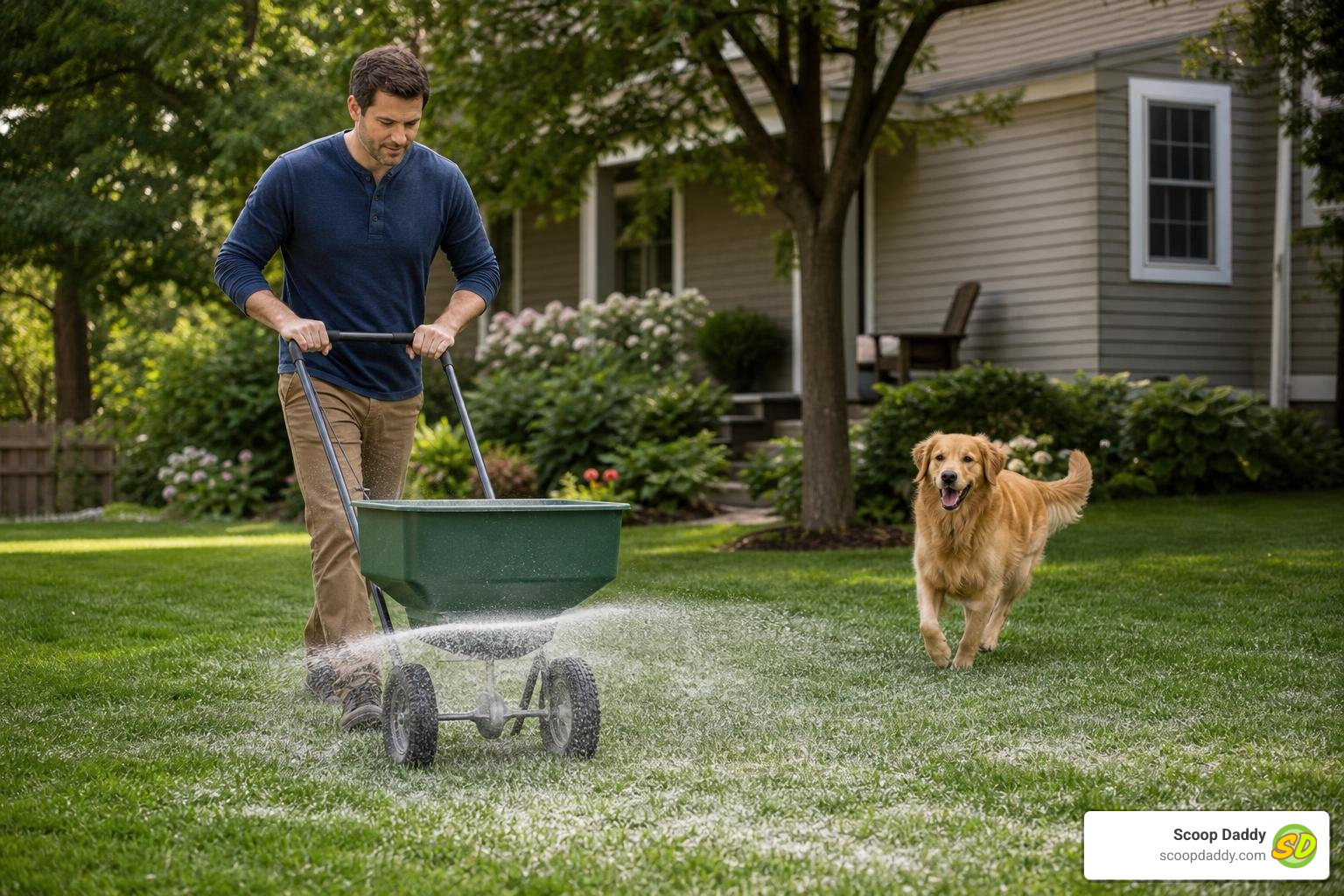
The Sour Truth: Using Lime to Remove Odor in Your Yard
The Sour Truth About Using Lime to Remove Odor in Your Yard
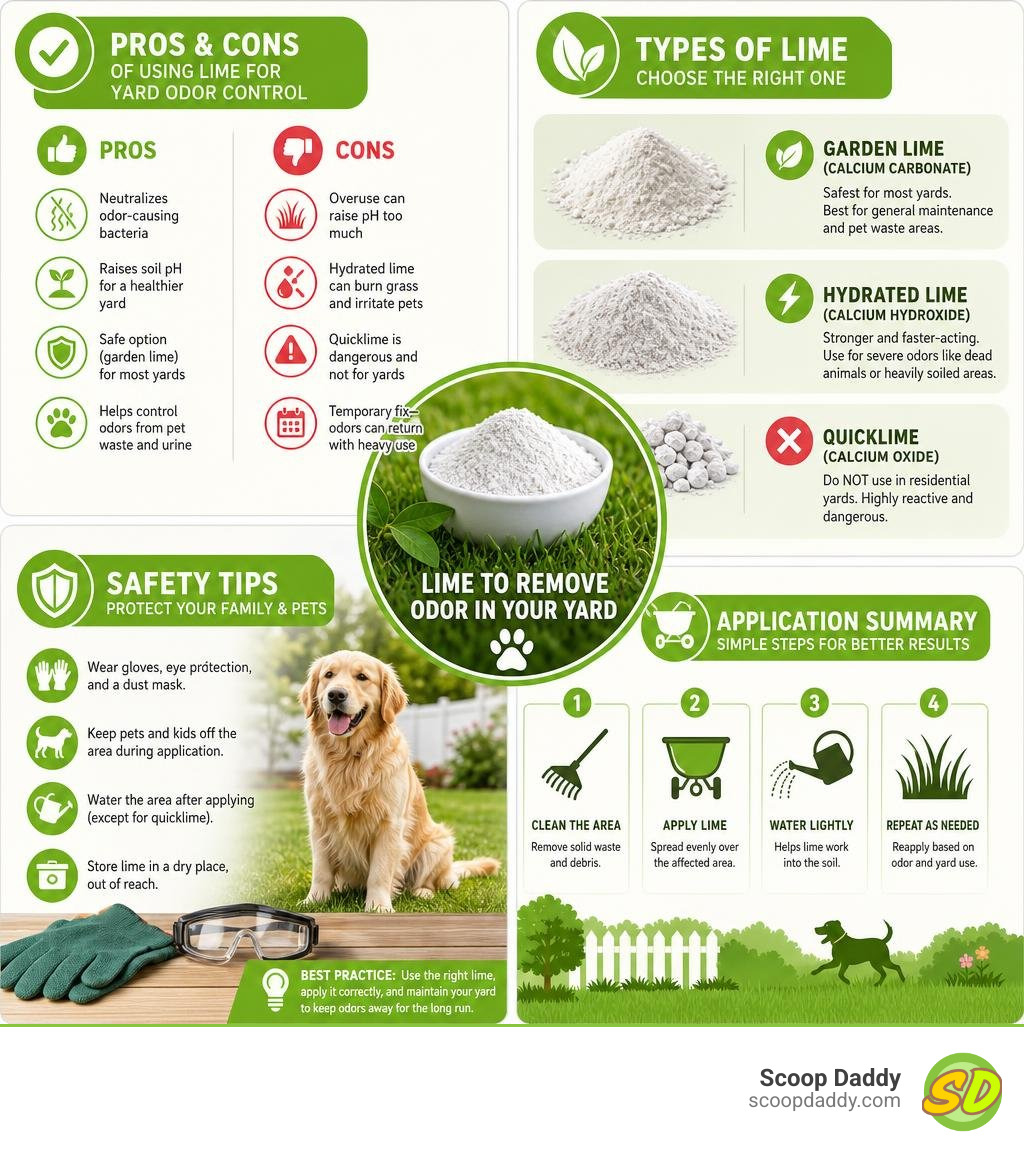
Using lime to remove odor in your yard works — but only if you pick the right type and apply it correctly.
Here’s the short answer:
- Garden lime (calcium carbonate) is the safest option for most yards. It raises soil pH to suppress odor-causing bacteria. Best for general maintenance and pet waste areas.
- Hydrated lime (calcium hydroxide) is stronger and faster-acting. It’s better for severe odors like dead animals or heavily soiled areas — but it can burn grass and irritate pets if misused.
- Quicklime (calcium oxide) should never be used in residential yards. It’s dangerously reactive and can cause serious chemical burns.
- Professional deodorizing help is the safest choice when odors are severe, recurring, tied to heavy pet waste buildup, or you are unsure which product to use.
The bottom line: lime can significantly reduce yard odors from pet urine, feces, and decaying organic matter — but it’s not a one-size-fits-all fix. For the best and safest results, especially in high-use pet areas or yards with persistent odor, hiring a professional pet waste removal and deodorizing service can help ensure the source of the smell is handled properly.
If you have dogs, a yard that gets heavy use, or Southwest Florida’s intense heat baking in that pet waste smell, you already know how fast things can go south. That ammonia-heavy odor from dog urine, the lingering funk after your pup does their business in the same corner every day — it’s a real problem for homeowners here.
Lime has been used for odor control for thousands of years, across agriculture, construction, and sanitation. But using it wrong in your yard can damage your grass, harm your pets, or even make the soil worse for plant growth.
This guide breaks down exactly how lime works, which type to use, how to apply it safely, and what to watch out for — especially for Southwest Florida yards and families with dogs. It also explains when calling a professional is the smarter move, so your yard gets deodorized safely instead of just temporarily covered up.
Related content about lime to remove odor in yard:
Understanding the Types of Lime to Remove Odor in Yard
When you head to your local home improvement store in Fort Myers or Naples, you will likely find several products labeled “lime.” However, these products are not chemically identical, and using the wrong one can turn your yard care routine into a disaster.
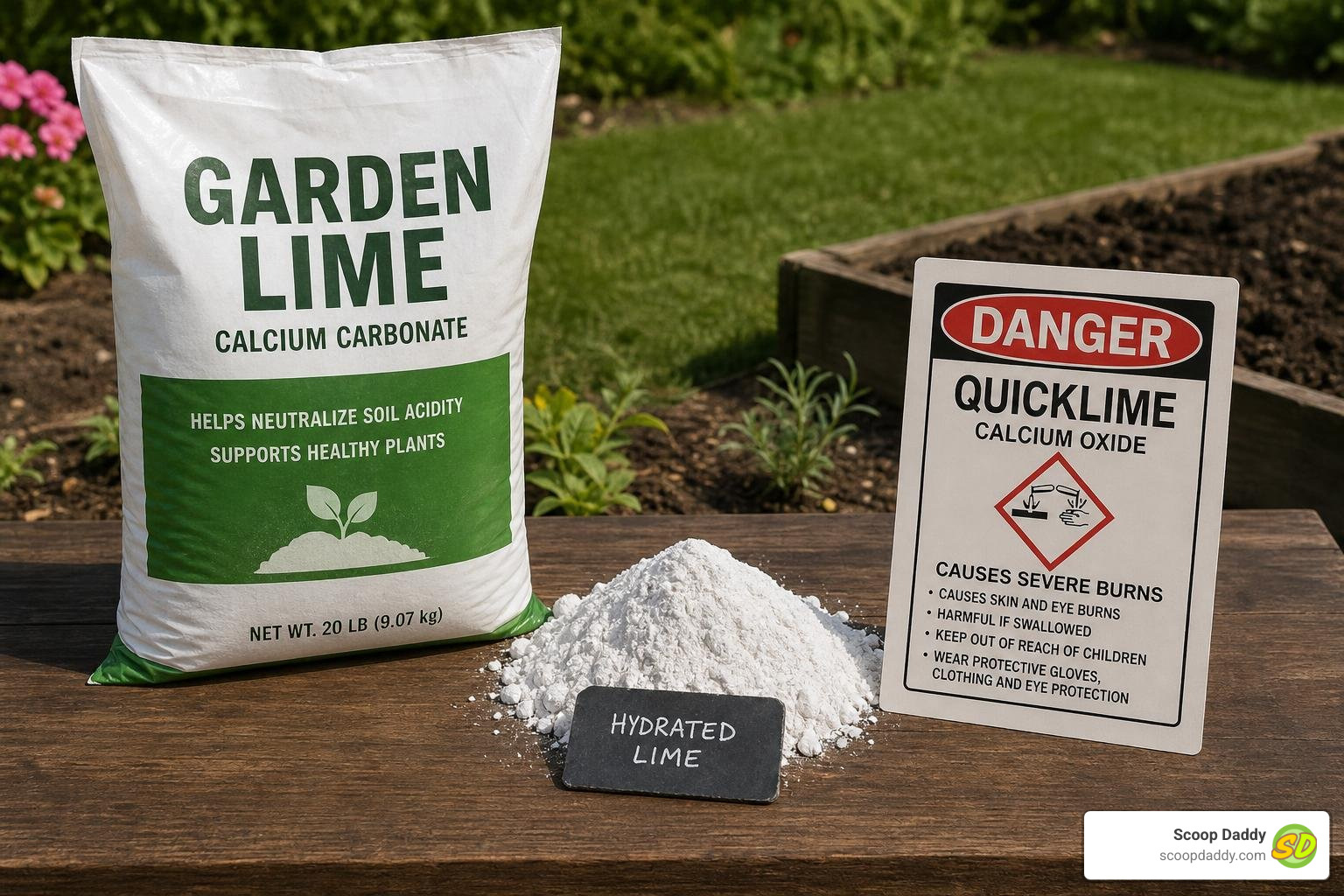
To understand how these products work, we have to look at their chemical makeup and Neutralising Value (NV). According to Lime and Liming | RHS Advice , the NV of liming materials is expressed as a percentage of the neutralizing value of pure calcium oxide.
Here are the three primary types of lime you will encounter:
- Calcium Carbonate (Garden Lime / Agricultural Lime): This is natural limestone that has been ground down into a powder or pelletized. It has an NV of 50-55%. It is slow-acting, highly stable, and the safest choice for residential yards with pets and children.
- Calcium Hydroxide (Hydrated Lime / Slaked Lime): Created by adding water to calcium oxide, hydrated lime is a fine white powder with an NV of approximately 70%. It comprises about 24% chemically combined water and 74% calcium oxide. It is highly alkaline and acts much faster than garden lime, making it incredibly effective at neutralizing severe odors. However, it is highly caustic and must be handled with extreme caution.
- Calcium Oxide (Quicklime): This is pure, unsated lime created through calcination. It is extremely reactive with water and has no place in a residential backyard.
Choosing the Right Lime to Remove Odor in Yard
Choosing between these options depends entirely on the severity of your odor problem and who uses your yard. For general yard maintenance, pet potty spots, and mild odors, garden lime (calcium carbonate) or dolomitic lime (which includes magnesium carbonate) is your best bet.
If you are dealing with a severe biological odor, hydrated lime is far more effective because of its high alkalinity. However, it requires strict safety protocols to protect your lawn and your pets.
We always recommend choosing pelletized lime over powdered lime for residential use. Powdered lime is incredibly dusty. A light Gulf breeze in Bonita Springs can easily blow powdered lime all over your patio, your face, and your pets. Pelletized lime consists of compressed lime dust that dissolves slowly when watered, making it much cleaner, safer to breathe, and easier to spread evenly.
| Feature | Garden Lime (Calcium Carbonate) | Hydrated Lime (Calcium Hydroxide) |
|---|---|---|
| Primary Use | Mild odors, soil pH maintenance | Severe odors, carcass burial |
| Neutralising Value (NV) | 50-55% | 70% |
| Speed of Action | Slow (weeks to months) | Fast (hours to days) |
| Pet Safety | High (once watered in) | Low (highly caustic until dissolved) |
| Lawn Burn Risk | Very low | High (if over-applied) |
The Dangers of Quicklime in Residential Yards
We cannot stress this enough: do not buy or use quicklime (calcium oxide) in your yard.
Quicklime is created in a lime kiln through calcination. When quicklime comes into contact with moisture—whether that is rainwater, morning dew, or the moisture on your dog’s paws—it undergoes an exothermic reaction. This means it generates intense heat.
Using quicklime in a residential yard is a recipe for severe chemical burns on your pets, your children, and yourself, not to mention completely incinerating your grass. Stick to garden lime or carefully managed hydrated lime.
How Lime Works to Neutralize Unpleasant Yard Odors
To understand why lime is so effective, we have to look at the science of decay and odor creation. Most foul yard smells come from anaerobic bacteria and fungi breaking down organic matter in acidic, wet environments.
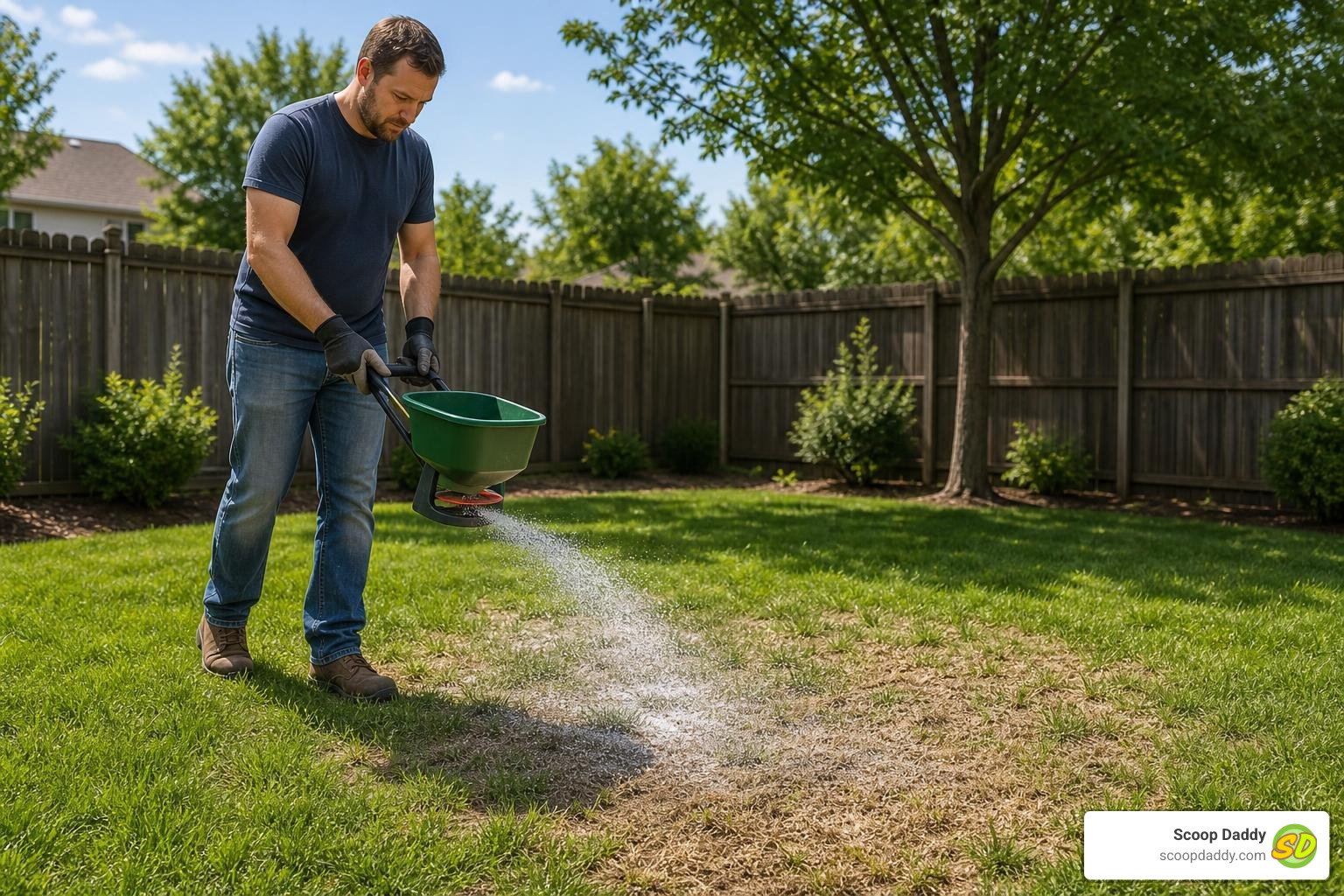
According to Can Garden Lime Tackle Odors? Unveiling the Truth – GreatGardenPlans , lime works for odor control by rapidly raising the pH of the soil or organic material. This sudden shift to an alkaline environment suppresses the growth of odor-causing anaerobic bacteria while encouraging beneficial aerobic microbes that break down waste cleanly.
Additionally, lime is highly hygroscopic. This means it absorbs moisture from its surroundings. By drying out wet, compacted soil or decaying matter, lime directly targets and eliminates the damp conditions that foster rot and decay.
Neutralizing Pet Urine and Feces Odors
When your dog urinates on the lawn, the high concentration of nitrogen and urea breaks down into ammonia. This ammonia not only creates a harsh, pungent smell but also makes the soil highly acidic, which eventually kills your grass.
Applying lime to remove odor in yard spaces solves both problems at once. The lime neutralizes the acidic ammonia, eliminating the smell, while restoring the soil pH to a healthy, neutral range (typically between 6.2 and 7.0) that allows your turfgrass to recover.
If you are struggling with persistent pet odors, you can read more about comprehensive solutions in The Ultimate Guide to Removing Dog Urine Odor From Your Yard and Feline Fine: How to Remove Cat Odor From Your Yard and Garden. You can also learn how to neutralize these areas safely from experts at Using Lime to Get Rid of Dog Urine Smell Outside – The Odor Dude. Expert Free Odor Removal Help .
Deodorizing Decaying Organic Matter and Dead Animals
If a wild animal passes away in a hidden corner of your yard or under a deck, the decomposition process can produce an unbearable smell. Hydrated lime is the industry standard for managing these severe biological odors.
As detailed in Will lime stop the smell of a dead animal? , hydrated lime works by creating an extremely high pH environment that disrupts the cell membranes of the putrefying bacteria responsible for the odor. It also dehydrates the carcass and suffocates insects, preventing fly and maggot infestations.
To use lime for a dead animal burial:
- Dig a hole at least four feet deep.
- Sprinkle approximately 1 cup of hydrated lime at the bottom of the hole.
- Place the carcass in the hole.
- Sprinkle another cup of hydrated lime directly on top of the body.
- Backfill the hole with soil.
This process ensures that the decomposition happens quickly, cleanly, and without attracting scavengers to your Southwest Florida yard.
Step-by-Step Guide: Safe Application Techniques
Applying lime requires a systematic approach to ensure you eliminate odors without harming your turf or your family.

To get the best results, follow these steps adapted from How To Apply Lime To Lawn – Restore Soil Ph For A Lush Green Turf :
- Prep the Lawn: Mow your grass slightly shorter than usual and rake away any thick layers of thatch or fallen leaves. This ensures the lime makes direct contact with the soil.
- Calibrate Your Spreader: Set your broadcast spreader according to the calibration instructions on your lime bag.
- Apply in a Grid Pattern: To avoid leaving stripes or patchy areas, apply half of the calculated dose walking in parallel lines, then apply the remaining half walking in perpendicular lines.
- Water It In: Immediately after applying, water your lawn lightly. This starts dissolving the pellets, washing the lime into the soil where it can go to work on odors.
Testing Soil pH in Southwest Florida Before Applying Lime
Before you buy a single bag of lime, you must test your soil. This is especially critical for homeowners in Southwest Florida, including Fort Myers, Naples, Estero, and Bonita Springs.
Unlike other regions with naturally acidic soils, Southwest Florida soil is largely sandy and sits on top of massive limestone and shell deposits. This means our local soil is often naturally neutral to highly alkaline.
If your soil pH is already above 7.0, adding more lime to your yard can cause a severe “nutrient lockout.” When soil becomes too alkaline, turfgrass cannot absorb essential nutrients like iron and manganese, leading to yellowing, weak grass. Always use a DIY soil test kit or send a sample to a local university extension office before applying lime. For more tips on managing a healthy Florida lawn, check out The Ultimate Guide to a Pet-Friendly Backyard in Florida.
Proper Application Rates and Timing
If your soil test confirms that your soil is acidic (below 6.0) and can handle a lime application, the standard recommendation is to apply 25 to 50 pounds of lime per 1,000 square feet.
Because sandy soils have a lower buffering capacity than clay soils, they require less lime to change the pH. Be careful not to over-apply.
Timing is also crucial. Avoid applying lime during the peak of summer heat when your grass is already under heat stress. A light drizzle is perfect for helping pelletized lime dissolve, but avoid applying lime right before a major Southwest Florida thunderstorm, as heavy downpours will wash the lime away before it can penetrate the soil. For more advice on keeping your lawn pristine, check out How to Get a Clean Yard and Keep It That Way.
Risks, Safety Precautions, and Pet Safety Concerns
While lime is a natural mineral, it is still a powerful chemical agent that requires respect.
When handling powdered or hydrated lime, always wear:
- Heavy-duty gloves
- Safety goggles to prevent eye irritation
- A dust mask or respirator to prevent inhaling fine particles, which can cause chemical burns in your throat and lungs
Additionally, you should review safety warnings regarding the misuse of lime for pet waste, as discussed in detail by Using Toxic Lime for Odors | Smell & Wetness Removal .
Keeping Pets Safe During and After Application
Your pets are much closer to the ground than you are, making them highly susceptible to lime irritation. If a dog walks on dry lime powder or wet, undissolved lime paste, it can cause severe chemical burns on their paw pads. If they sniff the ground, they can inhale the dust, leading to respiratory distress.
To keep your furry friends safe:
- Keep all pets and children indoors during the application.
- Thoroughly water the yard immediately after spreading the lime to dissolve the pellets or wash the powder into the soil.
- Keep pets off the treated grass until the lawn has dried completely.
If you are dealing with a strong, recurring odor or you are not sure whether lime is safe for your lawn, it is better to bring in professional help than guess. A professional pet waste removal and yard deodorizing service can remove the waste source, choose pet-safe deodorizing methods, and reduce the risk of chemical irritation, lawn burn, or over-application.
Keeping a clean yard is about more than just managing smells; it is about safety. For more information on maintaining a safe outdoor space, read Dog Poop Is Not Fertilizer: How to Keep Your Yard Safe and Clean.
Lawn Damage and Nutrient Lockout Risks
Spilling a concentrated pile of lime in one spot or over-applying it across your yard will cause a rapid pH spike. This leads to a condition called soil chlorosis, where your grass turns yellow because it is starved of iron and manganese.
Furthermore, never apply lime and fertilizer at the same time. If you mix them, a chemical reaction occurs that converts the nitrogen in your fertilizer into ammonia gas. This not only creates a terrible smell but also completely wastes your fertilizer. Always wait at least two to three weeks between applying lime and applying fertilizer.
Frequently Asked Questions About Lime to Remove Odor in Yard
How Long Does It Take for Lime to Eliminate Odors?
Once you water the lime into the soil, it typically takes 12 to 24 hours to actively begin reducing pet urine and organic waste odors. For deep-seated odors or large-scale soil pH adjustments, it can take several weeks to see the full benefits.
How Often Should Lime Be Reapplied to Maintain Odor Control?
For general lawn maintenance, you should only apply lime based on the results of a soil test, which is typically every 3 to 5 years. However, if you are spot-treating highly active pet potty areas or managing a compost pile, you can apply very small, frequent doses of garden lime every few weeks to keep odors at bay without disrupting your overall soil chemistry.
What Are the Best Alternatives to Lime for Yard Odor Control?
If your Southwest Florida soil is already alkaline and you cannot safely use lime, excellent alternatives include:
- Baking Soda (Sodium Bicarbonate): A safe, mild deodorizer that neutralizes acidic odors.
- Activated Charcoal: Incredibly effective at trapping and absorbing odors without altering soil pH.
- Organic Bulking Agents: Adding straw or wood chips to wet areas or compost piles to improve airflow and reduce anaerobic odors.
- Sweet PDZ (Zeolite): A natural, non-toxic mineral that absorbs moisture and ammonia safely, making it highly popular for pet areas.
Conclusion
Using lime to remove odor in yard spaces is a time-tested, highly effective method for neutralizing pet waste and organic decay. However, because Southwest Florida’s sandy soils are naturally alkaline, applying lime requires careful testing, the right product selection, and strict safety precautions to protect your lawn and your beloved pets.
For many homeowners, the safest and most effective solution is to hire professional help instead of trying to diagnose and deodorize the yard alone. Professionals can remove the pet waste source, assess the odor problem, and apply safer deodorizing methods without risking burned grass, irritated paws, or worsening soil conditions.
If managing yard odors and cleaning up pet waste feels like a chore you would rather hand off, we are here to help. At Scoop Daddy, we provide professional, reliable pet waste removal services for homes and commercial properties throughout Southwest Florida, including Fort Myers, Naples, Estero, and Bonita Springs. With our tech-driven scheduling and consistent, high-quality service, we keep your yard fresh, clean, and safe for the whole family.
Ready for a fresh, odor-free backyard? Contact us today to learn more about our Professional Pet Waste Removal Services.
You May Like
How to Survive the Annual Post-Winter Backyard Poop Apocalypse
What Every Southwest Florida Dog Owner Needs to Know About Spring Poop Clean Up Spring poop clean up is the process of removing accumulated dog waste from your yard before Florida's rainy season arrives — and in Southwest Florida, it matters more than most people realize. Here's the quick version
Read More
A Practical Guide to Pet Waste Removal
Why a Pet Waste Service Is Worth Every Penny A pet waste service sends trained technicians to your yard on a regular schedule to remove dog poop, bag it, and haul it away — so you never have to touch it. Here's how it works in a nutshell: Sign up
Read More
How to Get a Clean Yard and Keep It That Way
A Clean Yard Starts With the Right Plan Clean yard landscaping is about more than just mowing the grass. It's the combination of smart design, regular maintenance, and the right cleanup habits that keep your outdoor space looking sharp — and feeling safe for your family and pets. Quick answer:
Read More