
An Essential Guide to Fixing Yard Poop Smell in Fort Myers
Why Yard Poop Smell Happens So Often in Fort Myers
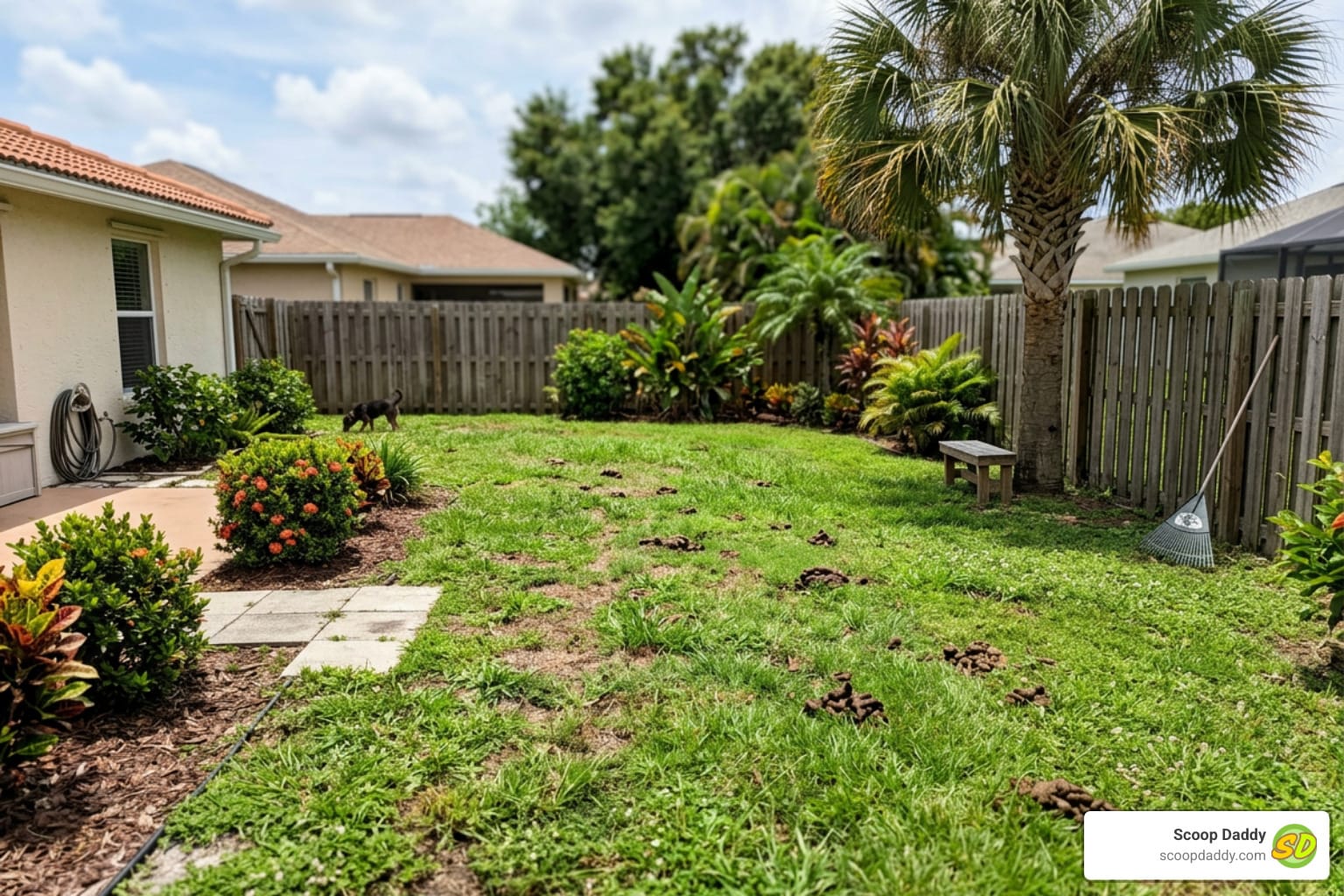
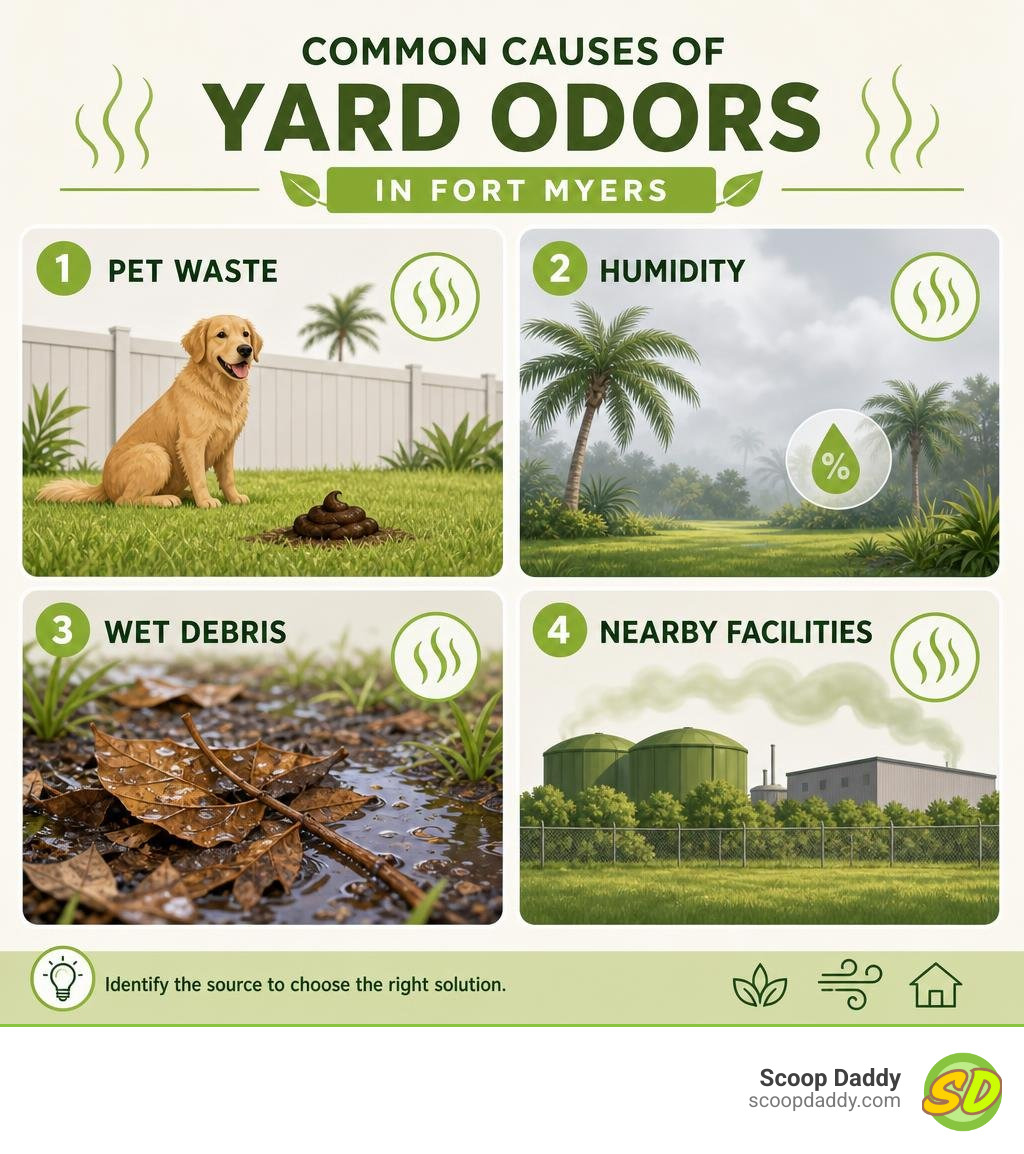
The poop smell homeowners notice on their yard usually comes from pet waste that breaks down quickly in Southwest Florida’s heat and humidity. Rain, damp grass, and poor airflow can hold that odor close to the ground, making a small amount of waste smell much worse.
| Likely source | Why it smells stronger in SWFL |
|---|---|
| Dog poop left in the grass | Heat and moisture speed up decay |
| Dog urine in turf or soil | It can leave a sharp ammonia-like odor |
| Wet yard debris or drainage areas | Organic material can rot and trap smells |
| Nearby composting or waste operations | Some facilities process organic waste that can create sewage-like odors |
The key is to first identify whether the smell is limited to your property or seems to drift in from elsewhere. A smell that appears after your dog uses the yard may point to accumulated pet waste. A strong odor that arrives with the wind and affects several homes may warrant an odor complaint with local or state environmental agencies.
Yard poop smell fort myers terminology:
Common Causes Behind a Yard Poop Smell Fort Myers Homeowners Notice
When we step outside into our outdoor spaces in Southwest Florida, we expect tropical breezes, not foul odors. However, discovering a strong yard poop smell that Fort Myers’ residents describe as sewer-like or fecal can immediately ruin any afternoon on the patio. Understanding the exact source of the smell is the first step toward getting rid of it for good.
In Lee County, these odors generally originate from two main sources: local industrial or agricultural waste processing and unmanaged pet waste decaying on residential turf. Across Florida, communities have raised concerns about industrial composting operations that process sewage sludge and organic debris. For instance, in northern Florida, residents have reported persistent odor problems near composting operations, illustrating how industrial biomass processing can impact nearby neighborhoods when southeasterly winds carry airborne smells.
On a neighborhood level, pet waste is the leading cause of persistent outdoor smells. It is a common misconception that dog waste simply biodegrades into harmless soil nutrients. In reality, dog poop is not fertilizer, and leaving pet waste on your lawn allows harmful bacteria to multiply rapidly in our warm, humid environment.
Identifying Local Biosolids and Biomass Facilities
Industrial composting facilities utilize biosolids—recycled sewage matter collected from wastewater treatment plants—mixed with tree trimmings and yard debris to create commercial compost products. While recycling organic material is valuable, improper handling or storage can generate heavy foul odors that travel across property lines.
When facilities store unpermitted volumes of organic sludge or fail to maintain proper aeration in compost stacks, anaerobic digestion occurs. This microbial breakdown releases volatile gases such as hydrogen sulfide, ammonia, and methane. Florida Department of Environmental Protection (FDEP) guidelines require facilities to obtain strict permits and manage pile heights to limit air pollution. When enforcement actions or consent orders are issued against non-compliant facilities, operators must implement odor mitigation techniques, such as applying thick wood chip biofilters or planting dense tree buffers (attenuation projects) to absorb airborne particles before they reach residential homes.
Pet Waste Accumulation in SWFL Heat
For the vast majority of homeowners in Fort Myers, Naples, Estero, and Bonita Springs, intense weather conditions intensify backyard odor problems. Southwest Florida experiences intense heat and persistent high humidity throughout most of the year. These environmental factors create a natural greenhouse effect on your lawn.
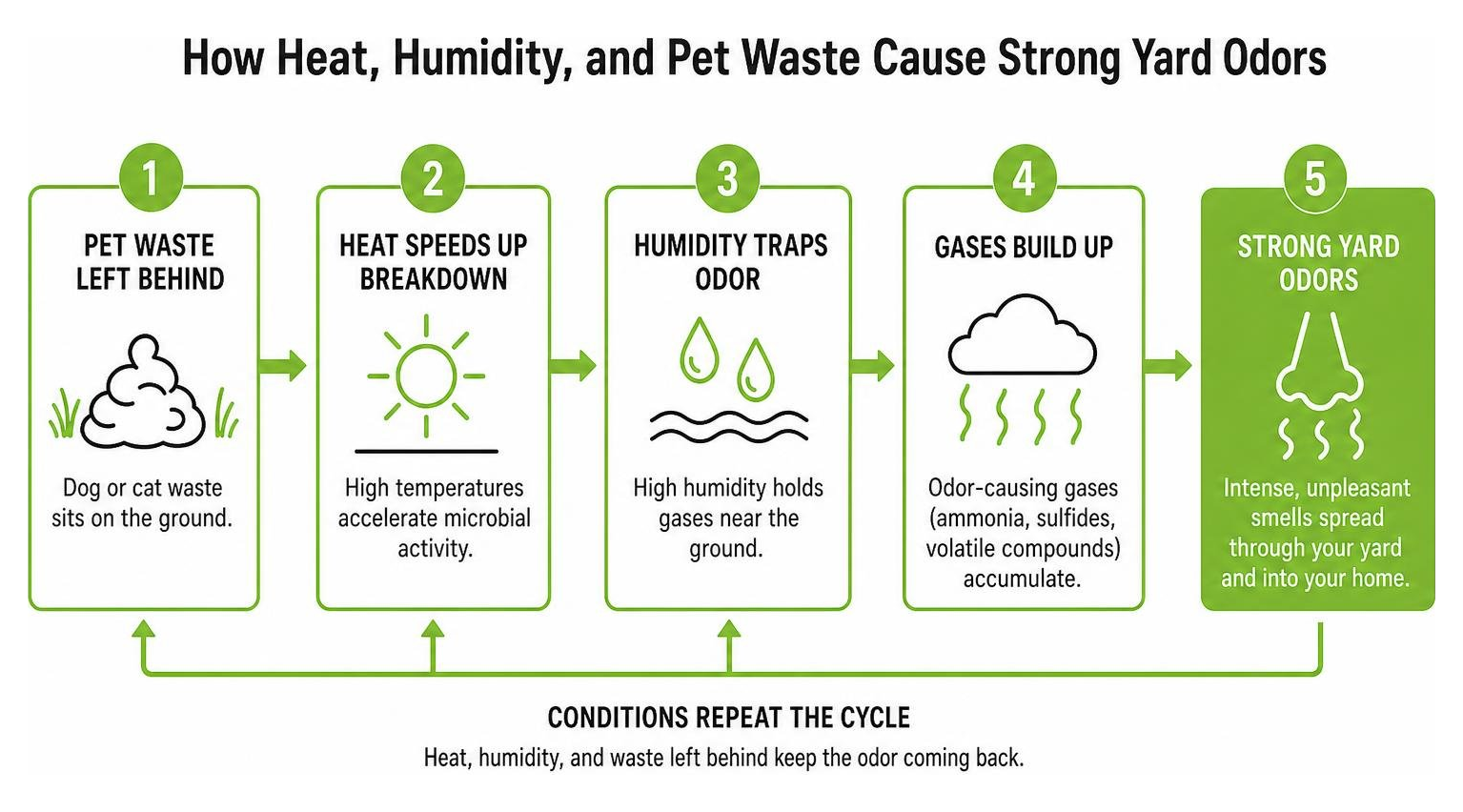
When pet waste sits on damp grass, microbes break down the organic matter at an accelerated pace. The humidity seals the evaporating gases near ground level, preventing wind from dissipating the stench. Left unchecked, even a few days of waste from a single dog can make an entire backyard smell intolerable. Beyond the immediate inconvenience to your nose, Why Even Pick Up Poop? The Dangers of Abandoned Pet Waste article highlights the environmental risks, including groundwater contamination and turf burning from concentrated ammonia and nitrogen.
Health Impacts and Environmental Regulations in Lee County

Living with a persistent yard poop smell in Fort Myers is more than just a nuisance for homeowners—it can also create health risks and environmental concerns. In Lee County, local regulations and state environmental frameworks help protect communities from air quality problems and runoff contamination.
When organic waste decomposes uncovered in backyards or unpermitted industrial sites, it creates breeding grounds for vector pests like flies, mosquitoes, and rodents. Furthermore, intense summer downpours in Southwest Florida wash uncollected waste directly into local storm drains, carrying harmful pathogens into waterways like the Caloosahatchee River and local canals.
Health Risks Associated With Unmanaged Waste
whether from commercial sludge processing or uncollected pet droppings, carries biohazardous contaminants:
- Airborne Microbes and Respiratory Irritants: High concentrations of ammonia and hydrogen sulfide gases irritate the eyes, nose, throat, and lungs, forcing residents to keep windows shut and avoid outdoor activities.
- Pathogen and Bacteria Growth: Dog waste contains harmful pathogens including E. coli, Salmonella, Giardia, and roundworms. These organisms remain active in soil long after the physical waste appears to have broken down.
- Stormwater Contamination: Heavy rainfall sweeps bacteria-laden runoff off lawns into nearby retention ponds and drainage canals, contributing to nutrient overloading and harmful algal blooms.
Reporting Severe Yard Odor Complaints in Fort Myers
If you suspect that the foul smell in your neighborhood is coming from a commercial biomass plant, municipal utility, or agricultural site rather than a residential lawn, you have regulatory options. The Florida Department of Environmental Protection (FDEP) tracks industrial air emissions and enforces environmental compliance.
Residents experiencing heavy, widespread industrial odors should log specific details, including:
- Date and Time: Note exactly when the smell starts and stops.
- Wind Direction: Observe which direction the breeze is coming from.
- Odor Intensity: Describe the smell (e.g., strong human feces, chemical ammonia, or rotten eggs).
Filing formal logs with the FDEP or reporting non-emergency code violations through local Lee County enforcement portals creates an official paper trail, prompting inspectors to conduct air sampling and check local facility permits.
Practical Steps to Eliminate Foul Yard Odors
Eliminating a heavy odor requires a two-step approach: removing the physical source of the smell and treating the affected turf or soil to neutralize residual compounds. Below is a direct comparison of two popular soil treatments used by property owners:
| Treatment Option | Primary Function | Best Used For | Application Considerations |
|---|---|---|---|
| Agricultural Lime | Raises soil pH, counteracts acid, and suppresses bacterial gases | Bare dirt, heavy mud, and deep soil treatment | Must be watered in thoroughly; non-pelletized dust can irritate pet paws |
| Enzymatic Deodorizers | Uses active enzymes to digest organic uric acid and feces proteins | Natural grass, artificial turf, patios, and outdoor furniture | Safe for immediate pet contact; works best when sprayed on damp turf during cool evening hours |
DIY Steps to Eliminate Yard Poop Smell that Fort Myers Property Owners Can Take
If the source of the stink is right in your own backyard, taking immediate action will fresh up your outdoor space fast. Here are the steps to follow:
- Perform a Thorough Waste Cleanup: Walk your property systematically and clear all dog droppings. Check along fence lines, under bushes, and around high-grass borders where waste easily gets hidden. Using effective tools makes this job much easier; check out No More Landmines: Best Ways to Clean Dog Poop From Your Yard for step-by-step pick-up strategies.
- Apply Natural Soil Neutralizers: For soil areas where waste has decayed, garden lime can neutralize acidic odors and dry out problem spots. Be sure to read The Sour Truth: Using Lime to Remove Odor in Your Yard to learn proper application techniques that keep your lawn healthy and pet-safe.
- Spray Bio-Enzymatic Treatments: Standard water hoses only spread bacteria around. Enzyme-based yard sprays actively digest residual bacteria and breakdown uric acid crystals. Follow tips from The Ultimate Guide to Removing Dog Urine Odor From Your Yard to eliminate deep-seated urine smells in dirt, grass, and hardscaping.
Professional Waste Management and Maintenance Strategies
Keeping a pristine lawn in Southwest Florida takes continuous effort. High summer temperatures speed up bacterial growth, meaning waste pickup cannot be put off for long without causing severe odors.
Implementing structured lawn care routines makes a world of difference. Establishing a routine schedule ensures waste is removed before humidity converts it into a neighborhood problem. Reviewing A Practical Guide to Pet Waste Removal helps pet parents structure their weekly sanitation habits. Pair routine pickup with smart lawn care—such as keeping grass mowed to proper heights and allowing direct sunlight to dry wet spots—to learn How to Get a Clean Yard and Keep It That Way.
Frequently Asked Questions About SWFL Yard Odors
Why does my Fort Myers yard smell like human sewage?
A human sewage smell can stem from nearby industrial composting operations that process biosolids (recycled wastewater organic solids) alongside wood debris. However, if the smell is localized to your immediate lawn, it is usually caused by accumulated pet waste decaying rapidly under thick turf in hot, humid conditions, which releases sewer-like hydrogen sulfide and ammonia gases.
Can Florida summer weather make lawn odors worse?
Yes. High ambient heat accelerates organic decomposition, while high humidity locks airborne moisture and foul gases close to the ground. Additionally, heavy afternoon summer rain showers soften old dog waste, allowing bacteria to spread quickly across grass blades and soil.
Who should I contact to report extreme industrial odors?
If you suspect an industrial facility, agricultural site, or waste operation is violating air quality standards, you should contact the Florida Department of Environmental Protection (FDEP) South District office or submit an odor complaint log directly through the state environmental reporting portal.
Conclusion
A persistent yard poop smell in Fort Myers does not have to ruin your time outdoors. By identifying whether the odor comes from local industrial composting operations or accumulated pet waste on your grass, you can take immediate steps to neutralize the smell and protect your outdoor environment.
At Scoop Daddy, we provide reliable pet waste removal services across Southwest Florida—including Fort Myers, Naples, Estero, and Bonita Springs—helping homeowners keep their lawns clean, fresh, and completely free of waste. Discover how effortless lawn maintenance can be by reading Dog Poop Cleaners 101: Get Your Yard Back Without the Dirty Work, and visit Scoop Daddy Pet Waste Removal Services to schedule your service today.
You May Like
Taming the Jungle: Your Complete Guide to Yard Waste Removal
Why Yard Waste Removal Matters for a Clean, Healthy Yard Yard waste removal is the process of collecting, preparing, and properly disposing of organic debris from your lawn — including grass clippings, leaves, branches, and shrub trimmings. Here's a quick overview of how to handle it: Bag or bundle your
Read More
How Pet Waste Removal Services Help Maintain Property Value and Curb Appeal
Doggy Landmines Don’t Impress the Neighbors Brown Spots & Burned Grass = Bye-Bye Curb Appeal Smell That? Neither Should You (or Your Guests) A Cleaner Yard Shows You Care Scoop Daddy = Property Value’s Secret Weapon Your dog is part of the family, but their waste? Not exactly boosting your
Read More
The Environmental Benefits of Proper Pet Waste Disposal
Wait…Dog Poop Is Bad for the Planet? Rain + Poop = Polluted Waterways It’s Not Fertilizer. It’s a Health Hazard. The Ripple Effect: How Responsible Dog Parents Make a Difference Scoop Daddy’s Role in a Cleaner, Greener Neighborhood Wait…Dog Poop Is Bad for the Planet? As loving dog parents, it’s
Read More